Man storms APC National secretariat to beg for his reward
Man storms APC National secretariat to beg for his reward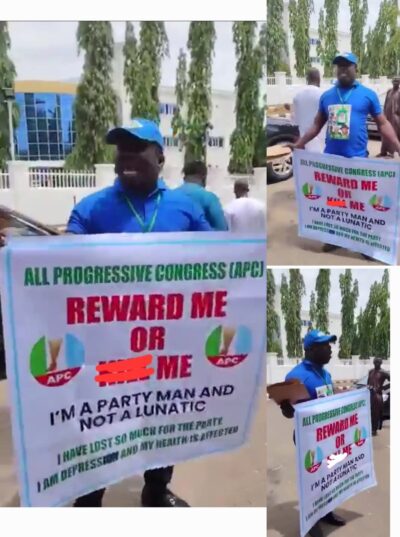
A deeply emotional scene recently unfolded at the national secretariat of the (APC), where a man publicly broke down while recounting the sacrifices he made in support of the party during the 2023 elections.
According to his statement, he sold his house and spent over ₦30 million to support the party’s campaign efforts. In a heartbreaking twist, he claimed his wife died during the process, leaving him alone to care for their children. Today, he says he is homeless and unable to afford their school fees — all while feeling abandoned by the very political structure he once championed.
His words were not just a personal cry for help; they have sparked wider conversations about political loyalty, sacrifice, and the expectations that come with grassroots support in Nigeria’s democracy.
The Cost of Political Devotion
Politics in Nigeria, as in many parts of the world, often relies heavily on the commitment of grassroots mobilizers — individuals who invest time, resources, and sometimes their entire livelihoods to support candidates and parties. However, this case raises a troubling question: What happens when that loyalty is not reciprocated?
The man’s story suggests a dangerous culture where political engagement is treated as a high-risk investment rather than civic participation. Selling personal property and spending millions without any formal structure of compensation or support exposes a system that can easily exploit the most devoted supporters.
A System Without Safety Nets
Unlike formal employment or contractual engagements, political volunteering or sponsorship often lacks clear agreements. There are no guarantees of reimbursement, no welfare systems, and no accountability mechanisms when things go wrong.
This creates a vacuum where individuals may act on hope, promises, or assumptions — only to find themselves stranded when political tides shift.
Moral and Ethical Questions
This incident also raises ethical concerns for political parties. While parties benefit immensely from loyal supporters, should they not also bear some responsibility for their welfare, especially in extreme cases like this?
Even if no formal agreement existed, the optics of a supporter becoming destitute after such significant contributions can damage public trust and raise questions about leadership responsibility.
Public Reaction and Social Commentary
Since the story surfaced, reactions have been mixed. Some sympathize deeply with the man, viewing him as a victim of a broken political culture. Others argue that personal financial decisions — especially extreme ones like selling a home — should not be made based on political expectations.
Regardless of perspective, one thing is clear: this incident has touched a nerve.
Lessons for Citizens
This situation serves as a cautionary tale. Political participation is a right and, for many, a passion — but it should not come at the expense of personal stability or family welfare. Citizens must approach political involvement with clear boundaries, ensuring that their basic needs and responsibilities are not jeopardized.
Conclusion
The image of a man standing at a party secretariat, pleading for recognition after losing nearly everything, is a powerful symbol of the imbalance that can exist in political systems. It challenges both citizens and political institutions to rethink the nature of loyalty, reward, and responsibility.
If nothing else, his story should prompt a national conversation — one that asks not just what people can do for politics, but also what politics should do for its people.