
Researchers discover ancient wood for Noah’s Ark near Mount Ararat
Researchers discover ancient wood for Noah’s Ark near Mount Ararat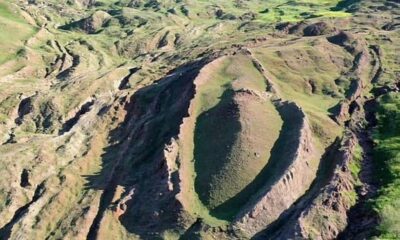
Researchers have discovered fragments of ancient wood believed to be about 4,300 years old at a site associated with the biblical account of Noah’s Ark in eastern Turkey.

The wood fragments were found at a boat-shaped geological formation known as the Durupinar Formation, near Mount Ararat, a location that has attracted the attention of researchers, historians and religious scholars for decades.
According to a report by the British newspaper *Express*, the wood fragments were recovered from more than 30 feet beneath the ground during investigations at the site.
Preliminary testing indicated that part of the wood could date from between 2410 and 2269 BC, with the analysis giving this possibility a probability of 60.6 per cent.
The period is close to the timeframe associated with the biblical flood in some religious interpretations.
Andrew Jones, founder of the Noah’s Ark Scans project, said the preliminary findings were consistent with some traditional understandings of when the flood described in the Bible may have occurred.
Professor Cenker Atila, who is leading the investigation, expressed excitement after getting the opportunity to hold the recovered wood fragments.
“I was extremely excited when I first pulled the wood out of the ground and held it in my hands. Since we found it at such a considerable depth, I immediately realised that it was unlikely to be something modern,” he said.
He described the possibility that the wood could have formed part of Noah’s Ark as particularly significant.
However, researchers have yet to establish that the wood fragments are actually remains of Noah’s Ark.
Several geologists have argued that the Durupinar Formation is a natural geological structure created through erosion rather than the remains of an ancient vessel.
The research team said further investigations were necessary to determine how the wood became buried beneath the ground and establish its precise age.
Jones said his team was still examining the findings before reaching any conclusions.
“What we still don’t know is how the wood got there,” he said.
He added that further test results were expected in December 2026.
The Durupinar Formation, which measures approximately 157 metres in length, was first identified in 1959 through aerial photographs.
Its boat-like shape and proximity to Mount Ararat have fuelled decades of speculation about whether it could be the location where Noah’s Ark came to rest, as described in the Bible.