
Lagos to Dem0lish GNI Building 10 Months After Fir£
Lagos to Demolish GNI Building 10 Months After Fire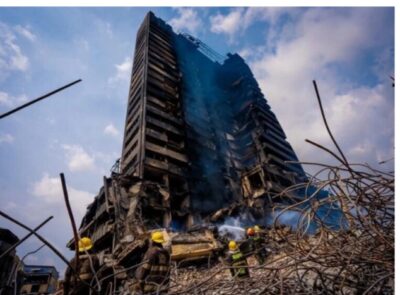
The Lagos State Government has formally initiated the controlled demolition of the historic Great Nigeria Insurance House on Martins Street in Lagos Island, exactly ten months after a devastating inferno severely compromised the structural integrity of the twenty-five-storey commercial skyscraper. State emergency management authorities and technical engineering teams moved heavy machinery into the densely populated commercial district following comprehensive structural integrity tests that determined the burnt tower posed an immediate collapse hazard to neighboring buildings, busy market stalls, and thousands of daily pedestrians. The site, which has remained cordoned off under tight security monitoring since the initial disaster, is now undergoing a systematic, phase-by-phase teardown managed by specialized engineering contractors to prevent uncontrolled falling debris in the tight urban grid.

The decision to demolish the landmark structure stems from a horrific fire incident that swept through the high-rise building, causing severe thermal stress to the internal concrete support columns, load-bearing walls, and steel reinforced girders. Despite exhaustive fire-fighting operations deployed during the initial blaze, the heat intensity weakened the core architectural frame, rendering restoration attempts technically impossible and financially unviable. Subsequent assessments conducted by the Lagos State Material Testing Laboratory and independent structural engineers confirmed that the building suffered irreparable damage, leading executive leadership to mandate a total clearance of the plot to safeguard human lives and property across the surrounding market zones.
Logistical planning for the high-risk demolition required extensive coordination across multiple municipal agencies, including the Lagos State Emergency Management Agency, the state fire service, traffic management authorities, and law enforcement units. Given the extreme density of the surrounding commercial hub—where informal trader kiosks, multi-level shopping plazas, and narrow pedestrian walkways directly abut the footprint of the tower—engineers have opted for a controlled mechanical dismantling process rather than a rapid explosive implosion. Specialized long-reach excavators, crane systems, and dust-suppression water cannons have been deployed to strip the building from the upper levels downward, ensuring that environmental impact, noise, and structural vibrations remain strictly within safe operational thresholds.
The prolonged ten-month gap between the destructive fire and the active commencement of site demolition sparked considerable debate among local shop owners, property developers, and urban planning experts across the metropolis. Business owners in the immediate vicinity reported significant economic disruptions due to safety perimeter closures, vehicular traffic diversions, and restricted access to adjacent trading arcades. However, state officials maintained that the extended preparation window was necessary to conduct thorough legal reviews, coordinate with primary property insurers, establish risk-mitigation protocols for surrounding structures, and secure specialized international equipment required to execute a safe high-rise teardown within a crowded inner-city commercial hub.
Community leaders and local trader unions have expressed relief at the formal kickoff of the clearing operations, viewing the exercise as a crucial step toward restoring normal commercial activities and removing a lingering safety hazard from the skyline. Municipal authorities have reiterated their commitment to maintaining strict site control throughout the duration of the demolition project, urging local traders, shoppers, and commuters to respect established safety barriers and cooperate with traffic control personnel. Once ground zero is completely cleared and certified safe, urban planning authorities plan to conduct comprehensive soil and foundation evaluations before determining future development guidelines for the strategic commercial location.