
JUST IN: Abba Kyari, Gbajabiamila and the Burden of the Nigerian President’s Chief of Staff
JUST IN: Abba Kyari, Gbajabiamila and the Burden of the Nigerian President’s Chief of Staff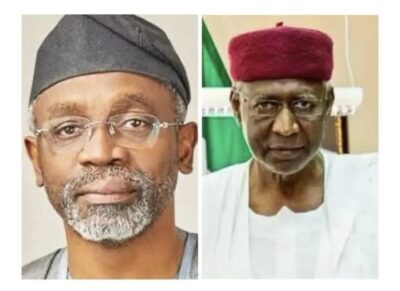
by Kabir Akintayo
Abba Kyari, Gbajabiamila and the Burden of the Nigerian President’s Chief of Staff, by Kabir Akintayo
POLITICS DIGEST — Power in government is not exercised only through constitutional offices. Sometimes, it resides in positions that operate quietly behind the scenes, controlling access, shaping decisions and coordinating the machinery of leadership. In Nigeria’s Presidency, no office better illustrates this reality than that of the Chief of Staff (CoS) to the President. Though absent from the Constitution, it has grown into one of the most strategic and influential offices in government, making its occupant both indispensable to the President and vulnerable to relentless public scrutiny.
The latest controversy surrounding the office stems from allegations linked to the scandal-ridden Presidential Foreign Intervention Promotion Council (PFIPC), where its Director-General, Prince Adeniyi Adeyemi, reportedly accused the Chief of Staff to President Bola Ahmed Tinubu, Mr. Femi Gbajabiamila, of demanding a share of the agency’s proposed take-off proceeds. Although the allegations remain unproven and have generated intense public debate, they have once again thrust the office of the Chief of Staff into the national spotlight.
For many observers, the development is hardly unprecedented. Successive administrations have witnessed Chiefs of Staff becoming subjects of controversy, accused of wielding excessive influence and presiding over powerful inner circles around the President. The recurring pattern raises an important question: why does an office without constitutional backing repeatedly emerge as one of the most contentious centres of power in Nigeria?
The answer lies partly in the evolution of the office itself.
The office of the Chief of Staff was introduced into Nigeria’s presidential system by former President Olusegun Obasanjo in 1999. Borrowed largely from the American model, it was originally conceived as an administrative and coordinating position rather than a political power centre.
Obasanjo appointed Major General Abdullahi Mohammed as the first Chief of Staff, with responsibilities largely centred on managing presidential schedules, coordinating appointments and serving as the head of the President’s domestic staff. In the United States, the office is often described as the President’s “gatekeeper”—a description that has increasingly become applicable in Nigeria.
Over time, however, the office evolved far beyond appointment scheduling. The Chief of Staff became the critical bridge between the President and virtually every arm of government, overseeing correspondence, coordinating presidential engagements, vetting official documents, arranging meetings, monitoring presidential activities and facilitating communication with key government officials.
Beyond these responsibilities, the office coordinates principal staff officers, manages presidential directives, oversees executive documentation, arranges Federal Executive Council meetings and serves as a liaison between the President and strategic national institutions. Such extensive functions naturally place enormous influence in the hands of whoever occupies the office.
Interestingly, the only President who chose not to appoint a Chief of Staff was the late President Umaru Musa Yar’Adua.
Instead, Yar’Adua relied on a Principal Secretary, David Edevbie, effectively scrapping the office and dispersing many of its coordinating responsibilities. The decision significantly reduced the concentration of authority around a single presidential aide.
Yet the arrangement also created administrative ambiguities within the Presidency. As competing political interests sought influence, observers often struggled to identify who truly coordinated presidential affairs. Following Yar’Adua’s death in 2010, subsequent administrations restored the office, apparently convinced of its strategic necessity.
President Goodluck Jonathan appointed Mike Oghiadomhe as Chief of Staff in 2010 and later replaced him with retired Brigadier General Jones Arogbofa in 2014.
Although both wielded considerable influence, neither attracted the level of public controversy that would later define the office under President Muhammadu Buhari. Their tenure largely reinforced the perception of the Chief of Staff as a senior coordinator rather than a dominant political force.
The Abba Kyari Era
No occupant has shaped public perception of the office more profoundly than the late Abba Kyari.
Appointed by President Buhari in 2015, Kyari quickly emerged as arguably the most powerful Chief of Staff in a democratic history of Nigeria. Buhari’s governing style significantly expanded the office’s authority.
Unlike previous administrations, Buhari operated without a Principal Private Secretary exercising the traditional coordinating role. More importantly, ministers, political appointees and senior government officials were directed to channel requests and submissions through Kyari.
The defining moment came in August 2019 when Buhari instructed ministers that every request requiring presidential attention must first pass through the Chief of Staff. Critics immediately argued that the directive elevated an unelected official into a position of extraordinary influence.
Consequently, Kyari became the focus of persistent allegations and public criticism. He was variously described as the “de facto President,” “Deputy President,” and leader of a powerful cabal allegedly controlling access to Buhari. Whether fair or exaggerated, such labels reflected public perceptions of the enormous authority concentrated in the office.
Gbajabiamila and the Weight of History
Against this historical backdrop, Femi Gbajabiamila appears to be confronting a familiar challenge.
As a former Speaker of the House of Representatives and one of President Tinubu’s closest political allies, Gbajabiamila assumed office with considerable political capital.
Not long after the administration was inaugurated, allegations began circulating that the Chief of Staff was influencing appointments and major government decisions. The rumours became so widespread that President Tinubu publicly intervened to defend his aide.
During a Federal Executive Council meeting on October 30, 2023, Tinubu dismissed allegations that Gbajabiamila was manipulating appointments or selling government positions to the highest bidder. The President expressed confidence in the integrity of his Chief of Staff and cautioned against what he described as a campaign of calumny. He further clarified that discrepancies observed in some appointments resulted from human errors rather than deliberate interference by Gbajabiamila.
However, the PFIPC controversy has once again revived longstanding concerns about the concentration of influence around presidential gatekeepers.
While President Tinubu has directed the Independent Corrupt Practices and Other Related Offences Commission (ICPC) to conduct a comprehensive investigation into the PFIPC saga, official findings may ultimately determine the veracity or otherwise of the allegations. Nevertheless, the episode reinforces a recurring pattern in Nigerian governance: whenever a Chief of Staff becomes highly visible, controversy often follows.
The explanation is not difficult to find. The office sits at the intersection of power, access and decision-making. Every minister, politician, businessman or stakeholder seeking presidential attention inevitably encounters the gatekeeping functions of the Chief of Staff. Such strategic positioning naturally breeds suspicion, rivalry and political accusations.
Perhaps the most enduring lesson from Nigeria’s democratic experience is that the power of the Chief of Staff ultimately derives from the President.
The office possesses no independent constitutional authority. Its influence depends entirely on the confidence reposed in it by the President and the powers delegated to its occupant. As many political analysts have observed, every authority exercised by the Chief of Staff flows directly from the Presidency itself.
From Abdullahi Mohammed to Mike Oghiadomhe, Jones Arogbofa, Abba Kyari and now Femi Gbajabiamila, the office has mirrored the governing style and leadership preferences of the Presidents they served.
Whether the ongoing ICPC investigation into the PFIPC allegations ultimately establishes culpability or clears those implicated remains to be seen. However, as with many controversies involving the Presidency, public confidence in the outcome will depend largely on the transparency, independence and credibility of the investigative process.
Beyond the immediate allegations, the episode once again underscores the unique place the office of the Chief of Staff occupies in Nigeria’s governance architecture.
It has evolved far beyond managing presidential schedules and coordinating appointments to becoming one of the most influential centres of power within the Presidency. And as history has consistently demonstrated—from the era of Abba Kyari to the current debates surrounding Femi Gbajabiamila—the closer the office is to presidential authority, the greater the scrutiny, suspicion and controversy that inevitably accompany it.
Naija news channel