APC Chairman Responds to Alleged ₦5bn Bribes for Governors, Defends Defections and Declares Tinubu Far Better Than Atiku
APC Chairman Responds to Alleged ₦5bn Bribes for Governors, Defends Defections and Declares Tinubu Far Better Than Atiku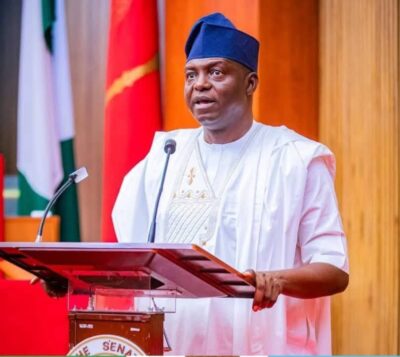
The National Chairman of the All Progressives Congress (APC) has dismissed allegations that the ruling party is bribing politicians to defect, describing the claims as opposition propaganda while defending President Bola Tinubu’s performance ahead of the 2027 general election.
During an interview with Channels Television journalist Seun, the APC chairman also explained why he believes Tinubu is far better than former Vice President Atiku Abubakar, citing their records in governance, privatisation, infrastructure development, tax reforms and electricity generation.
The chairman disclosed that after going on a retreat to plan, he returned to Maiduguri for another retreat with members of the APC National Working Committee, state chairmen and other key party stakeholders who would play important roles in the 2027 general election.
He said the meeting lasted three days in Maiduguri and focused on examining the party’s strengths, weaknesses and opportunities ahead of the election.
According to him, the party assessed its position and concluded that it was ready for the 2027 general election.
On Allegations of Bribing Politicians to Defect
During the interview, Seun questioned the chairman about allegations that the APC was offering governors ₦5 billion, senators ₦2 billion, and members of the House of Representatives and state Houses of Assembly ₦1 billion each to secure their defections.
The journalist also asked whether the chairman was offering money or other incentives to politicians joining the ruling party.
In response, the APC chairman dismissed the allegations, insisting that opposition parties were responsible for spreading the claims.
He argued that opposition parties had tried everything possible to win even a ward chairman from the APC but had failed to achieve that objective.
The chairman also challenged those making the allegations to provide evidence, questioning how the ruling party could allegedly pay ₦200 billion to each defecting governor without leaving a financial trail or causing a noticeable impact on the economy.
He said that if such enormous sums had been moved, the transactions would have been visible and the economy would have felt the impact.
According to him, opposition figures were making serious allegations without presenting evidence to support their claims.
He also accused opposition spokespersons of spreading incorrect information about the Federal Government’s student loan programme.
The chairman explained that the government pays students’ school fees in full, regardless of the amount, while also providing money for books every month. He said some opposition figures had wrongly assumed that ₦20,000 was the total amount given to students because they heard some beneficiaries discussing the money on air.
He accused them of failing to study the relevant documents before making public statements.
On Whether Defections Mean Nigerians Support Tinubu
Seun also questioned whether the movement of politicians into the APC showed that Nigerians genuinely supported Tinubu’s policies or whether politicians were simply joining the ruling party to protect their political careers.
The journalist argued that politicians could be seeking a safe haven rather than reflecting the wishes of ordinary Nigerians.
The APC chairman disagreed with the suggestion that politicians should be separated from other Nigerians, asking who qualified as a Nigerian and who had determined that defecting politicians did not support Tinubu.
When asked whether he had evidence that politicians were joining the APC because of the government’s policies, he answered in the affirmative.
He argued that Nigerians could listen to the statements made by defectors to understand their reasons for joining the ruling party.
Atiku’s Role in Privatisation Under Obasanjo
The APC chairman also criticised Atiku Abubakar’s record as vice president under former President Olusegun Obasanjo, particularly his role in the privatisation of public enterprises.
He said Atiku chaired the economic team from 1999 to 2003 and was involved in the privatisation of what he described as critical national infrastructure.
As examples, he cited a steel-related company in Akwa Ibom, which he said was built for $3.5 billion but sold for less than $130 million, and another steel company in Delta State, which he said was built for $1.5 billion but sold for $30 million.
The chairman argued that the difference between the original construction costs and the reported sale prices raised questions about the privatisation process.
When Seun asked whether Atiku should be held responsible for the outcomes, the APC chairman answered yes, insisting that Atiku chaired the privatisation committee.
He also cited Peugeot as another example, arguing that the company was producing vehicles before it was privatised but could no longer produce a single vehicle after the privatisation process.
The chairman used these examples to argue that Atiku’s record in government could not be compared with Tinubu’s.
Why He Says Tinubu Is Better Than Atiku
When asked directly how Tinubu was better than Atiku, the APC chairman declared that the president was far better, pointing to Tinubu’s record as governor of Lagos State and his current administration’s policies.
He said Lagos generated approximately ₦14 billion in annual revenue when Tinubu became governor, while the state now generates more than ₦1 trillion annually.
He also highlighted the establishment of institutions and the development of the Lagos Blue Line and Red Line rail projects, which he said were now operational.
The chairman further mentioned the Lagos State Traffic Management Authority (LASTMA), arguing that the institutions established under Tinubu helped strengthen the state’s administration.
Defending Tinubu’s Tax Reforms
The APC chairman also defended the Federal Government’s tax reforms, arguing that they were designed to reduce the tax burden on poor Nigerians and small businesses while increasing government revenue.
He said that before the reforms, people could face taxes on basic items and activities, including bicycles, radios, televisions, chickens taken to market and vegetables sold for income.
He argued that the new tax regime provides relief for low-income earners and small businesses.
According to his explanation, individuals earning less than ₦800,000 annually are exempt from personal income tax, while he also highlighted provisions relating to housing and rent relief.
He maintained that the reforms would allow small and medium-sized businesses to grow while bringing more people into the tax net and increasing government revenue without placing additional pressure on the poorest Nigerians.
Electricity Reforms and State Power Projects
The APC chairman also defended the government’s electricity reforms, explaining that the new system allows states and private investors to generate electricity, sell power to consumers and participate in transmission and distribution under the applicable arrangements.
He cited electricity projects in Bayelsa, Ondo, Ogun, Imo and Enugu, claiming that the states had commissioned or advanced their own power projects under the new opportunities created by the reforms.
He argued that these developments showed the difference between the current administration’s approach and previous governments.
The APC chairman maintained that Tinubu’s policies, including tax reforms, electricity reforms and infrastructure development, demonstrated why he believed the president was better positioned than Atiku.
His comments come as political parties and their leaders prepare for the 2027 general election, with the APC defending the growing number of defections into its ranks and dismissing allegations that financial incentives are behind the movement of politicians into the ruling party.