YOUR PHONE IS DIRTIER THAN A TOILET SEAT.
YOUR PHONE IS DIRTIER THAN A TOILET SEAT.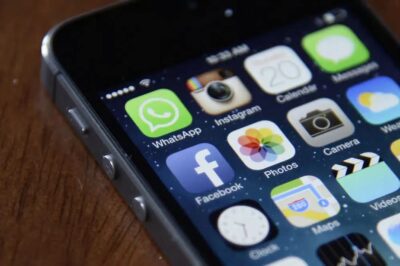
You wake up. You reach for your phone. You scroll. You take it to the bathroom. You scroll while you sit there. You wash your hands after, but you do not wash your phone. You go to the kitchen. You scroll while you eat. You put it on the pillow next to your face. You fall asleep with it in your hand.

You have just spent an entire day transferring bacteria from every surface you touched to your face, your mouth, and your bed.
And you think your toilet is the dirty thing in your house.
YOUR PHONE IS COVERED IN BACTERIA
This is not my opinion. This is documented science.
In 2017, students at the University of Arizona found that cell phones carry 10 times more bacteria than a toilet seat. The average phone had 17,000 bacterial gene copies on its surface .
A 2025 study published in the Journal of Infection and Public Health found that 94.5% of mobile phones were contaminated with bacteria including Staphylococcus aureus, E. coli, and Pseudomonas aeruginosa .
And a study of healthcare workers’ phones people who should know better found that over 90% of phones were contaminated with potentially pathogenic bacteria .
Your phone is not just dirty. It is dangerous.
WHERE THOSE BACTERIA COME FROM
Every time you touch your phone, you transfer whatever was on your hands.
· After the toilet. You washed your hands, but did you wash your phone? No. And you touched it before you washed your hands.
· After handling money. Money is one of the dirtiest things you touch. It carries bacteria from hundreds of hands.
· After opening a door. Door handles are a bacterial highway.
· After shaking hands. Every greeting is a bacterial exchange.
· After touching your face. You touch your face 23 times per hour. Then you touch your phone.
Your phone is the central hub of your personal bacterial network.
THE TOILET CONNECTION
And here is the part that will make you want to wash your hands right now.
If you take your phone to the toilet and you know you do you are exposing it to aerosolized bacteria that are released when you flush. A 2015 study found that flushing a toilet can send bacteria up to 10 inches above the seat . Those bacteria land on surfaces including your phone.
You are not just scrolling on the toilet. You are collecting.
THE HEALTH RISKS
Your phone can transmit:
· Skin infections; from Staphylococcus
· Gastrointestinal infections; from E. coli and Salmonella
· Respiratory infections; from Streptococcus
· Acne and skin irritation; from the bacteria and oils transferred from your hands to your face
And in households, where phones are often shared among family members passed from parent to child to grandparent the contamination spreads even faster.
One phone. One family. One bacterial colony.
WHAT YOU SHOULD ACTUALLY DO
1. Clean your phone every day.
Use a microfiber cloth. For deeper cleaning, use a 70% isopropyl alcohol wipe. Do not use bleach or harsh chemicals they damage the screen.
2. Do not take your phone to the toilet.
This is the hardest one. But it is the most important. Leave it outside.
3. Do not share your phone.
If you must share, clean it before and after.
4. Wash your hands after using your phone.
Especially before eating. Especially after being outside.
5. Do not put your phone on your pillow.
The bacteria from your hands will transfer to your face while you sleep.
6. Do not eat while scrolling.
You are transferring bacteria from your phone to your food to your mouth.
THE BOTTOM LINE
Your toilet seat is not the dirtiest thing in your house. Your phone is.
You clean your toilet. You clean your hands. But you never clean the thing you touch most the thing that touches your face, your mouth, and your bed.
10 times more bacteria than a toilet seat. 94.5% of phones contaminated. And you are touching it right now.
Clean your phone. Wash your hands. And leave your phone outside the toilet.
Because the next infection might come from the thing you cannot put down.
-Baby Doctor ❤️🩺
Disclaimer: This article is based on studies published in the Journal of Infection and Public Health, the University of Arizona, and the Journal of Applied Microbiology. Every claim is verifiable.