
Trump proposes fresh tariffs on China, EU, 12 other economies
Trump proposes fresh tariffs on China, EU, 12 other economies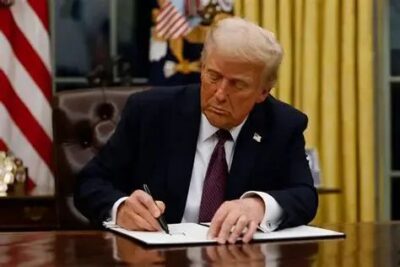
United States President Donald Trump has proposed a fresh round of tariffs targeting 14 major trading partners, including China, the European Union (EU), India and Japan, as Washington intensifies efforts to protect American industries from foreign competition.
The proposed measures were announced on Wednesday, November 25, by the Office of the United States Trade Representative (USTR), following an eight-month investigation into what the US government described as “structural excess capacity” in the manufacturing sectors of the targeted economies.
According to Washington, the countries concerned are using government subsidies and other industrial policies to encourage excessive production, resulting in an influx of relatively cheap goods into international markets and putting American manufacturers at a disadvantage.
The proposed tariffs are expected to affect a wide range of trading partners and could further heighten tensions in global trade relations if implemented.
China, EU face proposed higher tariffs
The 14 economies listed in the proposal are China, Bangladesh, Cambodia, the European Union, India, Indonesia, Japan, South Korea, Malaysia, Singapore, Switzerland, Taiwan, Thailand and Vietnam.
Mexico and Norway, which were also investigated, have been spared from the proposed measures for now.
China faces a proposed tariff rate of 20 per cent on most products. The additional duties would be imposed alongside tariffs introduced during Trump’s first administration, although they would not be added to more recent tariffs relating to forced labour.
A senior US official reportedly warned that the proposed rate could rise to 40 per cent if negotiations between Washington and Beijing break down.
For the European Union, the proposed tariff stands at 15 per cent, in line with an existing trade agreement between the United States and the bloc.
However, the USTR indicated that the rate could increase to as much as 20 per cent, depending on the outcome of the process.
Washington cites unfair trade practices
The proposed tariffs are being pursued under Section 301 of the US Trade Act of 1974, which empowers the American government to impose trade restrictions on countries found to engage in practices considered unfair or harmful to US commercial interests.
The Trump administration argues that some foreign governments support domestic manufacturers through subsidies and industrial policies that encourage production beyond domestic demand.
Washington maintains that such practices allow foreign producers to sell goods at lower prices in international markets, creating competitive difficulties for American businesses.
The investigation forms part of Trump’s broader trade policy, which seeks to strengthen domestic manufacturing and address what his administration considers unfair trading practices by major economic partners.
Public hearing scheduled for January 2027
Despite the announcement, the proposed tariffs have not yet been finalised and remain subject to a public consultation process.
According to the USTR, interested parties and affected businesses have until January 5, 2027, to submit comments on the proposals.
A public hearing is also scheduled to commence on January 25, 2027, after which the US government will consider submissions before deciding whether to implement the measures.
The consultation process could provide affected countries, businesses and industry groups an opportunity to challenge the findings of the investigation or present arguments against the proposed duties.
China rejects US allegations
Meanwhile, China has rejected Washington’s claims that its industrial policies have created structural excess capacity in international markets.
Chinese Foreign Ministry spokesman Guo Jiakun described the allegation as a false issue and opposed the use of the matter as justification for political manipulation.
Beijing’s rejection signals the possibility of further disagreements between the world’s two largest economies over trade policies, industrial production and market access.
The proposed tariffs could also have wider implications for global supply chains, international commerce and businesses that depend on trade between the United States and the targeted economies.
If implemented, the measures would add another layer of uncertainty to international trade relations, particularly for manufacturers and exporters operating across the affected markets.