
Tinubu Is Not Jonathan, He Cannot Oversee An Election He Will Lose’: Farotimi Says Only A Revolution Will Save Nigeria
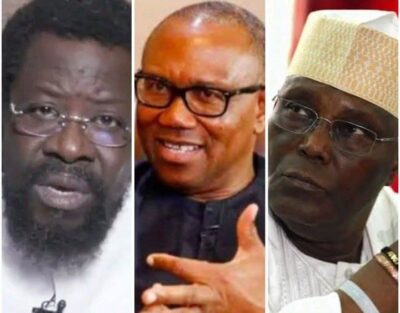 ‘Tinubu Is Not Jonathan, He Cannot Oversee An Election He Will Lose’: Farotimi Says Only A Revolution Will Save Nigeria
He also expressed doubts about the ability of Nigerian voters to determine political outcomes through elections, alleging that the judiciary would ultimately endorse electoral outcomes unless citizens take action.
Human rights lawyer and activist, Dele Farotimi, has warned Nigerians ahead of the 2027 general elections that President Bola Ahmed Tinubu cannot preside over an election he would lose, saying that Nigeria is gradually sliding into dictatorship under the guise of democracy.
Farotimi, while addressing Nigerians on the political situation in the country, said the 2027 elections could not be relied upon to produce change unless citizens organise themselves and confront what he described as a deeply entrenched political system.
According to him, Tinubu is different from former President Goodluck Jonathan, who conceded defeat after losing the 2015 presidential election.
“Tinubu is not Jonathan, he is incapable of presiding over an election he will lose, and he has neither a pathway to victory, nor the narrative to explain the outcome he desires. If it were not so tragic, it’d be comedic; feudalism has birthed a monster,” Farotimi said.
He also expressed doubts about the ability of Nigerian voters to determine political outcomes through elections, alleging that the judiciary would ultimately endorse electoral outcomes unless citizens take action.
“Your votes do not count and the judiciary will endorse it, unless me and you decide to do something about it, because we are sleeping while a dictatorship is being installed in our country democratically,” he said.
Farotimi said Nigerians must confront the reality of the country’s political situation and develop a new political vision capable of mobilising citizens beyond conventional party politics.
“I believe that it is time to tell ourselves the truth. The only thing that can be done to Nigeria is to restructure it, reimagine it, find a way to get together a critical mass of its victims, sell them a new version of this country, draw a line in the sand, and confront the system,” he said.
The lawyer said he had consistently argued that only a revolution could fundamentally transform Nigeria.
“One thing I have never been shy about is to tell you what it will take to save Nigeria. And this is my own belief. It will take a revolution to save Nigeria,” Farotimi said.
He, however, noted that such a revolution could potentially happen through the ballot box, although he remained unconvinced that enough Nigerians had been persuaded to vote based on a clear political vision rather than individual personalities.
“That revolution might come through the ballot. I’m not convinced, but insufficient numbers are persuaded to believe in the vision, not the person,” he said.
Farotimi argued that political movements seeking to transform Nigeria must put a clear vision for the country before voters rather than focusing solely on personalities and conventional electoral politics.
“Vision for a new Nigeria placed on the ballot. If you don’t place the vision for a new Nigeria on the ballot, you cannot mobilise the people to stand behind their votes,” he said.
He further argued that Nigeria’s political discourse had been deliberately reduced to conventional politics, making it difficult for citizens to rally around a transformative national agenda.
“That is why the distraction has been completely about politics. When a leadership emerges that understands the place of visioning and places that vision on the ballot, mobilizes the Nigerian people behind it, we may have a democratic revolution,” Farotimi said.
His comments come as political parties and opposition figures intensify preparations for the 2027 elections, with debates over electoral credibility, the independence of democratic institutions, political restructuring and the ability of Nigerians to effect political change through the ballot box becoming increasingly prominent.