South-East Is Not Our Enemy’ — Kwankwaso Calls For Stronger North–Igbo Alliance Ahead Of 2027 Elections
‘South-East Is Not Our Enemy’ — Kwankwaso Calls For Stronger North–Igbo Alliance Ahead Of 2027 Elections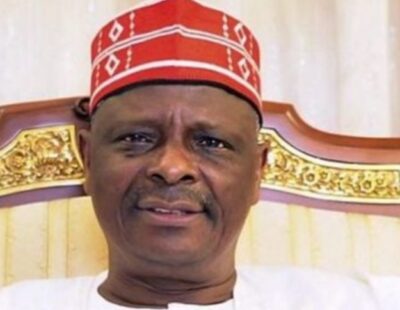
Kwankwaso insisted that the North and the South-East have a long history of political cooperation that should be revived rather than abandoned, particularly ahead of the 2027 general elections.
Former Kano State governor and Vice-presidential candidate of the Nigeria Democratic Congress (NDC), Rabiu Musa Kwankwaso, has said that the South-East region is neither Nigerian nor North’s enemy, urging Nigerians to move beyond the divisions created by the civil war.
Kwankwaso insisted that the North and the South-East have a long history of political cooperation that should be revived rather than abandoned, particularly ahead of the 2027 general elections.
Speaking during an interview with BBC Igbo published on Wednesday, the former governor argued that reconciliation, forgiveness, and inclusion were the principles that guided Nigeria’s political leaders after the civil war.
He stressed that the country cannot afford to be driven by ethnic and regional mistrust, noting that successive generations of northern political leaders had recognised the importance of working closely with the South-East.
Kwankwaso, who described the South-East region as a longstanding ally of the North, said, “We have to forgive ourselves. We have to work together as a family. South-east has been our ally, our friends, over the years.”
The former Minister of Defence pointed to the First Republic, noting that the Northern People’s Congress (NPC) entered into a political alliance with the National Council of Nigerian Citizens (NCNC), led by Nigeria’s first President, Nnamdi Azikiwe.
According to him, the collaboration between the two regions demonstrated that political leaders at the time placed national unity above ethnic interests.
“During our own time, or the time of our fathers, grandfathers in politics, in the first republic, you could see the NPC then, which is mainly a northern political party, had an alliance with the NCNC, headed by Nnamdi Azikiwe,” he said.
Kwankwaso also recalled that after military rule ended in the late 1970s, political leaders deliberately embraced reconciliation by integrating the South-East into national leadership despite the wounds left by the civil war.
He said leaders of the National Party of Nigeria (NPN), including former President Shehu Shagari, worked closely with politicians from the South-East and eventually supported the emergence of the late Dr. Alex Ekwueme as Nigeria’s Vice President.
“The civil war was finished in 1970. In 1978 and 1979, when democracy came back, the first thing they said was, ‘Look, they are not our enemies. Let’s prove to them. Let’s bring them. Let’s work together,'” Kwankwaso stated.
“Our leaders of the first republic worked together with them, and that’s how they brought Alex Ekwueme to be the vice president.”
Reflecting on his personal relationship with Ekwueme, Kwankwaso described the late statesman as a trusted friend of the North, adding that he attended his funeral in Oko, Anambra State.
“I went to Oko, the hometown. I was there during Alex Ekwueme’s burial. Throughout his life, he was our friend. It’s only that democracy was truncated,” he said.
Kwankwaso further cited the return of former Biafran leader, Chukwuemeka Odumegwu Ojukwu, from exile as another example of post-war reconciliation.
He said northern political leaders welcomed Ojukwu back into the country and allowed him to fully participate in democratic politics despite his role during the civil war.
“The NPN, a mainly northern party, had to invite Ojukwu to come back. He came back, contested for a Senate seat, and lost,” he said.
“But despite the fact that he was the leader of Biafra at that particular time, our leaders decided to forgive themselves and forge ahead.”
Calling for national unity, Kwankwaso warned against politics built on religion, ethnicity or regional identity, insisting that no group could successfully govern Nigeria in isolation.
“We cannot be in the same country and start fighting. We have to have the spirit of forgiveness, whoever offended the other. It depends on who is giving the story,” he said.
“We are so happy that we in the north have decided to go back to history to work with the south-east. That’s not to say we are fighting the south-west or any zone in this country. No, we are all friends.
“You can’t play politics in this country alone, politics of Muslims, or Christians, or north, or south, not at this level.”