
Pope Francis’ Posthumous Diary Reveals Two-Year ‘Spir!tual Crisis, Encounters With The Devil’
Pope Francis’ Posthumous Diary Reveals Two-Year ‘Spiritual Crisis, Encounters With The Devil’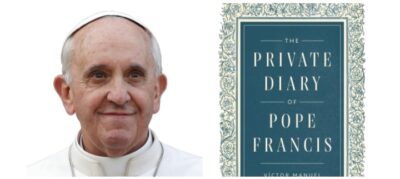
The diary is based on handwritten notes and reflections Jorge Mario Bergoglio scribbled in a black-covered planner from December 1992 — six months after he was appointed auxiliary bishop of Buenos Aires — up until August 2024, less than a year before his death.
A private diary of Pope Francis, published on Tuesday in 94 countries and five languages, has revealed a two-year “spiritual crisis” and startling encounters with the devil during his 12-year papacy, offering a rare and deeply personal glimpse into the inner life of the late Argentine pontiff.
The 141-page book, published in English by Penguin Random House, was curated by Argentine theologian Cardinal Víctor Manuel Fernández, a close friend of the late Pope. Francis appointed Fernández as prefect of the Vatican’s Dicastery for the Doctrine of the Faith in 2023.
The diary is based on handwritten notes and reflections Jorge Mario Bergoglio scribbled in a black-covered planner from December 1992 — six months after he was appointed auxiliary bishop of Buenos Aires — up until August 2024, less than a year before his death.
According to Cardinal Fernández, the original diary contains 86 pages of entries from before Francis’ election to the papacy, and 55 pages written afterward, in which he recounts his “feelings, moods, joys, weariness, crises, and most personal and sincere concerns.”
“The most confidential parts of the diary are written in code, using symbols that we cannot decipher,” the cardinal noted, as quoted by America Magazine report, adding that some sections were kept locked away after Francis’ death until Pope Leo XIV granted him access.
The diary reveals Bergoglio’s profound reflections on the spiritual realm, including several striking encounters with the devil, which he described as physically present.
“I don’t doubt that he was physically present,” Francis wrote.
He recounted two encounters while serving as Archbishop of Buenos Aires: the first from his car, where he saw “menacing and, at the same time, seductive eyes,” and the second during a celebration at a parish chapel, where the devil appeared with “eyes of fire” and a gaze “like flames of fire.”
A third encounter occurred “a few days” after his return from Chile in 2018. “I was in a meeting. I saw him and heard his voice, triumphant, possessing everything: ‘Now I’ve gotten everything I wanted,’” the late Pope wrote, adding that he could never forget the “powerful raspiness of his voice.”
The diary also sheds light on Francis’ turmoil during the 2018 sexual abuse crisis in Chile, where he initially defended Bishop Juan Barros, who was accused of covering up abuse. Realizing his error, Francis dispatched investigators to Chile.
Investigative reporting service
Following the arrival of the investigators, Francis wrote of experiencing a sensation of “fear, panic, fright that the devil would take revenge.”
Months later, on June 7, 2018, he penned a harrowing entry: “Last night I saw the entrance to Hell. Pagan seduction in full force. I peeked in to look a little and it terrified me… I grabbed the rosary as a weapon.”
Cardinal Fernández noted that after this vision, Francis suffered “intense shame and pain caused by the abuse of minors in the church.”
Despite his immense global influence, the diary portrays a man who remained deeply humble. He lamented his own flaws, referring to “the proud, self-sufficient, cynical, self-deceptive Jorge,” and continually sought refuge in God’s mercy.
He was also a man of rigorous discipline, waking at 4:00 a.m. to read the Bible, keeping a copy by his nightstand for midnight reading.
Cardinal Fernández highlighted the Pope’s “heroism in pastoral charity,” recalling an instance in 2018 when Francis called the cardinal’s wife, Elisabetta Pique, an hour after her plane landed in Buenos Aires to express his condolences over the death of her father.
The diary reveals a life deeply influenced by Ignatian spirituality and popular piety. His vocation, he wrote, was triggered by a quasi-mystical experience of God’s mercy on September 21, 1953, the feast of St. Matthew, when he was 16. That experience inspired his episcopal motto, “Miserando atque eligendo” (“By having mercy and by choosing”).
He also detailed his deep devotion to Our Lady of Luján, St. Joseph, and St. Thérèse of Lisieux, revealing that his requests to St. Joseph—placed as written petitions under a statue of the “sleeping” saint—were mostly answered. Similarly, his intercessions to St. Thérèse often resulted in the arrival of a white rose, which he took as a sign that his prayers were granted.
According to the book’s publisher, the text is divided into three parts: Bergoglio’s entries as interpreted by Cardinal Fernández; commentary on the artwork in his study at Domus Santa Marta; and an examination of the underlining in four books he had sent from Buenos Aires after becoming Pope.
Cardinal Fernández revealed that Pope Leo XIV requested the removal of specific sentences from the draft that mentioned “confusing things about living persons.”