
Nigerian Man Falade, Owner Of US Building Which C0llapsed, K!lled Eight, Owes Over $450,000 In Fines, Taxes, Water Bills
Nigerian Man Falade, Owner Of US Building Which Collapsed, Killed Eight, Owes Over $450,000 In Fines, Taxes, Water Bills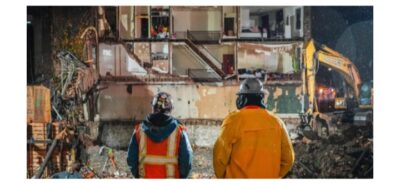
According to a report by The New York Post, Falade, who has appeared on the New York City Public Advocate’s annual “Worst Landlords Watchlist” six times, accumulated most of the outstanding debts through the three-storey building at 1321 Flatbush Avenue, which collapsed on Wednesday.

Olufemi Falade, a Nigerian man who owns the Brooklyn building in New York City that collapsed onto an adjoining construction site, killing eight people, has been exposed as a notorious landlord owing more than $450,000 in outstanding fines, unpaid taxes and water bills. Nigerian news analysis
According to a report by The New York Post, Falade, who has appeared on the New York City Public Advocate’s annual “Worst Landlords Watchlist” six times, accumulated most of the outstanding debts through the three-storey building at 1321 Flatbush Avenue, which collapsed on Wednesday.
A review of New York City records reportedly showed that Falade owes approximately $170,000 in fines imposed by the Department of Buildings (DOB) in 2019 over improperly displayed signs.
He also owes $114,945 in unpaid water bills accumulated over several years and another $113,526 in outstanding property taxes dating back to 2021.
Beyond his debts to the city, Falade reportedly owes the United States Internal Revenue Service (IRS) $49,269 in unpaid personal federal income taxes, according to a 2010 tax lien.
He also owes New York State an additional $4316 in personal income taxes.
The New York Post previously reported that the city’s Department of Buildings approved deep excavation plans for a construction site at 2625 Bedford Avenue in March, despite concerns that the plans lacked crucial structural support that could have helped prevent the neighbouring building from collapsing.
The developer had planned to construct a three-storey, 25,000-square-foot mixed-use building on the site.
Discover more
Journalism training courses
news
News
Track Exec Orders
Citizen journalism platform
According to records, the approved plans contained extensive and sophisticated shoring and bracing arrangements along most parts of the construction lot, including the backyard of Falade’s property at 1321 Flatbush Avenue.
However, the blueprints allegedly failed to provide hard structural reinforcements immediately alongside the building that eventually collapsed.
Falade’s history with housing violations and regulatory authorities reportedly stretches back several years.
Discover more
Access Services
Check Voting Info
Political commentary service
Journalist
Journalism
Apart from repeatedly appearing on the city’s Worst Landlords Watchlist, he was sentenced to 12 days in jail in 2006 and fined an additional $50,000 for civil contempt after failing to address more than 1,800 violations across 12 Brooklyn properties he owned at the time.
The violations reportedly included vermin infestations, exposed electrical wires and leaking pipes.
Records from New York City’s Department of Housing Preservation and Development (HPD) further showed that the collapsed Flatbush Avenue property had 98 outstanding violations before the deadly incident.
The violations included a leaking roof, defective doors, bedbug infestations and exposed electrical wiring.
Some of the complaints and violations concerning the leaking roof reportedly dated as far back as 1976, with further violations continuing to be issued through earlier this year.
The 96-year-old building was purchased by Falade in 1999 for an undisclosed amount through a company identified as Femi Realty Corp., according to city property records.
In November 2024, he transferred ownership of the property to another company under his control, Isolag Realty Corp.
Records reportedly showed that Falade signed the transfer documents as both the seller and buyer, with no money exchanged in the transaction.
The property transfer has also raised questions about the use of corporate entities by landlords with outstanding regulatory and financial obligations.
According to real estate legal experts, transferring properties between companies controlled by the same individuals is a practice sometimes used by rogue landlords to evade fines and tax liabilities, although such transactions do not automatically extinguish existing debts.
Commenting on the situation, Massimo D’Angelo, a longtime real estate attorney with Blank Rome, called for better coordination between New York City’s housing and building regulatory agencies to strengthen enforcement against landlords with repeated safety violations.
“There has to be unity between HPD and DOB files, and particularly for structural oversight violations,” D’Angelo said.
He also questioned the effectiveness of the city’s enforcement measures, particularly in cases involving landlords with long histories of violating housing regulations.
“This guy was rotting in jail for 12 days and it didn’t cure the problem. The city’s remedies are too slow,” he said.
Meanwhile, Falade reportedly failed to respond to messages seeking his comments on the outstanding debts, his history of housing violations and the circumstances surrounding the collapse.
