
Nigerian Air Force Air Cr∆shes Have K!lled At Least 294 Since 1980, Including 25 In Ondo
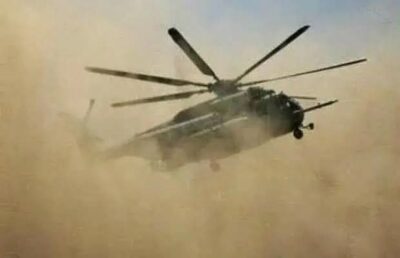
Nigerian Air Force Air Crashes Have Killed At Least 294 Since 1980, Including 25 In Ondo
The accident, described by military sources as one of the worst air disasters in recent years, has once more exposed the troubling safety record of the nation’s military aviation fleet.

Nigeria was again thrown into mourning on Monday after a Nigerian Air Force (NAF) aircraft carrying 25 military personnel and civilians crashed in Ondo State, killing all on board.
The accident, described by military sources as one of the worst air disasters in recent years, has once more exposed the troubling safety record of the nation’s military aviation fleet.
SaharaReporters had exclusively reported that the ill-fated aircraft had been worked on a day before the incident.
The nature of the work, which sources described as unscheduled rectification at the 81 Air Maritime Group base in Benin City, is now central to the investigation ordered by the Chief of Air Staff, Air Marshal Sunday Kelvin Aneke.
The aircraft was en route from Benin, Edo State, to Lagos when air traffic controllers lost radio contact at about 9:13 a.m. It crashed 500 metres east of the Naval Base in Igbokoda, Ilaje Local Government Area, sinking deep into swampy terrain.
The difficult terrain has since required swamp buggies deployed by the Ondo State Government and the National Emergency Management Agency (NEMA) to recover bodies.
Aviation Minister Festus Keyamo initially announced that 32 persons were on board, but the Nigerian Air Force, in a statement on Tuesday, October 6, by its Director of Public Relations and Information, Air Commodore Ehimen Ejodame, corrected the figure to 25, five crew members and 20 passengers with no survivors.
President Bola Tinubu has declared three days of national mourning, with flags at half-mast nationwide, describing the loss as a painful reminder of the sacrifices of military personnel.
Full Manifest of NAF 931
The crew members on board were Squadron Leader M.I. Aburime, Flight Captain; Squadron Leader A.P. Man-Ugwueje, Co-pilot; Flight Lieutenant I.S. Bako, Co-pilot; Warrant Officer Abubakar A., Aircraft Technician; and Corporal Uguru H.C., Aircraft Technician.
The passengers were Flight Lieutenant T.L. Lazarus; Flight Lieutenant M. Akinloye; Flying Officer I.M. Adeshina; Master Warrant Officer Onwuka F.; Master Warrant Officer Matini B.A.; Warrant Officer Nuhu F.S.; Flight Sergeant James R.B.; Flight Sergeant Mohammed A.I.; Sergeant Ani A.E.; Sergeant Izibenikien S.I.; Sergeant Alafuka C.; Sergeant Mbadugha A.N.; Lance Corporal Ugwuba F.C.; Lance Corporal Eledan G.E.; and six civilians – Mrs Ezeh Nneka, Godstmine Tarabina, Joy Micheal, Sunday Micheal, Ukeme David and Gideon Omotola.
SaharaReporters traces the history of major military air crashes that have shaped the force.
The Deadliest: 1992 Ejigbo C-130 Hercules Disaster
The worst remains the September 26, 1992, Lockheed C-130H Hercules (NAF 911) disaster. The aircraft took off from Murtala Muhammed International Airport, Lagos, for Kaduna. Three minutes after takeoff, it suffered multiple engine failure and plunged into the Ejigbo/Oke-Afa canal swamp.
All 159 people on board died. The victims were 151 Nigerian Army officers, mostly majors who had just returned from ECOMOG peacekeeping operations in Liberia and students of the Armed Forces Command and Staff College, Jaji, plus five Ghanaians, one Tanzanian, one Ugandan and one Zimbabwean officer. There were no survivors. It remains Nigeria’s deadliest military air disaster.
1980-2006: The Early Trail
Long before Ejigbo, the signs were there. On May 26, 1980, a Fokker F27 carrying a Nigerian delegation of government officials, army officers and journalists to São Tomé and Principe crashed at Forcados in Delta State, killing all 30 people on board.
The late 1990s saw a spate of Dornier crashes. On February 24, 1997, a Dornier Do 128-6 Skyservant (NAF-017) on a training flight crashed three kilometres from the Kaduna Airport runway, killing three officers.
On September 12, 1997, another Dornier 228-212 crashed with 10 people on board, killing all of them.
On October 26, 2000, another Dornier Do 128 crashed on approach to Warri Airport in Delta State. All six people on board died.
Then came the Benue crash that wiped out the Army’s top brass. On September 17, 2006, an 18-seater Dornier 228 transport carrying 15 senior officers and three crew members crashed at Vandeikya, Benue State, while en route to a retreat at Obudu Cattle Ranch. Ten Generals were on board. Fifteen people died and three survived. It was the highest loss of senior officers in a single day since the civil war.
2010-2019: From Mock Drills To Boko Haram War
On March 12, 2010, an Alenia G-222 (NAF 950) carrying emergency workers on a mock disaster response exercise overshot the runway at Port Harcourt International Airport. Ten of the 53 people on board were injured.
On August 28, 2015, a Dornier DO228-212 (NAF030) crashed into a building inside Ribadu Cantonment shortly after takeoff from Kaduna Military Airfield, killing all seven on board, comprising two pilots, two engineers and three passengers.
On September 28, 2018, two F-7Ni jets collided over Katampe Hill, Abuja, while rehearsing for Nigeria’s 58th Independence Day celebration. One pilot died.
On January 2, 2019, an Mi-35M attack helicopter supporting troops fighting Boko Haram in Damasak, Borno State, crashed, killing all five crew members on board.
2021: Nigeria’s Blackest Year In The Air
2021 was the bloodiest year for the NAF in recent memory, with three crashes in three months.
First, on February 21, 2021, a Beechcraft King Air B350i aircraft suffered engine failure shortly after takeoff from Abuja. It was heading to Minna, Niger State, to conduct aerial surveillance ahead of a mission to rescue abducted Kagara schoolgirls. It crashed while trying to return to Nnamdi Azikiwe International Airport, killing all seven personnel.
Then, on March 31, 2021, an Alpha Jet disappeared over Sambisa Forest, Borno, while on reconnaissance. Both pilots, Flight Lieutenant Chapele Ebiakpo and Flight Lieutenant John Abolarinwa were killed. The wreckage was found a year later in Bama.
The most shocking was on May 21, 2021. A Beechcraft 350 Super King Air (NAF203) crashed in bad weather near Kaduna International Airport, killing Chief of Army Staff, Lieutenant General Ibrahim Attahiru and 10 other senior officers. Attahiru had been appointed COAS just four months earlier.
Two months later, on July 18, 2021, bandits shot down an Alpha Jet over Zamfara. Pilot Flight Lieutenant Abayomi Dairo ejected and trekked for hours before being rescued, in the first confirmed downing of a NAF jet by bandits.
2022 To Date: The Trend Continues
Between 2022 and 2023, the Air Force recorded at least four more crashes, according to aviation data seen by SaharaReporters. A Super Mushshak trainer crashed in Kaduna, killing two pilots in 2022. An FT-7NI trainer crashed in Makurdi in 2023. An Mi-171 helicopter on casualty evacuation crashed at Chukuba, Niger State, killing 11 personnel. An Mi-35P helicopter crashed after takeoff in Port Harcourt.
In total, between 2015 and 2023 alone, the Nigerian Air Force suffered about 14 separate air incidents,destroying about 15 aircraft and killing over 35 personnel.
The Cumulative Death Toll
The scale of the tragedy becomes clearer when the documented crashes are tallied. SaharaReporters’ records show that peacetime crashes involving Nigerian military aircraft have killed at least 294 military personnel and civilians. The toll includes 30 deaths in Forcados in 1980; 159 in Ejigbo in 1992; 13 in two Dornier crashes in 1997; six in Warri in 2000; 15 in Benue in 2006; seven in Kaduna in 2015; one in an Abuja collision in 2018; five in Damasak in 2019; 20 in three crashes in Abuja, Borno and Kaduna in 2021; 13 in trainer and helicopter crashes between 2022 and 2023; and 25 in Ondo.
Why Do Military Aircraft Keep Falling?
Military sources who spoke to SaharaReporters point to the same three issues for 40 years: an aging fleet procured in the 1970s and 80s without a reliable spare parts supply chain, inadequate maintenance infrastructure, and zero public accountability.
Unlike civilian aviation accidents, which are investigated by the Nigerian Safety Investigation Bureau (NSIB), military crash reports are classified. Black-box data are not made public, and no officer appears to have been publicly sanctioned for negligence in connection with such a crash.