Nigeria Moves Closer to Receiving 12 US-Made AH-1Z Viper Attack Helicopters
Nigeria Moves Closer to Receiving 12 US-Made AH-1Z Viper Attack Helicopters
Nigeria is moving closer to adding 12 American-made AH-1Z Viper attack helicopters to its military fleet, with production of the aircraft now underway in the United States as Abuja seeks to strengthen its capacity to confront terrorism, insurgency and other armed security threats across the country. The programme represents one of Nigeria’s most significant recent investments in specialised attack-helicopter capability.

The latest development followed the start of production at Bell Textron’s assembly facility in Amarillo, Texas, in September 2026. A Nigerian Air Force delegation led by Chief of the Air Staff, Air Marshal Sunday Kelvin Aneke, visited the facility for a ceremony marking production of the first aircraft. Bell says all 12 helicopters are expected to complete production by early 2029.
The United States Mission in Nigeria subsequently highlighted the programme as part of expanding security cooperation between Washington and Abuja. It said the planned acquisition demonstrates the two countries’ commitment to strengthening Nigeria’s defence capabilities and addressing existing and emerging threats, while supporting wider peace and security in the region.
Although recent announcements have brought renewed attention to the helicopters, the acquisition is not a newly negotiated deal. The process dates back several years. In April 2022, the US State Department approved a possible Foreign Military Sale to Nigeria covering 12 AH-1Z attack helicopters and associated equipment, with the entire proposed package carrying an estimated value of $997 million.
That figure covers considerably more than the 12 aircraft themselves. The US notification included 28 T700-GE-401C engines, with 24 intended for installation and four as spares, as well as 2,000 Advanced Precision Kill Weapon System guidance sections. The package also included targeting systems, electronic warfare equipment, night-vision equipment, training, spare parts, technical support and other equipment required to operate and sustain the fleet.
Bell was subsequently awarded a contract connected with manufacturing and delivering the aircraft. The company confirmed this month that production of Nigeria’s first Viper had formally begun under the US Foreign Military Sales programme. Bell will also provide engineering, programme-management and logistics support associated with the aircraft.
During the Texas ceremony, members of the Nigerian delegation inspected the production line and signed the frame of the first aircraft being manufactured for the Nigerian Air Force. Air Commodore Ehimen Ejodame, the Air Force spokesperson, said the Viper would play an important role in strengthening Nigeria’s counterterrorism and counterinsurgency operations and improving the military’s ability to protect civilians.
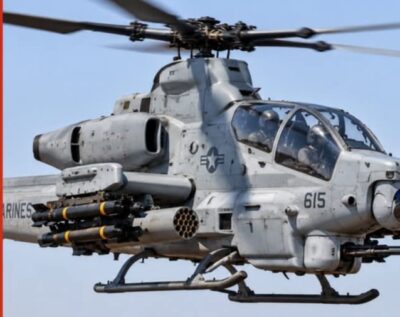
The AH-1Z Viper is a dedicated attack helicopter developed by Bell and operated by the United States Marine Corps. It is designed for missions including close air support, armed reconnaissance, escort and attacks against ground targets. Its targeting equipment and ability to employ guided and unguided weapons could provide Nigerian forces with additional options when supporting troops operating in difficult terrain.
For Nigeria, the acquisition comes as security forces continue confronting several distinct threats. Military operations remain active against jihadist groups in the North-East, while armed groups commonly described as bandits have carried out killings, kidnappings and attacks on rural communities across parts of the North-West and North-Central regions. Other areas face separate security challenges, creating sustained demands on military personnel and equipment.
The helicopters are therefore expected to complement rather than replace Nigeria’s existing combat aircraft. The Nigerian Air Force already operates the A-29 Super Tucano, another major platform obtained from the United States. Twelve Super Tucanos were acquired under a separate deal approved years before the Viper programme and have been deployed as part of Nigeria’s counterterrorism capabilities.
The Vipers could provide a different form of air support because helicopters can operate more closely with troops on the ground and perform missions that differ from those assigned to fixed-wing combat aircraft. However, the Nigerian Air Force itself has emphasised that obtaining sophisticated equipment must translate into operational effectiveness rather than simply increasing the number of aircraft in its inventory.
That distinction is important for Nigerians hoping new military equipment will produce improvements in security. Attack helicopters can provide surveillance, fire support and rapid responses during military operations, but they cannot independently resolve insecurity. Their effectiveness will depend on intelligence, trained crews, maintenance, ammunition, logistics and coordination between air and ground forces.
Nigeria will also have to sustain the aircraft after they enter service. The acquisition programme includes training and logistical support, while Nigerian personnel have previously engaged US counterparts to study the operation and maintenance of the AH-1Z. In June 2025, Nigerian Air Force officials participated in a programme-management review in California and visited US Marine Corps units operating the Viper to examine maintenance, logistics and operational practices.
For communities repeatedly affected by armed violence, the practical importance of the acquisition will ultimately be measured by whether improved military capabilities contribute to safer roads, farms and settlements. Rural communities in several parts of Nigeria continue to face kidnappings and attacks, making the government’s ability to convert defence spending into measurable improvements in civilian security an important public concern.
The programme also represents a further deepening of defence ties between Nigeria and the United States. Washington has supported Nigerian military programmes through aircraft sales, training, technical assistance and other forms of security cooperation. The Viper project brings another advanced American combat platform into the Nigerian Air Force and requires continued cooperation throughout production, training, delivery and long-term maintenance.
The helicopters will not arrive simultaneously with the announcement that production has begun. Manufacturing, testing, training and other stages remain before the aircraft can become operational in Nigeria. US military programme officials say production of the 12-aircraft fleet is projected to be completed in early 2029.
The start of production nevertheless marks a significant transition from years of approvals, negotiations and programme planning to the physical construction of the aircraft. Once delivered and inducted, the 12 AH-1Z Vipers are expected to become an important part of Nigeria’s attack-helicopter fleet.
For Nigeria, however, the larger test will come after delivery. The acquisition gives the military a potentially powerful additional tool, but its effect on the country’s security situation will depend on how effectively the helicopters are maintained, deployed and integrated with intelligence and ground operations while protecting civilians during combat missions.