New Iran supreme Leader, Mojtaba Khamenei Reportedly Absent at Allegiance Rally as Supporters Pledge Loyalty to His Portrait
New Iran supreme Leader, Mojtaba Khamenei Reportedly Absent at Allegiance Rally as Supporters Pledge Loyalty to His Portrait
Iran’s newly appointed Supreme Leader, Mojtaba Khamenei, has reportedly sparked widespread attention after failing to appear in person at a major allegiance ceremony held in Tehran.
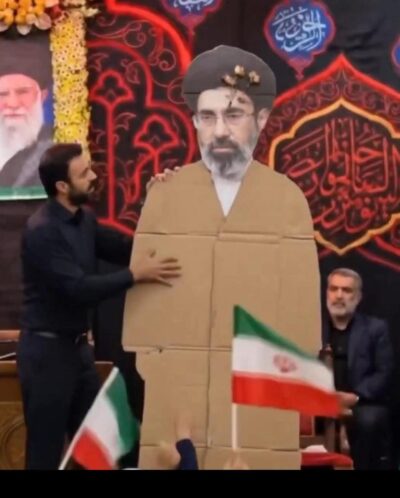
The rally, organized by the powerful Islamic Revolutionary Guard Corps (IRGC), was meant to demonstrate public loyalty and support following his emergence as Iran’s new supreme authority. However, instead of appearing physically before supporters, a life-size cardboard cutout of Mojtaba Khamenei, alongside several framed portraits, was placed on display during the event.
According to reports, attendees at the gathering pledged their allegiance to the portrait and cutout, chanting slogans of support and affirming loyalty to the new leader despite his absence.
Sources familiar with the situation say Mojtaba Khamenei did not attend the ceremony due to security concerns, as tensions across the Middle East continue to escalate. Iranian authorities are reportedly taking extra precautions to protect key figures within the country’s leadership amid fears of potential threats.
The unusual scene of supporters pledging loyalty to a cardboard representation has quickly gone viral across social media platforms, with observers around the world reacting with surprise and debate. While some supporters described the event as a symbolic gesture of unity and loyalty, critics questioned the optics of a leadership ceremony where the central figure was physically absent.
Mojtaba Khamenei, the son of longtime Iranian leader Ali Khamenei, has long been considered an influential figure within Iran’s political and religious establishment. Over the years, analysts have suggested that he wielded considerable behind-the-scenes power, particularly within networks connected to the Revolutionary Guard.
His reported elevation to the country’s highest leadership role marks a significant moment in Iran’s political trajectory, as it would represent the first time the position effectively passes from father to son since the establishment of the Islamic Republic.
As regional tensions persist and global attention remains fixed on Iran’s leadership transition, questions continue to swirl around Mojtaba Khamenei’s public visibility, security arrangements, and the broader implications for the country’s political future.