Jihadist Bandits Account For More Than 70% Violent Att∆cks On Nigerian Communities, Worship Places In 2025 – Report
Jihadist Bandits Account For More Than 70% Violent Attacks On Nigerian Communities, Worship Places In 2025 – Report
The report warned that the scale and coordination of the violence amounted to a grave threat to national unity and constitutional order.

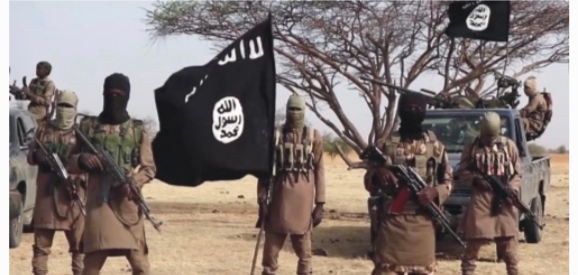
A new report by the International Society for Civil Liberties and Rule of Law (InterSociety) has revealed that jihadist Fulani bandits and herdsmen were responsible for more than 70 per cent of violent attacks on Christian communities and places of worship across Nigeria in 2025.
The report warned that the scale and coordination of the violence amounted to a grave threat to national unity and constitutional order.
In the document, the civil liberties organisation noted that mass killings of Nigerians and the destruction of churches have been “systematic, well-coordinated and clearly known to leaders of Nigeria since June 2015.”
“By our collected statistics and other pieces of evidence, it is our finding that leaders of Nigeria since June 2015 have gravely compromised the country’s sovereignty, threatened its unity and undermined the religious and constitutional secularism upon which Nigeria was founded,” the report stated.
InterSociety accused successive administrations of presiding over what it described as an “ethno-religiously polarised state of nature,” alleging that violence against Christian communities has been particularly severe in the Middle Belt, the North-East, Southern Kaduna, Kebbi, Katsina, parts of Ondo State, and Eha-Amufu in Enugu State.
According to the group, jihadist Fulani herdsmen and bandits have emerged as “the most widespread and atrocious and government-friendly Islamic terror groups in Nigeria,” allegedly driving attacks framed around “convert to Islam or die” campaigns.
The organisation asserted that these groups accounted for more than 70 per cent of egregious attacks on Christians and their sacred places of worship in 2025.
The report further alleged that the violence followed a structured pattern, claiming that attacks were executed through “structural, cultural and physical violence dimensions.”
It cited controversial government policies such as RUGA settlements, pastoral grazing reserves and ranching initiatives as measures that, in its view, facilitated forced settlement of armed herders among indigenous Christian populations.
InterSociety also raised questions over Nigeria’s forest security, referring to an alleged 2015 forest-mapping exercise by the Nigerian Army that identified more than 11,000 forests nationwide.
The group asked how detailed knowledge of forest locations, especially in Christian-majority regions, became accessible to armed groups who later established camps there.
“If the above disclosures are true, who leaked the documented statistics on Nigeria’s forests to jihadist Fulani herdsmen and bandits?” the report queried, noting that increased incursions reportedly began in early 2016 and coincided with several internal military operations.
Despite its grim assessment, the organisation credited international pressure for preventing an even higher death toll.
InterSociety claimed that “not less than 600 Christian lives and dozens of churches were saved” in 2025 through sustained advocacy on international religious freedom and diplomatic interventions.
The report singled out United States President Donald Trump as a “defender of Nigerian christians in 2025,” adding that his interventions during the Christmas and New Year period helped avert further attacks.
InterSociety also named the United States and Canada as the “most Christian religion-friendly and defending countries” in relation to Nigeria during the year under review, while recognising several lawmakers, clergy and advocacy groups for what it described as outspoken defence of persecuted Christians.
At the same time, the organisation criticised the “silence and fear” of some Nigerian Christian political leaders, describing 2025 as “their worst era of integrity test” in defending the faith and its institutions.
It also listed a number of individuals and organisations it considered disappointing on issues of religious freedom.
The report was signed by Emeka Umeagbalasi, a criminologist and researcher who heads InterSociety.
He said the findings were intended to “encourage stronger domestic and international action” against armed groups operating in forests across the Middle Belt, the South-East, South-South, South-West and parts of the North.
While the allegations are sweeping, InterSociety urged Nigerian authorities and the international community to investigate the claims thoroughly, warning that failure to address the underlying drivers of the violence could further destabilise Africa’s most populous nation.