
INTERPOL B√sts Crime Networks Across Nine Latin American Countries, Arrests Over 200 Suspects
INTERPOL Busts Crime Networks Across Nine Latin American Countries, Arrests Over 200 Suspects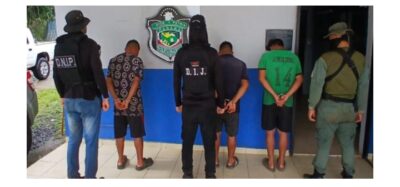
More than 1000 live animals were recovered, including exotic birds and big cat species.

An international operation coordinated by the International Criminal Police Organisation (INTERPOL) has dismantled environmental crime networks operating across nine countries in Latin America and the Caribbean, resulting in 233 arrests, the recovery of more than 1000 animals and the identification of 60,000 hectares of illegally cleared forest.
The operation, known as Operation Madre Tierra VIII, was conducted between June 1 and July 31, 2026, involving Colombia, Costa Rica, the Dominican Republic, El Salvador, Guatemala, Honduras, Mexico, Nicaragua and Panama.
According to a statement released by INTERPOL on Wednesday, October 7, investigators uncovered illegal timber and wildlife trafficking networks operating on an industrial scale along the corridor connecting Central and South America.
INTERPOL said that across more than 330 cases reported by the nine participating countries, it recorded 233 arrests and identified 312 individuals suspected of involvement in environmental crimes.
They also carried out 313 seizures, including up to 4.6 tonnes of cyanide, mercury and ammunition.
More than 1000 live animals were recovered, including exotic birds and big cat species.
INTERPOL said the operation was coordinated by its Regional Bureau for Central America in El Salvador and built on intelligence gathered during previous operations to support investigations and prosecutions.
By sharing information across borders, investigators identified criminal networks, uncovered financial and corporate links and targeted individuals and entities allegedly driving environmental crimes.
Krandall Gullock, the Head of the INTERPOL Regional Bureau for Central America, said investigators were increasingly following financial trails to expose the companies and properties allegedly being used to conceal environmental crimes.
“Across Latin America and the Caribbean, investigators are tracing payments and identifying the companies and properties used to hide criminal activity across borders,” Gullock said.
“By linking those findings across jurisdictions, they gain a clearer picture of how these networks operate, how far they stretch and who exactly is involved.
“Following the money, whether from an illegal gold mine in Panama to a buyer in North America, Europe or Asia, helps a case move beyond the individuals physically harvesting the timber, handling the animal or extracting the gold and focuses on the companies that finance, manage and profit from the trade.”
INTERPOL said one of the clearest examples of the approach emerged from the 2025 Madre Tierra operation, when Colombian authorities sought its assistance in an investigation involving 11 foreign companies suspected of industrial-scale deforestation.
The network was allegedly responsible for clearing more than 52,000 hectares of protected forest in the Amazon basin, an area INTERPOL said was equivalent to approximately 73,000 football fields.
During Madre Tierra VIII, INTERPOL said it expanded the investigation and uncovered links to an additional 161 companies and 65 individuals operating across several continents.
Using its global policing databases and analytical support, investigators identified new leads pointing to widespread permit fraud, as well as the alleged use of shell companies and foreign investment mechanisms.
Three INTERPOL Red Notices, three Blue Notices and a Purple Notice were issued to assist authorities in identifying, locating and arresting suspects linked to the network.
Raids conducted by Colombian authorities resulted in 16 arrests and the seizure of additional digital evidence for forensic analysis.
INTERPOL said the criminal activities under investigation are believed to have caused irreversible damage to ecosystems considered critical to regional climate stability and environmental heritage.
In Costa Rica, INTERPOL said it intensified operations against illegal mining, seizing approximately 4.6tonnes of cyanide and 11 containers of mercury, chemicals commonly used in illicit gold extraction.
The operation, according to INTERPOL, exposed the scale of chemical pollution associated with illegal mining and its impact on waterways, biodiversity and surrounding communities.
INTERPOL said it also uncovered trafficking routes connecting Latin America with illicit markets in Europe and Asia.
In Mexico, INTERPOL said several big cats were recovered along routes allegedly used by criminal networks to transport narcotics and other illicit commodities.
Among the animals seized were two endangered Bengal tigers, including a rare white tiger, as well as lions, ocelots and jaguars.
In Nicaragua, INTERPOL said law enforcement authorities recovered a significant number of CITES-listed exotic birds, including parrots and green and red macaws.
INTERPOL said reptiles, including pythons, rare insects and exotic birds, accounted for a majority of the wildlife recovered during the operation.
INTERPOL said it also seized about 165 kilogrammes of dried shark fins estimated to be worth $280,000.
Thomas Ungerbuehler, INTERPOL Assistant Director of Environmental Security, said the operation demonstrated the increasingly international character of environmental crime.
“These cases demonstrate the transnational nature of environmental crime, with biodiversity-rich countries increasingly targeted as sources of high-value commodities destined for illicit markets around the world,” he said.
“They highlight the importance of sustained international cooperation to identify, disrupt and dismantle the criminal networks driving this trade and threatening global biodiversity.”
INTERPOL said Operation Madre Tierra is a recurring initiative led by the organisation in coordination with the Commission of Central American, Mexican, Caribbean and Colombian Police Chiefs and Directors to combat environmental crime.
The agency said the latest operation marked the eighth edition of the campaign, adding that its support for Madre Tierra VIII was delivered under Project GAIA, with backing from Germany’s Ministry for the Environment through the International Climate Initiative.
INTERPOL said that additional support was provided through Project LEAP, funded by Norway’s International Climate and Forest Initiative.