
INSIGHT: Hope Uzodimma’s senate bid raises constitutional questions over unfinished guber tenure
INSIGHT: Hope Uzodimma’s senate bid raises constitutional questions over unfinished guber tenure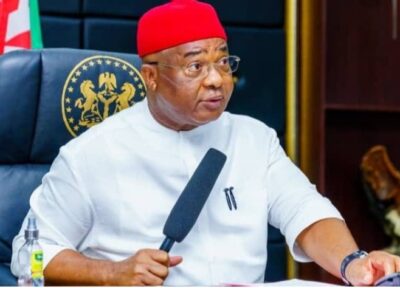
Since the start of Nigeria’s fourth republic, it has become common for governors approaching the end of their second terms to seek seats in the senate.
The 10th senate currently has 13 former governors among its members, reflecting the continued presence of former state chief executives in the national assembly.
Hope Uzodimma, governor of Imo, is, however, taking a different route. The governor is seeking to return to the red chamber while his second term as governor still has months to run, a move that has opened a constitutional debate and raised questions about the political precedent it could establish.
The governor secured the All Progressives Congress (APC) ticket for Imo west at the party’s May 18 primary, putting him on course to contest the 2027 senatorial election. Uzodimma, a former senator, is said to be eyeing the senate presidency seat.
However, while the presidential and national assembly elections are scheduled for January 16, the 11th senate is expected to be inaugurated in June, more than six months before Uzodimma’s tenure as Imo governor expires in January 2028.
That creates an unusual situation. If Uzodimma wins the senatorial election, he would have to decide whether to leave part of his gubernatorial mandate incomplete to take his seat in the national assembly.
And if he does so, another question immediately follows. Could a governor who leaves the government house before his tenure expires emerge as president of the senate almost immediately after taking his seat?
The normal political cycle is straightforward. A governor completes two terms, leaves office, and subsequently seeks election to the senate, often using the experience and political network acquired while in the government house to secure a seat in the red chamber.
Uzodimma’s case is different because his second term does not end in 2027. He was sworn in for another four-year term in January 2024, meaning his tenure is expected to run until January 15, 2028.
The Imo governorship election falls outside the regular 2027 election cycle, creating an unusual gap between the end of his gubernatorial tenure and the inauguration of the next senate. Rather than waiting until 2028, Uzodimma has opted to seek the senatorial seat now.
His decision has therefore raised a question that extends beyond his personal political ambition. Can an elected governor contest another elective office before completing his tenure and then leave office to take up the new position?
THE CONSTITUTIONAL QUESTION
Uzodimma represented Imo west in the senate from 2011 to 2019 before becoming governor
At the centre of the debate is the distinction between contesting an election while holding office and occupying two offices at the same time.
Section 183 of the 1999 Constitution provides that: “The Governor shall not, during the period when he holds office, hold any other executive office or paid employment in any capacity whatsoever.”
However, Ekene Umunakwe, a constitutional lawyer who spoke to TheCable, said Uzodimma could legally contest the senatorial election while his tenure as governor was still running.
Umunakwe said the Constitution and the Electoral Act do not require an elected public office holder to resign merely because they intend to contest another elective position.
“Under the Nigerian Constitution and the Electoral Act, a sitting elective official like a governor is not required to resign from office merely to campaign or run for another legislative elective position,” he said.
“Resignation is only mandatory for political appointees, such as commissioners or ministers, prior to contesting.”
But Umunakwe drew a distinction between the right to contest an election and the right to hold two offices simultaneously.
He said section 68(1)(f) of the Constitution prevents a person from being a member of the national assembly while simultaneously holding another executive office.
The provision makes the timing of any transition crucial if Uzodimma wins the election. The governor could contest and win the senatorial seat while still in office, but he would have to relinquish the governorship before taking his oath as a senator.
The legal question is therefore not simply whether Uzodimma can run for the senate, but how and when he would leave office if elected.
WHEN WOULD UZODIMMA HAVE TO RESIGN?
If Uzodimma wins the January 2027 senatorial election, he would still be governor of Imo. His victory at the polls would not automatically transfer him from the government house to the senate chamber. The critical point would come when the 11th senate is inaugurated and senators-elect take their seats.
According to Umunakwe, Uzodimma would have to relinquish his governorship before taking the oath of office as a senator to avoid holding both positions simultaneously.
That could mean resigning shortly before the senate’s inauguration, with his deputy assuming the governorship for the remainder of the term in line with the constitutional succession process.
In effect, Uzodimma could win the senatorial election while still governor, leave office later, and then take his oath as a senator.
“Because Imo state operates on an off-cycle election timeline, with Uzodimma’s term as governor scheduled to end in January 2028 and the 2027 general elections/senate inauguration happening in mid-2027, a brief overlap would occur,” Umunakwe said.
“If he wins and accepts the senate seat in 2027, he must formally relinquish his governorship before taking the oath of office as a senator, triggering a handover to the deputy governor or a constitutional succession.”
IS UZODIMMA GUNNING FOR SENATE PRESIDENCY?
The political intrigue surrounding Uzodimma’s return to the senate goes beyond Imo west. For months, speculation has linked his planned return to the legislative chamber to a possible bid for the senate presidency of the 11th national assembly.
Uzodimma has not publicly declared that he is seeking the position. His stated reason for seeking the senate ticket has been to represent the people of Imo west and support President Bola Tinubu’s administration through what he described as “quality representation, effective legislation, enhanced development, and sustainable progress”.
However, his political profile has fuelled speculation about a possible leadership bid. Uzodimma represented Imo west in the senate from 2011 to 2019 before becoming governor.
He also chairs the Progressive Governors Forum, the umbrella body for APC governors, and has been involved in mobilising support for Tinubu’s administration.
His supporters could argue that he would bring both legislative and executive experience to the senate.
His opponents, however, could argue whether his decision to leave the government house before his tenure expires is driven primarily by the desire to represent his constituents or by a wider political ambition.
THE AKPABIO FACTOR AND THE SENATE RULES BATTLE
Senate President Godswill Akpabio
Akpabio is also seeking to return as the senate president
Any calculation about the 11th senate presidency must also account for Godswill Akpabio, the incumbent senate president.
Akpabio secured the APC ticket to return to the senate in 2027, meaning the possibility of his seeking another term as senate president cannot be ignored.
At the launch of the APC presidential campaign council, Akpabio cautioned governors against seeking another elective office before completing the mandate given to them by the electorate, a remark widely seen as an indirect jab at Uzodimma.
If both men return to the red chamber, the race could become a contest between an incumbent presiding officer seeking continuity and a former senator returning after serving as governor.
The outcome would depend on the composition of the 11th senate, the APC’s internal calculations, and the alliances built among senators-elect.
The Constitution does not reserve the senate presidency for any particular region, although political parties have historically considered zoning and regional balancing when deciding who occupies principal offices in the national assembly.
Uzodimma, however, recently stated that the south-east should not take a back seat in national politics. That makes the region’s dimension particularly significant in any debate over the next senate leadership.
Speculation over Uzodimma’s possible senate presidency ambition intensified in May when the senate amended its standing rules to restrict eligibility for presiding and principal offices to senators who had served two consecutive terms.
The move was widely interpreted as potentially shutting out returning politicians, including Uzodimma, from the senate presidency race.
The amendment triggered a confrontation in the chamber, with Adams Oshiomhole, senator representing Edo north, objecting to the changes.
However, 24 hours later, the senate rescinded the clause requiring senators-elect to choose presiding officers before taking their oath of office after concerns that it could create “constitutional inconsistencies and unintended tensions”.
THE QUESTION OF AN UNFINISHED MANDATE
The most difficult issue may ultimately be neither section 183 nor the senate rules, but what an elected governor owes the voters who gave him a four-year mandate. If Uzodimma resigns in 2027, he would leave the government house months before his tenure expires.
His deputy would assume the governorship and complete the remainder of the term under the constitutional succession process.
There would be nothing inherently unusual about a deputy succeeding a governor who resigns; the unusual element would be the reason for the resignation. Uzodimma would not be leaving because of incapacity, impeachment, or another constitutional contingency, but because he had won another election and wanted to take up the new office.
That distinction is likely to fuel the moral and political debate even if the courts find no constitutional impediment to his candidacy.
The Uzodimma case raises three distinct questions. The first is legal. Can a sitting governor contest and win another elective office before his tenure expires?
The second is institutional. When must he resign if he wins, and what happens to the remaining months of his gubernatorial mandate? The third is political. Should a governor voluntarily surrender part of an existing mandate to pursue another elective office?
Umunakwe’s position is that the governor can contest the election without first resigning, but cannot hold both offices simultaneously.
The immediate legal issue is therefore the distinction between eligibility to contest and the constitutional restrictions on occupying the governorship and a seat in the national assembly at the same time.
The question of whether a governor should leave office before completing the mandate given by voters is one that extends beyond the courtroom.
The central question is whether Uzodimma’s bid will be remembered as a lawful transition between elective offices or as a turning point in the debate over political ambition and the responsibility to complete an electoral mandate.