
Imo Court Recommends Prosecution Of Police ‘Tiger Base’ Officers Over Extortion, D£ath Of Man In Police Custody
Imo Court Recommends Prosecution Of Police ‘Tiger Base’ Officers Over Extortion, Death Of Man In Police Custody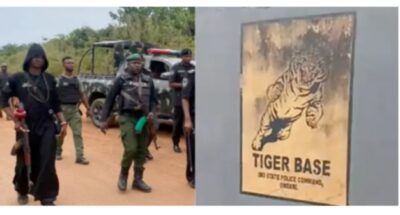
The recommendations followed a coroner’s inquest into Njoku’s death at the Tiger Base facility of the Nigeria Police Force, Imo State Command, on or about May 5, 2025.
A Magistrate Court in Imo State has recommended the prosecution of Inspector Barnabas and the Officer-in-Charge of the Anti-Kidnapping Unit, popularly known as Tiger Base, CSP Oladimeji, over allegations of extortion, corruption and the prolonged detention of one Japhet Njoku, whose health deteriorated before he died in police custody.
Discover more
News website subscription
Breaking news alert
Breaking news alerts
The court also recommended the transfer of all officers serving at the Anti-Kidnapping Unit, the payment of adequate compensation to the deceased’s family by the Imo State Police Command and the sponsorship of Njoku’s burial by the unit.
The recommendations followed a coroner’s inquest into Njoku’s death at the Tiger Base facility of the Nigeria Police Force, Imo State Command, on or about May 5, 2025.
In its findings, the court accused the Anti-Kidnapping Unit of subjecting suspects to prolonged detention and allegedly demanding money for police bail, which is supposed to be free.
The court further found that Njoku had been detained for about six weeks over an alleged stealing offence, which it described as bailable, and concluded that the prolonged detention and inhumane conditions in the facility contributed to the deterioration of his health and eventual death.
The inquest was conducted by the Magistrate’s Court of Imo State in the Owerri Magisterial District, presided over by Chief Magistrate E. U. Chinaka, on Wednesday, September 30, 2026, in Suit No. OW/MISC-425/2025.
The applicants were Mrs Augusta Njoku, Uchechukwu Njoku and Chibuzo Njoku, while the defendants were Inspector Barnabas, CSP Olademeji, the Commissioner of Police, Imo State, and the Attorney-General of Imo State.
Dr C. C. Nwadigo appeared for the applicants. The court record stated that the parties were absent and there was no appearance on behalf of the defendants.
In its recommendations, the court called on the Imo State Ministry of Justice to initiate criminal proceedings against Inspector Barnabas and CSP Olademeji before a court of competent jurisdiction.
CourtCourt
The court said the prosecution was necessary to serve as a deterrent to other police officers who might engage in similar alleged misconduct.
The recommendation specifically linked the alleged extortion and corruption to the refusal to grant Njoku bail, which the court identified as a central factor in his prolonged detention.
The court also recommended the total transfer of all officers serving under the Anti-Kidnapping Unit, citing allegations of overcrowding in detention cells and the collection of money from suspects for bail.
It directed that the Inspector-General of Police and the Commissioner of Police, Imo State Command, ensure compliance with the recommendations.
Other recommendations included installing closed-circuit television cameras in all police detention facilities, establishing a special unit to monitor the functionality of the cameras and providing adequate orientation for police investigating officers on the Administration of Criminal Justice Act (ACJA) and the Police Act.
The court further recommended that the Anti-Kidnapping Unit sponsor Njoku’s burial and that the Imo State Police Command pay adequate compensation to his family.
The recommendations are to be implemented within three months, according to the court record.
During the inquest, Uchechukwu Njoku, the deceased’s brother, testified that Japhet was arrested on March 29, 2025, following an allegation of stealing goods at Alaba Market in connection with a complaint reportedly made by one Ugomore Oluchi Obiagwu.
According to the testimony, Inspector Barnabas, the investigating police officer, refused to grant the deceased bail or charge him to court, insisting that he pay N500,000 as police bail and N300,000 to settle the complainant.
The family explained that it could not meet the demands, leaving Njoku in detention for weeks.
Uchechukwu further told the court that he was prevented from accessing his brother from May 5, 2025, until later that month, when he was informed of his death.
He said the deceased had complained about the deplorable conditions inside the cell, including the offensive odour from the toilet and overcrowding that forced detainees to remain standing for extended periods.
The witness also testified that Njoku had a wound on the left side of his head and had not suffered from any known ailment before his detention.
These accounts formed part of the evidence considered by the court in examining the circumstances surrounding the death.
Inspector Barnabas, who testified as a witness during the inquest, said Njoku had been detained over allegations of stealing and conduct likely to cause a breach of the peace following a petition.
He admitted that the deceased spent approximately six weeks in detention but claimed that he was not granted bail because CSP Olademeji had identified him as a terrorist during a routine cell inspection.
Barnabas further claimed that Njoku had confessed to being a terrorist.
However, according to the court record, Barnabas failed to produce the confession and admitted that it had not been recorded in compliance with Section 18(2) of the Administration of Criminal Justice Act.
The inspector denied demanding money for bail, insisting that police bail was free. He also denied that the alleged demand for money was responsible for Njoku’s continued detention.
The court, however, rejected the explanation concerning the terrorism confession, describing the claim that Njoku was a terrorist and had confessed to the allegation as a concoction by Barnabas and Olademeji intended to cover up what it characterised as an illegitimate operation involving prolonged detention, extortion and corruption.
Another witness, Basil Ekenyere, testified about the conditions inside the Tiger Base detention facility.
Ekenyere told the court that he had spent two weeks in detention before his own arrest and described the cell as extremely small, measuring approximately three or four ceiling units, while housing more than 45 suspects.
He described the conditions as unbearable and testified that two or three detainees died on some days.
Ekenyere also told the court that he paid N300,000 to settle Ugomore Oluchi Obiagwu and another N650,000 as police bail before he was released.
According to his testimony, the payments were necessary to secure his freedom and avoid the conditions he said were endangering detainees.
In its findings, the court said Njoku had been detained for an excessive period by Inspector Barnabas and his team at the Anti-Kidnapping Unit, contrary to the stipulated period within which a suspect should remain in custody pending investigation.
It further found that the offence for which Njoku was arrested was stealing, a bailable offence, and that the alleged demand for bail money was the reason he remained in detention for six weeks because his family could not afford the amount.
The court strongly criticised the conduct attributed to officers at the facility, stating that the unit had lost sight of its policing responsibilities and had allegedly resorted to torture, intimidation and extortion of suspects in custody.
It said the practices showed disregard for human dignity, the right to life, personal liberty, the right to bail and access to legal counsel as recognised under the Constitution of the Federal Republic of Nigeria.
The court also attributed the overcrowding of the cells to the alleged refusal to grant bail because of extortion by officers.
It concluded that the inhumane conditions under which Njoku was held contributed to his deteriorating health and that his prolonged detention caused his untimely death.
The court record stated that the medical pathologist did not testify during the proceedings.
However, the autopsy report tendered before the court listed meningitis, bronchial pneumonia and hypertensive heart disease as the causes of death.
The report was among the documentary exhibits considered during the inquest, alongside a petition, a police clinic report and statements obtained from suspects during the investigation.
The first prosecution witness, Deputy Superintendent of Police Mark Roger, testified that he investigated Njoku’s death following a petition submitted by a human rights organisation on May 15, 2025.
Roger told the court that his investigation established that a fight had occurred between Njoku and a cellmate, who allegedly beat him with a broom kept inside the cell.
He also testified that a specific sum of money was recovered during the investigation and had been contributed by some of the suspects in the case that led to Njoku’s arrest.
The witness tendered the petition, police clinic report, autopsy report and statements obtained during the investigation as exhibits.
Beyond recommending prosecution, the court outlined measures intended to address the alleged misconduct and prevent similar incidents in police detention facilities.
It recommended the installation of CCTV cameras in all police detention facilities and the creation of a special monitoring unit to ensure the cameras remain functional.
It also called for proper training and orientation for investigating officers on the provisions of the ACJA and the Police Act, particularly regarding the lawful detention of suspects and their rights.
The court further recommended that all officers serving under the Anti-Kidnapping Unit be transferred, citing allegations of extortion and the overcrowding of detention cells.
The Inspector-General of Police and the Commissioner of Police, Imo State Command, were directed in the recommendations to ensure compliance.
The court also recommended that the Anti-Kidnapping Unit bear the full cost of Njoku’s burial and that the Imo State Police Command pay adequate compensation to his family for unlawful detention and the deterioration of his health while in custody.
Meanwhile, the Imo State Ministry of Justice is being urged, in line with the court’s recommendation, to file appropriate charges against the two officers before a court of competent jurisdiction.