

IGP Admits Fears Nigerian Governors Could Hijack State Police, Urges Lessons From Ethiopia, Others
IGP Admits Fears Nigerian Governors Could Hijack State Police, Urges Lessons From Ethiopia, Others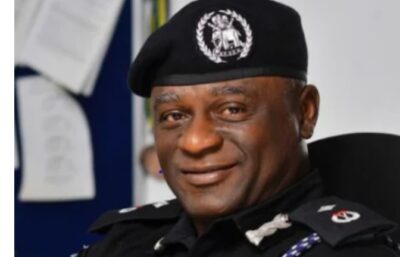
According to Disu, such issues must be addressed by learning from countries that have already adopted decentralised policing.
Inspector-General of Police, Olatunji Disu, has acknowledged widespread concerns among Nigerians over the proposed creation of state police, including fears that governors could hijack the outfits for political purposes.
According to Disu, such issues must be addressed by learning from countries that have already adopted decentralised policing.
He made the remarks on Wednesday at the Force Headquarters in Abuja while receiving participants of the National Defence College, who presented a research project titled “State Police and National Security: Strategic Options for the Nigerian Police by 2035.”
The police chief said concerns over the possible abuse of state police were legitimate and should form part of ongoing discussions on policing reforms.
“You have mentioned issues bordering on the fears of Nigerians. Will these state police be hijacked? You have mentioned this. You have talked about federalization, that means taking over,” Disu said.
He also raised questions about accountability under a state policing system.
“Who can give the directive to take over at instances where state police is not going well?” he asked.
According to the IGP, Nigeria should not attempt to establish state police without studying countries that have already experimented with similar policing structures.
IGP Olatunji Disu addresses Nigerians’ concerns over state police hijack fears pic.twitter.com/0L8SKRnmw8
— Instablog9ja (@instablog9ja) July 29, 2026
“You did a lot of work on comparative analysis. You went to India, Ethiopia and some other countries, and even the United States of America, where they have already had experience of state policing, who have faced the rigours of failures and correction,” he said.
“There is no better way of adopting it than by examining states and countries that have embarked on it so that we can learn from their work and experience.”
Disu said the police leadership was encouraged by the findings of the National Defence College’s research and expressed optimism that the recommendations would contribute to Nigeria’s ongoing discussions on policing reforms.
“At the same time, we are happy with the result we have gotten. We look forward to discussions where we can bring up more points to be quickly incorporated in the vision of the Nigerian State Police,” he added.
The Inspector-General described the research topic as timely, saying Nigeria’s evolving security challenges require innovative approaches to policing.
“The subject is not only timely but also highly relevant to the ongoing national conversation on policing reforms and the evolving security architecture of our country,” he said.
He noted that as Nigeria continues to grapple with increasingly complex security threats, well-researched proposals would be vital in designing an effective framework should the country eventually adopt state policing.
The IGP also commended retired Inspectors-General of Police, retired officers and serving police personnel for contributing to the debate on state police.
He admitted that such research should have been undertaken much earlier.
“It would have saved us from sitting down day and night, rushing to create another framework,” he said.
“You have done fantastic research. But it is not too late. We still have time to make use of this wonderful work you have done.”
Disu thanked the National Defence College for producing what he described as a valuable body of work capable of shaping future policing reforms in Nigeria.