I still braid hair, do makeup despite being blind — Adams
I still braid hair, do makeup despite being blind — Adams
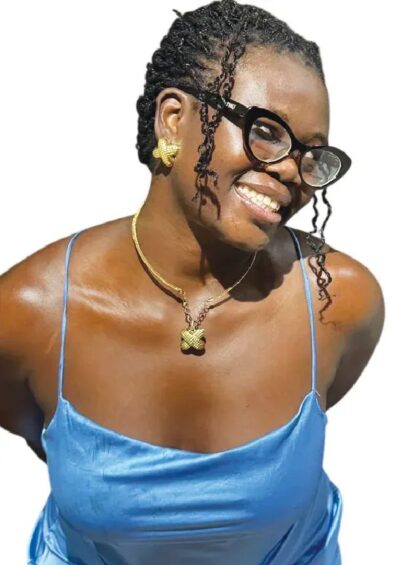
Susan Adams lost her sight to glaucoma after developing cataracts at the age of eight. A braider and makeup artist, she tells TEMITOPE ADETUNJI how she uses social media to challenge misconceptions about blindness
Can you give us a glimpse into your childhood?
I am originally from Benue State, but I was born in Kogi State, where I spent the first few years of my life. I attended primary and secondary school in Minna, Niger State, before proceeding to Benue State University, where I studied Theatre Arts. I am now a blind braider.
Could you tell us how you lost your sight?
I was not born blind. Like many people, I was short-sighted, but I did not have any serious eyesight problems at birth. My first major eye problem occurred when I was eight, when I developed cataracts. It was not a natural process, but that is a detail I would rather not discuss.
The condition progressed, and for eight years, we did not realise that the surgery on my left eye had been unsuccessful. When we eventually discovered this, we were told that the cataract had spread to my right eye. I underwent another surgery when I was 17, and thankfully, it was successful. At that point, I was essentially relying on one eye for my sight.
In 2024, my vision suddenly deteriorated. I went to the hospital and was diagnosed with glaucoma. The condition progressed very quickly. I later discovered that the hospital where I had been receiving treatment after my second surgery knew I had glaucoma but did not inform me.
How did you and your family cope with the news?
I do not think acceptance happens overnight. Sight is an integral part of our lives, and losing it after living with it for so long makes the experience even more difficult.
It was very difficult for me. Like many people would, I turned to faith, believing there was a solution somewhere and that my case would be different.
It was also difficult for my family, especially my mother. It was hard for her to accept that the child she had given birth to, who had lived with sight for more than 20 years, could suddenly become unable to see.
My siblings tried to understand my situation. They began learning, conducting research and asking questions because they wanted to know how best to help me.
However, I do not think they have completely accepted it even now. Part of them still believes it will pass, and I pray that it does. They continue to hope that things will change and that the condition is not permanent.
I believe you eventually learn to live with a situation like this, but acceptance is a very big word.
What was the most difficult part of adjusting to life without sight?
I had built my life around everything I loved doing and everything I thought I was good at, apart from talking. All those things depended on my sight.
I was a makeup artist, hairdresser and fashion model. I also worked as a runway model and was passionate about becoming an actor. At the time, it felt as though everything I knew how to do depended on my sight. However, I still braid hair, which is why I describe myself as a blind braider.
The thought that I might not become the person I had imagined myself becoming was excruciatingly difficult. I worried about how I would meet people, move around and carry out everyday activities. Before I discovered that I could do these things independently, the thought of depending on others was particularly difficult.
I was also an extrovert who loved being around people, so having to stay indoors and adjust to a different way of life was a significant change for me.
What everyday activities do people wrongly assume you can’t do?
A lot of things, honestly. I think people assume that blind people cannot do 99 per cent of everyday activities because there is not enough public awareness about blindness and what it really means.
Some people think I cannot dress myself or identify basic things I use every day. Others believe it is impossible for a blind person to make choices, have dreams or even love fashion.
Make PUNCH part of your everyday experience.
Add us to your Preferred Sources
There is also a misconception that blindness automatically means a person must be deeply religious or very spiritual.
One thing I encounter frequently is people’s inability to understand how I can be blind and still be confident, outspoken and confrontational, with opinions of my own. That is one of the things I have learnt to navigate.
Have you ever felt underestimated because of your condition?
Honestly, I cannot immediately recall an experience in which I was treated differently because of my blindness. Perhaps it is because I have a very good support system among my family and friends. The people around me do not treat me differently because I cannot see, and I am grateful to God for that.
They even encourage me to return to makeup. My friends will not go to the salon unless I am the one braiding their hair.
However, I once attended an audition where I was not selected. I was good enough to be invited for an interview, but I did not make the final selection.
I did not necessarily attribute that rejection to my blindness because I had experienced similar disappointments when I could see. I try not to use my blindness to explain every disappointment. Rejection can happen to anybody, whether they are blind or sighted.
Who has been your greatest source of support since you began losing your sight?
My family has been my greatest source of support, but I also give myself credit for continuing to push forward despite my struggles. The fear of living an unfulfilled life has been one of my greatest motivations.
What tools or technology have helped you become more independent?
Nigeria lacks sufficient accessibility tools for people who are blind or visually impaired, but VoiceOver on my iPhone helps me perform tasks independently, including creating posts, recording videos and editing simple content.
I am also learning to use computer screen readers such as JAWS and NVDA. Having lost my sight completely about a year ago, I am still learning to navigate life as a blind person.
Do you think Nigerian society does enough to make public spaces accessible to people with disabilities?
No. I do not think society is anywhere close to making workplaces, schools and public spaces accessible to blind people and others living with disabilities.
I live in Abuja, and there are places without proper walkways. Sometimes, crossing the road involves navigating obstacles that are more than three feet high. How can a blind person or wheelchair user navigate such an environment safely? We also lack sufficient accessible transport options.
The situation is not better in schools, where buildings may have stairs without adequate alternatives. Toilets are often inaccessible, and some marketplaces have multi-storey buildings that people with disabilities cannot easily access without assistance.
Many people do not understand blindness or the experiences of persons with disabilities. If you want to study a course of your choice at a Nigerian university, people may direct you towards special education instead of supporting your decision to pursue your preferred course.
People talk about accessibility, but we are not seeing enough practical action. We live with these challenges every day.
When a person with a disability gets a job, sometimes the employer’s motivation is to meet a disability employment quota rather than a genuine belief in the person’s ability. Despite the five per cent requirement, some employers do not give employees with disabilities meaningful responsibilities. As a result, you may have to work three times as hard to prove yourself.
You have over 50,000 followers on TikTok. How did you start creating content?
Before I lost my sight completely, I was already involved in the entertainment industry. I had known since childhood that I wanted to be part of it, although I had never imagined doing so as a blind person.
I previously created content featuring my makeup work, hairstyles, professional activities and modelling projects. I believe nobody can tell my story better than I can.
One of my main reasons for creating a new account was personal. I had just returned from the UK after receiving some of the most heartbreaking news of my life.
While in Nigeria, I thought travelling abroad might provide a solution to my condition. I assumed the necessary treatment might not be readily available in Nigeria and that things could be different elsewhere.
I visited a specialist glaucoma hospital in the UK, where an Indian doctor told me there was no cure for glaucoma anywhere in the world.
I returned home heartbroken. I did not want my family to see me going through that pain, so I created another account where they were not among my friends or followers. It gave me space to express myself freely and speak honestly about my feelings without constantly worrying about how my words might affect them.
Then I realised that many people did not even know a blind person could do so many things. That realisation felt like a slap in the face.
I decided that my content should not simply be a place to express self-pity. Instead, I wanted to change the narrative about blind people and show media organisations, Nollywood and the wider public what everyday life is like for a blind person. That was my motivation.
What reactions do you receive from your followers, and how do you handle negative comments?
My followers, whom I call the Unique Gems, are literally the best in the world. I am glad that I found them and that they found me.
Most are incredibly supportive. They are interested in learning about blindness and are curious in a healthy way. Whenever I share a dream or something I want to do, I receive a lot of support. I am grateful and do not take it for granted.
However, some people’s comments can be hurtful. Some have said that I am proud of my blindness. One comment that really got me down was from someone who said they thought I had given up.
I sometimes find rude comments difficult to deal with, but I remind myself that people’s comments often reflect their own personalities rather than anything about me. Their words do not define me, and I do not have to beat myself up over other people’s attitudes when I have done nothing wrong.
How has being blind influenced your friendships and relationships?
I am blessed to have good people around me who support and understand me. Living with a disability is not always easy, but having the right people in my life has made the journey better. Their support has helped me navigate relationships and relate to others despite the challenges that come with being blind.
Do you think living with a disability makes it more difficult to find love?
Living with disability makes many things difficult, but I do not think it is necessarily the reason finding love is difficult. I believe people get what they think they deserve. So, if you believe you deserve love, you will find love.
It also depends on the kind of love you think you deserve, right? I do not allow room for pity or for people who feel they need to help me. Even though I am a woman living with blindness, I had sight for a very long time because I was not born blind. I also lived and worked professionally for some years with my sight, yet I still struggled with love.
So, struggling to find love is not peculiar to blind people. It is a human experience. Everyone can struggle to find love, whether blind or sighted.
What advice would you give to someone who has recently lost their sight?
If you have just lost your sight, I want to tell you something that many people may not prepare you for: it is difficult, hard and painful.
You are going to be angry for a long time. You are going to feel frustrated, and you may blame yourself. You may blame God and even your family.
It is going to be very hard. As someone who is used to having sight, navigating the world without it will be difficult. At some point, you may feel as though you are losing your mind because, in reality, the experience can be overwhelming.
You are going to feel sad. I struggled with unhappiness for a very long time. But what I want you to know is that those feelings do not have to last forever.
The longer you dwell on those feelings, the longer you may continue to feel that way. You can cry, complain and get angry, but do not stay in that place for too long. Do not make it your home.
Do not make it the place where you live. Get up. You can build a life for yourself with or without sight.
It is not easy, and it is not something you go through happily, but it is something you can live with.