How Sunny Ade convinced me to accept kingship — Onikate of Ikate, Oba Adams
How Sunny Ade convinced me to accept kingship — Onikate of Ikate, Oba Adams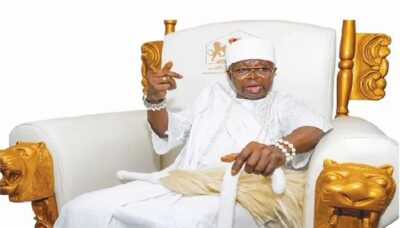
The Onikate of Ikate in Surulere, Lagos, His Royal Majesty, Oba Lateef Adams, shares his life’s journey with BIODUN BUSARI ahead of the celebration of his 10th anniversary on the throne
What were the defining moments of your childhood?
My father was a disciplinarian. I grew up in Lagos, and because of my father’s discipline, I was well-behaved. I take after him as a disciplinarian. So, because of my father, I was careful not to bring reproach to my family’s name. I am a Muslim, but I attended a Christian primary school. I attended St John’s School, Aroloya. For my secondary education, I proceeded to Ansar-Ud-Deen College, Isolo. In a nutshell, my father didn’t allow me to be wayward.
How would you describe your background?
My background was just as ordinary as that of a normal person. The only difference was that I’m from a royal family. I didn’t know until later that I was royalty. Nobody mentioned that to me throughout my childhood until later in life. But I did come from an ancient home. I’m from Isale Eko.
So, I’m a proper Lagosian. My father worked at the Nigerian Railway Corporation. He desired and laboured to ensure that his children were educated. Also, my mother was from Ogun State. She wanted her children to be protected. She used to guide me. So, I enjoyed all these privileges.
There was a time I went to my mother’s hometown, and one of her relatives told me that they saw a crown on my head. In spiritual parlance, it meant I would become king. That happened when I was in my 20s.
Meanwhile, my mother was from a royal home as well. When I was told, I didn’t even consider it because I was not interested. The public and even reporters knew me as the owner and chairman of Latris Fashions.
Are you saying that it didn’t occur to you that you would be king even while you were influential and running your fashion business?
It didn’t occur to me because I was not interested. I didn’t have it in mind. I believed in working diligently to expand my business, and that was my focus. I didn’t know I would become king, so I didn’t compete for it. I believe my kingship came from God.
When many people hear something like this, they begin to get ambitious. But I was not interested because my business was fulfilling and bringing me happiness and fame. I had met the late business mogul, MKO Abiola, at that time.
Apart from Abiola, my business had helped me make clothes for President Bola Tinubu, Dr Goodluck Jonathan and Chief Olusegun Obasanjo, among other important personalities in politics. So, I didn’t think becoming a king was important at that time.
At what point did you think the kingship became serious for your consideration?
I think it happened before my 50th birthday. That was 20 years ago. I will celebrate my 73rd birthday on December 17. It was at that time that the family came to me. Even the emissaries sent to me didn’t know me. It was one of them who knew my father. He knew me because I usually drove my father from Itire to the palace in Ikate.
My father was a chief from the ruling house in Itire. He was also given a chieftaincy title in Ikate. My father was the one who used to sign family receipts for land documents and related issues. He was their secretary. He was the Maiyegun of Itire.
How has it been managing your kingdom for 10 years?
Firstly, I thank God for choosing me to be the king in Ikate. The reason is that the town was one of the worst in those days before I ascended the throne. But with innovations and modern projects that I have implemented and supervised, the community has been transformed in terms of development for the public to benefit from.
It is my personal resolve that when a king is selected, he should work for people to enjoy better livelihoods. I have not stopped working. I am still forging ahead with reshaping the town. I am making people happy.
We have good roads and other infrastructure, unlike before I became king. Properties could be sold for between N8m and N20m then. Now, properties have appreciated in value in my community.
Do you still have time for your business after ascending the throne?
Yes, I won’t let royalty deprive me of my business. I moved my office from Ikeja to Miseneli in Masha. I have staff working every day. The business is doing well. I visit my office regularly to supervise.
Did your business prepare you for the role of a royal father in any way?
The business didn’t prepare me, but I prepared myself to do what I was supposed to do for the community. The preparation was about making me a responsible king to be reckoned with. However, there were people I met who were instrumental to my ascension to the throne.
As I made clothes for customers, I built good relationships with them. I must thank President Bola Tinubu for his role in my emergence as king. There are many people God used as destiny helpers.
Many of the dignitaries I met in the course of business will be present at the 10th anniversary of my kingship. I can’t leave the business because it made me who I am. I ensure that I appreciate all the people I met on my journey to becoming king.
How did you eventually become king?
After they concluded that I would be king, they called the ruling house to sign the documents making me king. They had concluded all their plans before they even consulted me. Meanwhile, I had not been informed. When they addressed me as the king, I denied it. But they insisted that I should be king because I am from the Akinwunmi ruling house.
They went to our Olori Ebi, the head of the family, Wahabi Irawo. He was the one who told them that I would be the next king. When they approached me, I asked if there was a palace, but they said there was no palace. Then I said I would continue to be Baale, which was the usual practice before my time.
Fortunately, I was at a party with Irawo’s son, Fatai Irawo, who was the Oba of Odi Olowo, Mushin. King Sunny Ade was there, and we were discussing. He was the one who said people wanted to make me king, but I wanted to settle for Baale.
He asked why I wanted to downgrade myself. That was how Sunny Ade convinced me that I should not settle for less. That was when it dawned on me. There was no opposition because of the way it all happened.
Do you have challenges to tackle as king in your domain?
Being a king is different from running a business. You have control over your business, but there are bad eggs in the town. Before my coronation, the community used to breed cultists and thugs who disturbed the peace of the area. It was one of the first things I needed to address because development cannot come to a violent place.
When I became king, I put my foot down. I would write to the Task Force at the Lagos State Secretariat, Alausa, Ikeja, to come and pick them up. I used soldiers and even operatives of the Oodua Peoples Congress to tame the bad elements disturbing the peace of the community.
If I discovered that you were a cultist or hooligan threatening people or engaging in any crime, I would invite law enforcement agencies to come and arrest you. That was what I did for Ikate to enjoy the peace it has till today. That was how I tamed the bad boys. They don’t mess with me. I don’t take nonsense. If they are found guilty, they are going to jail.
By doing that, they sat up, and I earned a reputation as a no-nonsense king. I learnt that when you become a king, nobody will teach you how to rule your kingdom. But I am proud today that my community is enjoying my reign. Even when the government doesn’t give me money, I personally use my resources to take care of my people.
What are the significant highlights of your 10th anniversary?
In collaboration with my wife, I am organising an empowerment programme for the less privileged in my community to mark the 10th anniversary. We have spent a lot of money to buy industrial sewing machines and grinding machines for people who need them for their businesses.
During Ileya, I slaughtered a cow to feed people. Sometimes, I gave out rice. But we later realised that food alone would not solve most of the problems. People have to be empowered. Part of what we are giving is N100,000 as capital for those in the pure water business.