

Division biggest threat to Church, says Enenche
Division biggest threat to Church, says Enenche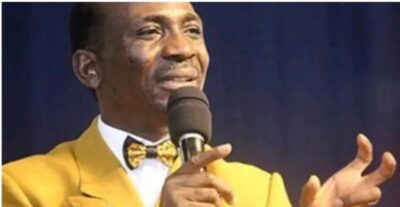
The Senior Pastor of Dunamis International Gospel Centre, Dr Paul Enenche, on Friday warned that division remained the greatest threat to the survival of the Church, urging Christians across the country to unite in the face of growing insecurity.

Speaking at the Northern Christian Stakeholders’ 2nd Solemn Assembly held at The Glory Dome, Abuja, Enenche said Christians must speak with one voice and support one another to overcome the country’s security challenges.
“It is clear that we are indestructible for as long as we are indivisible. The easiest way to destroy a people is to divide the people,” he said.
The cleric said the gathering was convened to foster unity among Christians and strengthen their collective response to the persistent attacks on communities across the country.
“We are here to see that we have a voice, just one voice, not discordant voices; one voice. This is the situation in the land, this is the situation in the territory and this is what we are talking about,” he added.
Enenche stressed that collective action multiplied strength, saying, “We have the multiplication of strength when our strength is pulled together,” while urging Christians not to face persecution in isolation.
He also referenced former United States President Abraham Lincoln’s famous wartime statement that “it is either we hang together or we will hang individually,” saying unity was critical to the survival of any people.
According to him, solidarity among believers could overcome even the gravest challenges.
“The force of unity can beat even the force of death… Who surrounds us determines what we can survive. When we decide that people won’t be on their own anymore and we are surrounded with each other, it determines how far we can survive the things that try to control us,” Enenche said.
Earlier, the Programme Director of Stefanos Foundation and convener of the assembly, Mark Lipdo, disclosed that more than 9,000 Christians had been killed across Nigeria in the last 25 years as violence linked to calls for the implementation of Shari’a since 1999 continued to devastate communities in the North.
Presenting the foundation’s 25-year documentation of attacks, Lipdo said over 79,000 people had been injured, 8,000 kidnapped, 17,404 abducted and more than 500 communities sacked, with victims displaced from their churches, homes, schools and businesses.
He listed Borno, Plateau, Kaduna, Benue, Zamfara, Niger, Rivers, Delta, Katsina and Yobe as the 10 states most affected by the violence.
Lipdo added that the attacks had continued unabated, with the foundation recording 113 incidents in June alone, resulting in 293 deaths, 44 injuries and 255 kidnappings.
He said Stefanos Foundation had, over the years, “distributed relief items, provided trauma counseling, provided shelter, rehabilitated, empowered and paid education and hospital bills for victims.”
“We have also informed the British parliament, US Congress, European Union and the world about this,” the convener stated.
Lipdo said the first Solemn Assembly, held on December 14, 2025, resolved that Nigeria’s security challenges could only be effectively addressed if traditional and religious leaders united under the One For Nigeria initiative.
“Currently, different prominent Nigerian leaders have expressed their support for this initiative, hence the need for the second gathering of Nigerian Christian Stakeholders.
Also speaking, scholar and author, Dr Yusufu Turaki, who delivered the keynote address, interrogated what he described as the “misunderstanding, misinterpretation and misapplication of the concept of persecution in Nigeria.”
He cited the controversy that trailed claims of genocide against Christians in 2025, which the Federal Government and the Muslim community had denied.
Posing what he described as the central question of the crisis, Turaki asked, “Who is killing who in the Northern States of Nigeria?”
He answered that it was neither the Yoruba, the Igbo nor southerners, but rather a case of “a northerner who is killing a northerner.”
Turaki also faulted popular narratives that he said obscure the true nature of the killings, singling out the “herders-farmers clashes” framing and the “unknown gunmen” label as narratives that “protect the culprits and demean the victims.
“There are evident surreptitious propaganda and the evasive and elusive diplomatic language and manipulation of the raw data on genocide and persecution in Nigeria against Traditionalist, Muslims and Christians,” he stated.