
Dangote begins Commercial Rice Production
Dangote begins Commercial Rice Production 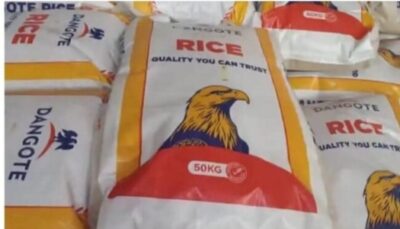
…..In Jigawa

Nigeria’s agricultural and manufacturing sectors have recorded another significant development as Dangote Rice Mill in Jigawa State commences commercial operations, marking a major milestone in the group’s long-awaited entry into large-scale rice processing and packaged rice production.
Situated in Hadin, Kaugama Local Government Area of Jigawa State, the facility is being announced as a 16-metric-tonnes-per-hour (MTPH) rice processing mill.
Its commencement of operations means Dangote has moved beyond its earlier investments in rice cultivation and agricultural development into the industrial processing, packaging and commercial distribution of finished rice. The company has also begun inviting customers to place orders, with plans to supply both Nigerian and international rice markets.
The development is particularly significant when viewed against Nigeria’s position as one of Africa’s major rice-consuming countries. Although the country has considerable agricultural potential and millions of people involved in farming, the rice value chain still faces challenges involving production costs, processing capacity, storage, transportation and distribution. Industrial investments such as this can help address part of that gap by creating additional capacity to transform locally cultivated paddy rice into finished products that meet the demands of consumers and commercial buyers.
An important aspect of the investment is its potential relationship with local rice farmers. Large-scale processing facilities require a consistent supply of paddy rice, creating opportunities for agricultural producers to supply industrial buyers. This can strengthen the connection between farming communities and manufacturing businesses, improve market access for farmers and encourage greater investment in rice cultivation. Beyond the farm and factory, the wider supply chain can also support transport operators, packaging suppliers, warehouse operators, distributors and retailers.
The facility also raises an important question about the future cost of rice in the Nigerian market. With another major industrial player entering commercial rice production, competition among established rice brands could increase. Greater processing capacity, improved supply and efficient distribution have the potential to contribute to more competitive prices for consumers. However, this will depend on the volume of rice produced, the cost of sourcing paddy, energy, logistics and the company’s ability to maintain consistent supplies.
The commencement of production is an important first step, but affordability will ultimately depend on how efficiently the entire value chain operates.
Employment is another important part of the development. Industrial rice production requires workers across processing, machinery operations, quality control, packaging, administration and logistics. It can also generate indirect employment through farming, transportation, wholesale and retail distribution.
The wider economic benefit will therefore extend beyond the factory itself, particularly if the facility establishes strong supply relationships with surrounding agricultural communities.
For Dangote Group, the commencement of rice production represents another step in its diversification into strategic sectors of the Nigerian economy. Its investments across cement, fertiliser, sugar, petroleum refining, and now rice processing reflect an industrial strategy that extends beyond manufacturing products for domestic consumption to building production capacity that can serve wider African markets.
For Jigawa State, the facility adds to its agricultural and industrial investment landscape. For Nigeria, it represents another opportunity to strengthen domestic food processing, support agricultural production, expand employment opportunities and reduce dependence on imported food products.
