
College Of Nursing Students Live In F£ar As Th!eves Use ‘Master Keys’ To Ra!d Female Hostels
College Of Nursing Students Live In Fear As Thieves Use ‘Master Keys’ To Raid Female Hostels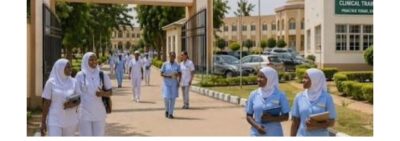
Some students who spoke to SaharaReporters on condition of anonymity, painted a harrowing picture of neglect, insecurity, and infrastructural decay that has turned the college into a shadow of what a nursing institution should be.

Students of the College of Nursing Sciences, Kano State, are living in perpetual fear and squalor, with female hostel residents facing repeated invasions by thieves armed with master keys, SaharaReporters has learnt.
Some students who spoke to SaharaReporters on condition of anonymity, painted a harrowing picture of neglect, insecurity, and infrastructural decay that has turned the college into a shadow of what a nursing institution should be.
“We are really suffering, especially because there is no proper security in the hostel,” one of the students’ said, pleading for anonymity.
“In the last three weeks, we have been experiencing repeated cases of thieves breaking into our hostel using master keys to unlock our doors and steal our gadgets.”
The student recounted a chilling sequence of thefts that have left students traumatized and authorities indifferent.
“Three weeks ago, five phones were stolen. Just last week, thieves repeatedly gained access to the hostel for four consecutive days, disturbing students and opening our doors with master keys,” the student told SaharaReporters.
The situation is compounded by the absence of a reliable electricity supply, leaving students to study and live in darkness while their safety remains compromised.
“We do not have a reliable electricity supply. We are living in very difficult conditions, and our safety is constantly at risk,” another student said.
“What is even more painful is that we have reported these incidents, but no concrete action has been taken to address the situation.”
The students’ account described an institution in crisis, where the basic necessities for learning and living are either absent or grossly inadequate.
“Inadequate classrooms, insufficient chairs and learning facilities, poor infrastructure, insecurity in the female hostels, a shortage of lecturers and other staff, and generally poor learning conditions” are among the challenges students face daily according to the students.
The students plea is not just for better facilities but for a safe environment where students can pursue their dreams without fear.
“We are not just asking for better learning facilities; we are also demanding a safe environment where we can live, study and pursue our dreams without fear,” the student said.
“Our safety, education and future as healthcare professionals matter. We sincerely hope that the relevant authorities will take urgent action before something worse happens.”
The students’ plight comes on the heels of an earlier SaharaReporters report detailing a crisis of leadership at the College of Nursing and Midwifery, Kano, where Mallam Idris, Head of the Department of Anatomy and Physiology, reportedly accused the Provost of bullying, corruption, abuse of office, and selective eviction of lecturers.
Idris had alleged that the institution lacked adequate staff, equipment, and training facilities, and that the Dambatta and Gwarzo campuses were so poorly equipped that lecturers had to borrow classrooms from hospitals and secondary schools.
He also accused the Provost of selling the college’s generators and water tank, and of annually diverting ₦500,000 from the college’s budget to purchase Ramadan food items for the Commissioner and Permanent Secretary of the Ministry of Health.
The lecturer further alleged that the Provost operates without a properly constituted Governing Council, a situation that has left the institution unrecognized by TETFund and NELFUND.
“The college operates as a college in name but continues to function like a school,” Idris had said.
The student’s account appears to corroborate the lecturer’s claims of institutional decay, with the added dimension of a security crisis that has left female students vulnerable to repeated burglaries.
Despite the gravity of the allegations, there has been no response from the college management or the Kano State Ministry of Health.
SaharaReporters reached out to the Provost’s office and the Commissioner of Health for comment, but calls were not returned as of press time.
The students, meanwhile, are left to grapple with the consequences of what they describe as official negligence.
“We have reported these incidents, but no concrete action has been taken,” a student said. “We are living in fear.”
The student’s appeal is a desperate one, a cry for help from those who are training to become the backbone of the state’s healthcare system.
