
Bayelsa Mass Bur!al Controversy! Son Rejects Government’s Mass Grav£, R£scues Mother’s Body And Bur!es Her Separately — 27 Others Left In Mass Grav£
Bayelsa Mass Burial Controversy! Son Rejects Government’s Mass Grave, Rescues Mother’s Body And Buries Her Separately — 27 Others Left In Mass Grave!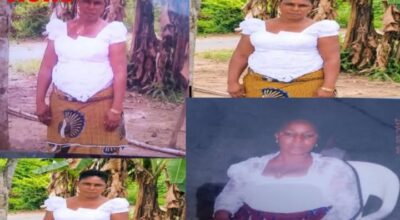
The family of Esther Passman Nee Biriesuoghe, from Egbemo-Angalabiri in Ekeremor Local Government Area of Bayelsa State, has secured the release of her remains from a mass burial arrangement organised by the Bayelsa State Government following the tragic Love Boat accident.
According to her son, Passman John, in a statement made available to Tarakirivoice, his mother’s body was among the 28 corpses taken by the state government to Azikoro Cemetery in Yenagoa for a mass burial.Read Newspapers
John disclosed that upon arriving at the cemetery, he discovered that a very wide grave had already been dug to accommodate the bodies.
However, he reportedly insisted that his mother’s remains must not be buried in a mass grave, demanding that she be given a separate and dignified burial.
Following his intervention, the authorities released his mother’s remains to him and made a separate burial space available.
He subsequently purchased a coffin and buried his mother separately, while the remaining 27 corpses were reportedly laid to rest in the mass grave.
Speaking further, John disclosed that he would make cement available to beautify his mother’s grave, expressing his determination to ensure that her final resting place receives proper attention.
He also informed Tarakirivoice that the family would announce a date for the traditional rites and burial ceremony in Egbemo-Angalabiri, Ekeremor Local Government Area of Bayelsa State.
FROM MISSING PERSON TO CONFIRMED VICTIM
Recall that Tarakirivoice had earlier reported the desperate search by Esther’s family after she was feared missing following the tragic Love Boat mishap.
In an earlier appeal titled, “Bayelsa Love Boat Tragedy: Where Is Esther? Family In Agony As Missing Egbemo-Angalabiri Woman Remains Unaccounted For, Begs Government And Rescue Teams For Help!”, the family had appealed to the Bayelsa State Government, security agencies, hospitals, rescue teams and members of the public to assist in locating her.
At the time, her family had been unable to establish her whereabouts or confirm her safety, leaving relatives in deep anxiety.
The latest disclosure by her son has now confirmed that her remains were among those recovered and taken to Azikoro Cemetery.
CONTROVERSY OVER MASS BURIAL ARRANGEMENTS
The development also brings renewed attention to concerns raised by some relatives over the mass burial arrangements.
Some family members had complained that relatives were not adequately informed ahead of the burial, arguing that proper notification would have allowed families to provide coffins and make individual burial arrangements for their loved ones.
However, the Chairman of the Ukubie Community Development Committee, Ruben Kemelate, had explained that the community was overwhelmed by grief and that the state government had taken charge of the burial arrangements.
HOW THE LOVE BOAT TRAGEDY HAPPENED
The tragedy occurred on November 20, 2026, when a boat popularly known as the Love Boat capsized while conveying mourners from Ayama to Ukubie community in Southern Ijaw Local Government Area of Bayelsa State.
Four days later, on November 24, 2026, the Bayelsa State Government conducted a mass burial for 28 recovered bodies at Azikoro Cemetery.
It is important to distinguish the 28 bodies involved in the mass burial from the overall casualty figures, as different reports have given varying figures for those who died or remained missing following the tragedy.
QUESTIONS ABOUT DIGNIFIED BURIALS
The decision by Passman John to insist on a separate burial for his mother raises fresh questions about communication with victims’ families, identification of recovered bodies and the need to respect the wishes of relatives during mass casualty burial arrangements.
For Esther’s family, the immediate priority is now to complete the traditional rites and burial ceremony in their ancestral community of Egbemo-Angalabiri.
After days of uncertainty, anguish and desperate appeals for help, the family can finally begin the process of giving their beloved mother a proper farewell.
Credit X Tarakiri Voice