Audit report: Atiku pledges to probe N25,000 per household palliative
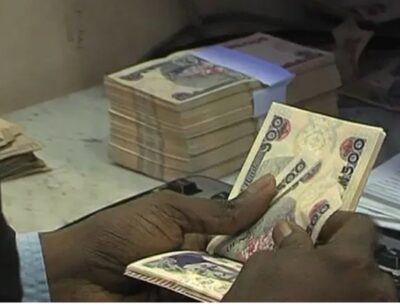 Audit report: Atiku pledges to probe N25,000 per household palliative
Former Vice President Atiku Abubakar has pledged to constitute a team of independent experts in finance, audit, technology and public accounting to review audit findings surrounding the sum of N33.75 billion reportedly paid to 3.29 million vulnerable Nigerian households under the federal government’s cash transfer programme.
Reacting on Saturday through his Senior Special Assistant on Public Communication, Phrank Shaibu, Atiku said the figures raised important questions about the reach and accountability of the intervention.
According to the figures, N33.75 billion divided among 3.29 million households amounts to approximately N10,258 per household.
Atiku noted that at a time of rising costs of transportation, electricity and food, Nigerians deserve clarity on how the intervention was disbursed and whether it reached the intended beneficiaries.
“This is not just a bookkeeping matter. If funds appropriated to support vulnerable Nigerians cannot be properly accounted for, and if access to records needed for accountability is limited, then public confidence in the programme is undermined,” Atiku said.
The former Vice President commended the Auditor-General of the Federation, Shaakaa Chira, for carrying out his constitutional responsibility.
“The Auditor-General deserves commendation for raising questions that are in the public interest. Institutions must protect the public purse and ensure transparency,” he stated.
Atiku also noted discrepancies in government communications on the programme, citing claims that more than N600 billion had been disbursed to over 10 million households, after an earlier figure of 15 million households was mentioned.
“A ministerial announcement is not proof of payment. A name on a social register is not evidence of a bank transfer. If more than 10 million households received over N600 billion, government should be able to show who received the money, how much each household received, and when the payments were made,” he said.
He referenced audit queries reportedly raised on N33.75 billion paid to 3.29 million beneficiaries, alongside N36.74 billion in payments said to have been made without pre-payment audit, and N4.62 billion for which payment vouchers were not produced.
“These are resources appropriated in the name of Nigerians who need support during a difficult cost-of-living period. Nigerians deserve to know how the money was spent,” Atiku added.
To support transparency, Atiku said he would constitute a team of independent experts in finance, audit, technology and public accounting to review available records relating to the cash-transfer payments.
“We will examine beneficiary data, payment channels, reconciliation records, and audit queries, within the limits of publicly available and institutional records. When the review is completed, we will share the findings with Nigerians,” he said.
Atiku further said the government should make payment records available for scrutiny.
“If Remita or other payment platforms processed these transactions, the records should be accessible. If beneficiaries received the payments, there should be verifiable evidence. If access to records was restricted, Nigerians deserve to know why,” he said.
He argued that Nigerians need more than announcements, but policies that improve purchasing power through reduced costs of transportation, food and energy.
“My proposal is a production-linked approach that supports domestic refining, increases local supply, and reduces the cost of energy so that the benefit reaches citizens through lower prices,” he stated.
Atiku said that if investigations show that funds meant for vulnerable Nigerians were misapplied, those responsible should be held accountable in line with the law.
“The poor have borne the burden of higher costs. They should not also lose the money appropriated to support them. Nigerians need the records, the recovery of any unaccounted funds, and policies that restore purchasing power,” he said.