
Atiku’s subsidy U-turn reopens old wounds
Atiku’s subsidy U-turn reopens old wounds
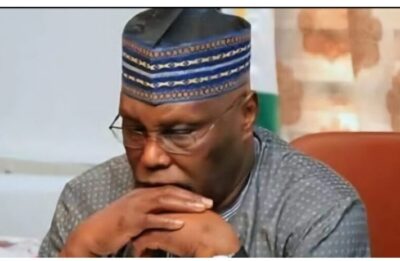
Former Vice President Atiku Abubakar’s pledge to restore fuel subsidy if elected president in 2027 has drawn sharp reactions from political rivals, policy experts, and everyday Nigerians, reopening one of the country’s most divisive economic debates, reports Deputy Political Editor RAYMOND MORDI. ExploringAfrican Heritage

The controversy began on Wednesday, August 19, 2026, when former Vice President Atiku Abubakar first hinted at a policy reversal in a Hausa-language interview, saying he would restore the petroleum subsidy if elected in 2027. The waters were temporarily muddied when his media aide, Paul Ibe, clarified during an AIT interview on Tuesday, August 25, 2026, that the subsidy would instead be “gradually phased out.”
However, the core U-turn was cemented later that same Tuesday. During a meeting in Abuja, Atiku publicly disowned his aide’s comments. Taking to his X (formerly Twitter) handle, the former vice president stated firmly: “On the question of subsidy, my position has not changed, and I will not change: I will restore it.”
This unequivocal reversal marks a stark departure from his 2023 campaign stance, in which he strongly backed removing the subsidy, describing it as a huge burden on the country’s finances.
Across the country, people are asking: what has changed?
Critics accuse Atiku of flip-flopping
Politicians from different parties quickly criticised Atiku’s statement. His opponents called it an act of desperation.
Presidential spokesperson Bayo Onanuga captured the administration’s sentiment, stating that Atiku “behaved like a man from an archaic past who least comprehends the present economic dynamics.” Onanuga argued that a return to the “much-abused, wasteful, pillaged, corruption-ridden fuel subsidy regime” would not just be a step backwards but a violation of the Petroleum Industry Act. “Desperate for power,” Onanuga continued, “he needed to make a promise that he knew… does not make fiscal sense.”
The criticism didn’t come only from the ruling party. Atiku’s fellow presidential candidates also voiced their opposition to the idea. Adewole Adebayo of the Social Democratic Party (SDP) accused him of “inconsistency,” citing his previous stance in the 2023 election, in which he, like Peter Obi, campaigned to remove the subsidy. “Something that was in place, you said you would remove it. Now your colleague removed it. Now you say you want to put it back. Inconsistency,” Adebayo remarked.
Dr Gbenga Hashim of the Accord Party went a step further, labelling Atiku the “father of subsidy removal” in Nigeria’s Fourth Republic and demanding an apology for his recent reversal.
Hashim argued that changing one’s mind is acceptable, but “pretending that you never held the position in the first place is dishonesty.”
Perhaps the most anticipated response came from Obi, the former Labour Party (LP) presidential candidate who had famously campaigned in 2023 on a platform of removing the subsidy. Obi, who has positioned himself as the voice of fiscal discipline and prudent management, did not mince words.
In a series of public engagements and social media posts, Obi maintained that his position on subsidy removal has not changed. He argued that the problem has never been the removal itself, but the absence of a concurrent social safety net to cushion the blow on ordinary Nigerians.
Obi’s camp further argued that Atiku’s sudden reversal exposed a fundamental flaw in his political philosophy: the willingness to abandon principle for votes, maintaining that subsidy is a corrupt enterprise that benefits a few at the expense of the many.
For Obi, the debate is not about returning to the old order but about ensuring that the new order works for Nigerians.
Omoyele Sowore, the African Action Congress (AAC) presidential candidate, strongly opposed Atiku’s proposal. Sowore believes the real issue is the need to change Nigeria’s political and economic system completely.
He described Atiku’s promise as “recycled rubbish from a politician who has run out of ideas.”
Sowore added that the subsidy was never a real solution, but a sign of bigger problems. “Atiku is offering Nigerians yesterday’s solution to today’s problem,” he declared.
The AAC candidate further argued that the real issue is Nigeria’s over-reliance on oil and its failure to build a productive economy. He proposed a complete overhaul of the energy sector, including massive investment in renewable energy and the immediate repair and activation of the country’s refineries.
Voices from the street
Beyond the political arena, everyday Nigerians are struggling with the effects of subsidy removal, and the debate is causing disagreements among families and friends. It is a common topic in markets, at bus stops, and in places of worship.
For Emmanuel Okonkwo, a Lagos commercial bus driver who plies the Oshodi-Apapa route, the subsidy removal has been nothing short of catastrophic. “Before, I could buy fuel for N250 per litre,” Emmanuel said in an interview, shaking his head. “Now it is over N1,200. My profit is gone. I go home with nothing. Sometimes I cannot even pay my children’s school fees. Atiku says he will bring it back? God bless him. At least someone is thinking about us.”
But not everyone shares Okonkwo’s sentiment.
Chidi Okpara, a young engineer who lives in Port Harcourt, Rivers State, offered a more nuanced perspective. He acknowledged the pain of the removal but argued that returning to subsidy would be a step backwards.
“Yes, things are hard,” Okpara admitted in a telephone interview. “But we cannot keep pretending that the subsidy was working. The fuel queues, the corruption, the smuggling—we all remember those days. The issue is that this government removed it without a plan: no palliatives, no alternatives, and no investment. Atiku is not offering a solution; he is offering an escape route. That is not leadership.”
Dr Aisha Mohammed, an economist, echoed Chidi’s view. She argued that the debate should not be about subsidy versus no subsidy but about governance and accountability.
“Subsidy removal was necessary, but it was done in the most painful way possible,” Mohammed said. “The government collected trillions in savings, and we have seen nothing: no new hospitals, no new schools, and no new roads. Atiku’s promise is tempting, but it is also a distraction. We should be asking where the money went, not begging for a return to corruption.”
The social media storm
Online, the debate has been equally fierce. On X, hashtags like #BringBackSubsidy and #AtikuIsDesperate have trended, with Nigerians from all walks of life weighing in.
One user, @NaijaPatriot, wrote: “Atiku promised to remove subsidies in 2023. Now he promises to bring it back. What exactly does he stand for? This is not about policy; this is about power.”
Another user, @LagosMum, countered: “You people are quick to criticise Atiku, but have you bought fuel recently? Have you bought food? The poor are dying. If a subsidy will save lives, then bring it back.”
The country is clearly divided, with people struggling between current hardships and doubts about returning to old policies.
The economic dilemma
The debate is not just about political opportunism; it cuts to the very heart of Nigeria’s economic dilemma. President Bola Tinubu’s declaration in May 2023 that “subsidy is gone” triggered an immediate economic earthquake. Petrol prices more than tripled, and the cascading effects on transportation, food prices, and living costs have been brutal.
A recent study by Mohammed Shuaibu of the University of Abuja found that poverty increased from about 50 per cent to 63 per cent after the removal, then moderated to 56.2 per cent with limited social protection measures.
Many Nigerians are struggling. A 50kg bag of rice now costs between N45,000 and N75,000, and even with the new N70,000 minimum wage, most workers find it hard to get by. Promises of future benefits feel empty compared to daily challenges.
Yet, for many analysts and stakeholders, the removal, though painful, was necessary. Policy expert Dr Muda Yusuf, Director of the Centre for the Promotion of Private Enterprise, noted that the reform “effectively stopped the haemorrhage of public resources” and curtailed smuggling, while making the downstream sector more transparent.
The Independent Petroleum Marketers Association of Nigeria (IPMAN) and the Petroleum Products Retail Outlets Owners Association of Nigeria (PETROAN) have also rejected Atiku’s proposal. IPMAN spokesperson Chinedu Ukadike argued that the focus should be on reviving local refineries to create competition and reduce price volatility, rather than returning to the old subsidy regime.
Billy Gillis-Harry, the National President of PETROAN, was even blunter, stating that those calling for the return of fuel subsidies “do not love Nigeria.” He argued that the country has moved past the era of subsidy and should focus on building a sustainable energy future.
A country at a crossroads
The return of the subsidy debate is a sign of just how fragile the public’s patience is. The government argues that the country has already surmounted the old problem of subsidy, even if the solution has brought new pains. Atiku argues that the new pains are too great, and the supposed benefits have not materialised.
Saifudeen Coomassie, a law lecturer, captured this tension. He admitted the removal was a “bitter but necessary correction,” arguing that a return to subsidy would be a return to enriching a few cabals. “Nation building is not about popularity,” he said. “It is about doing what is right for the next generation.”
But for millions of Nigerians who struggle to afford enough food, the promise of cheaper fuel is very appealing.
As the 2027 election draws closer, Atiku has thrown the debate wide open. His opponents—from Obi’s disciplined fiscal conservatism to Sowore’s radical restructuring agenda—offer competing visions. The ruling party offers continuity. And Atiku offers a return to the past.
For now, Atiku’s proposal has done more than spark political bickering. It has forced Nigerians to confront an uncomfortable question: Is the country willing to endure more pain in pursuit of long-term reform, or should it return to a subsidised system that, for all its flaws, offers temporary relief? How that question is answered could shape Nigeria’s economic path long after 2027.
