Air France Jet Makes Wr0ng Turn, Nearly Coll!des With American Airlines Plane In Los Angeles
Air France Jet Makes Wrong Turn, Nearly Collides With American Airlines Plane In Los Angeles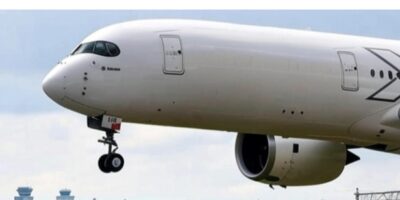
The incident occurred in the early hours of Saturday, November 7, 2026, as both aircraft departed the California airport for separate destinations.

An Air France Airbus A350-900 and an American Airlines Airbus A321 reportedly came within 400 feet (121 metres) of each other shortly after taking off from Los Angeles International Airport (LAX), narrowly avoiding a possible mid-air collision after air traffic controllers intervened.
The incident occurred in the early hours of Saturday, November 7, 2026, as both aircraft departed the California airport for separate destinations.
According to aviation publication, Simple Flying, Air France flight AF28 was heading to Papeete, French Polynesia, while American Airlines flight AA1660 was bound for Dallas/Fort Worth International Airport in Texas.
The two aircraft, which could collectively have been carrying more than 500 passengers, reportedly came dangerously close after the Air France jet deviated from its assigned departure route.
Simple Flying reported that the Air France aircraft, registration F-HUVK, had been cleared for take-off using the SUMMR2 departure procedure. The procedure, according to the Federal Aviation Administration (FAA), requires aircraft departing from designated runways to initially climb straight ahead before following their assigned routes.
At the same time, the American Airlines aircraft, registration N191UW, had been instructed by air traffic control to maintain an altitude of 2,000 feet, allowing the Air France aircraft to turn before climbing to flight level 270.
However, the Air France aircraft allegedly made an unauthorised left turn shortly after take-off instead of continuing straight ahead as required by its departure instructions.
Simple Flying, citing aviation observer TurbineTraveler in a post on X, reported that the unexpected turn placed the Air France A350 directly in the flight path of the departing American Airlines aircraft, resulting in a loss-of-separation incident.
The air traffic controller reportedly identified the developing conflict and quickly instructed both aircraft to turn away from each other, preventing a possible collision.
The controller subsequently questioned the Air France crew about its deviation from the assigned departure route.
Flight data published by Simple Flying showed that Air France flight AF28 departed at 12:15 a.m., while American Airlines flight AA1660 took off a minute later, at 12:16 a.m.
The Air France aircraft was an Airbus A350-900, while the American Airlines jet was an Airbus A321-200.
Both aircraft continued their journeys to their respective destinations, with no injuries or harm reported among passengers or crew.
Simple Flying said it contacted Air France on Sunday for comments about the incident, but an airline spokesperson was not immediately available.
The publication also noted that the incident was not the first time aircraft departing from Los Angeles International Airport had come dangerously close to one another.
In 2025, an American Airlines aircraft and an ITA Airways jet reportedly narrowly avoided a mid-air collision following a pilot deviation from the busy airport’s departure procedures.
Los Angeles International Airport is one of the busiest airports in the United States and operates carefully coordinated departure routes to maintain safe distances between aircraft.
The SUMMR2 procedure directs westbound departures over the Pacific Ocean, helping separate them from other departing and arriving aircraft.
Simple Flying reported that the Air France aircraft’s alleged sharp left turn shortly after take-off brought it across the path of the American Airlines jet, which had departed from Runway 25R.
The quick intervention by the departure controller and the pilots’ subsequent manoeuvres allowed both aircraft to avoid a collision and continue their journeys.