
Abia Businessman Jailed Five Years For Manufacturing, Selling Fake Goya Olive Oil
 Abia Businessman Jailed Five Years For Manufacturing, Selling Fake Goya Olive Oil
NAFDAC arrested Okoye and sent samples of the recovered products to its laboratory for scientific analysis. The investigation subsequently led to criminal proceedings against the businessman and his conviction on the two counts.

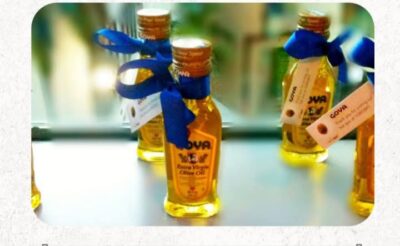
The National Agency for Food and Drug Administration and Control (NAFDAC) has secured the conviction of Innocent Okoye, a businessman in Aba, Abia State, for manufacturing and selling counterfeit Goya Extra Virgin Olive Oil, with the Federal High Court sentencing him to five years’ imprisonment or a fine of ₦5 million.
The judgment, delivered on Wednesday, October 28, 2026, by Justice K. O. Ogundare of the Federal High Court, Umuahia, followed months of investigation and prosecution over the production and distribution of the counterfeit product.
Okoye, the Managing Director of Chikason Industrial Nigeria Limited, Aba, was convicted on two counts relating to the manufacture and sale of fake Goya Extra Virgin Olive Oil.Buy Maps
The case followed an enforcement operation conducted by the agency’s Investigation and Enforcement Directorate in April 2026. Officials uncovered a facility in Aba used to produce and distribute counterfeit Goya oil.
NAFDAC arrested Okoye and sent samples of the recovered products to its laboratory for scientific analysis. The investigation subsequently led to criminal proceedings against the businessman and his conviction on the two counts.
The conviction comes amid growing concerns over the circulation of counterfeit food products in Nigerian markets, where manufacturers exploit the popularity of established brands to deceive consumers and make profits from products whose composition and safety cannot be guaranteed.
In January 2026, NAFDAC warned Nigerians about counterfeit Goya oil packaged in polyethylene terephthalate (PET) plastic bottles and sold to unsuspecting consumers as genuine imported products.
At a media briefing in Lagos, the agency’s Director of Investigation and Enforcement, Dr Martins Iluyomade, disclosed that investigators had uncovered an illegal production operation at Oke-Arin Market, Idumota, Lagos.
According to NAFDAC, operators of the facility were allegedly processing palm oil with colouring agents before repackaging the mixture as Goya oil for sale. The operation raised concerns about the methods used by counterfeiters to imitate established brands and mislead consumers.
Iluyomade explained that genuine Goya oil authorised for sale in Nigeria was imported in original glass bottles through approved distribution channels. He warned consumers to be cautious of products carrying the Goya brand name in PET plastic bottles.
The warning highlighted the difficulties consumers face in distinguishing genuine products from counterfeits, particularly when imitation goods are packaged and marketed to resemble established brands.
Beyond violations of product standards and intellectual property rights, food counterfeiting poses public health concerns because consumers may have no reliable way to determine the actual ingredients, quality or safety of the products they buy.
Edible oils manufactured or repackaged under uncontrolled conditions may contain undeclared substances or contaminants, potentially exposing consumers to health risks.
These risks are particularly concerning when such products are repeatedly used for cooking or applied to the skin without reliable information about their composition.
NAFDAC has urged consumers, traders and religious organisations to verify the sources of products they purchase and exercise caution when they encounter suspicious packaging or unusually presented goods.
The agency has also called on Nigerians to report suspected counterfeit products, illegal manufacturing facilities and distribution networks to the nearest NAFDAC office or through its official reporting channels.
NAFDAC maintained that tackling food counterfeiting requires stronger cooperation among manufacturers, distributors, retailers, consumers and law enforcement agencies to prevent falsified products from entering legitimate supply chains.
