Tinubu’s N66 Fuel Discount Is Political Gimmick, Not Policy,’ Says Peter Obi
‘Tinubu’s N66 Fuel Discount Is Political Gimmick, Not Policy,’ Says Peter Obi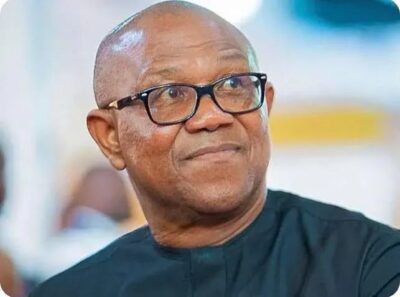
Obi also questioned the geographical reach and practical effectiveness of the 30-day discount scheme, particularly its reported restriction to NNPC Retail petrol stations.
The 2027 presidential candidate of the Nigeria Democratic Congress (NDC), Peter Obi, has berated the Nigerian government’s one-month petrol discount scheme, describing it as a political gimmick that offers little relief to Nigerians grappling with soaring living costs.
Obi, in a statement issued on Sunday, questioned the rationale behind the initiative, arguing that the discount of about ₦66 per litre, which he said amounts to less than five per cent of petrol costs, would do little to address widespread poverty, unemployment, insecurity and economic hardship.
The former Anambra State governor also called for the restoration of fuel subsidies, alongside subsidies for agriculture, healthcare, education and infrastructure, insisting that Nigeria could afford such interventions under a transparent, productive and accountable government.
He described the petrol discount announced by the Nigerian Government on October 1 as “plain political optics masked as policy,” accusing the administration of President Bola Tinubu of adopting reactive measures instead of developing sustainable solutions to the country’s economic challenges.
“The announcement by the APC-led Federal Government offering a 30-day discount on price of petrol to relieve the acute hardship and hunger caused Nigerians by its unplanned removal of subsidy can only be described as another very reactive and confused approach to governance that is now the culture of the Tinubu Government,” Obi said.
Obi said he had delayed commenting on the initiative to allow time to assess its implementation and outcomes, but noted that the scheme substituted political appearances for sound economic policymaking.
According to him, the government’s decision to remove petrol subsidies on May 29, 2023, was taken without adequate consultation or a proper assessment of the potential consequences for the economy and the livelihoods of ordinary Nigerians.
He argued that the subsequent floating of the naira and tax reforms were also poorly sequenced and implemented, contributing to inflationary pressures and sharp increases in the prices of goods and services.
Obi further criticised the government’s handling of public finances, alleging that the simultaneous use of three budgets had undermined transparency and accountability.
He said the combined effects of the policies had worsened multidimensional poverty, increased business closures and unemployment, widened inequality, heightened insecurity and forced many young Nigerians to seek opportunities outside the country.
“Most unfortunately, rather than engage in detailed and published regulatory impact assessment of their reactive policies, the President Bola Tinubu-led government has again demonstrated their well-known incompetence and insensitivity to governance,” he said.
The NDC presidential candidate argued that a proper regulatory impact assessment would have enabled the government to consult stakeholders, evaluate the likely consequences of its decisions and develop more inclusive and sustainable economic policies.
Obi also questioned the geographical reach and practical effectiveness of the 30-day discount scheme, particularly its reported restriction to NNPC Retail petrol stations.
According to him, the Nigerian Government’s arrangement would make the discount available at approximately 900 NNPC Retail stations out of an estimated 24,000 petrol stations across Nigeria.
He argued that the limited number of participating outlets would leave the overwhelming majority of filling stations outside the scheme, restricting access for millions of Nigerians.
Using an estimated national population of 243 million, Obi calculated that there would be approximately 270,000 Nigerians per participating NNPC Retail station if the population were evenly distributed among the 900 outlets.
He noted, however, that the distribution of the stations across the country was uneven, potentially leaving some communities with even less access to the discount.
“Imagine 243,000 Nigerians struggling for a N66.00 per litre discount in each of the NNPC petrol stations. This is certainly not how to govern a richly blessed and endowed nation!” he said.
Obi questioned whether the temporary discount would meaningfully reduce poverty, unemployment, insecurity and inequality or stimulate productivity and exports.
He also asked whether the initiative was intended to test public reaction to a possible restoration of fuel subsidies or was politically motivated ahead of the 2027 general elections.
“Too many questions, no answer!” he said, noting that he was preparing a more detailed explanation of his position on fuel subsidies and a policy roadmap for achieving fair, transparent and affordable petroleum product pricing.
He maintained that research into Nigeria’s existing revenue and potential earnings under a productive economy, supported by what he described as an incorruptible and competent administration, reinforced his position that subsidies should be restored.
According to him, such support should not be limited to petrol but should also cover agriculture, healthcare, education and infrastructure.
Obi argued that addressing the country’s economic difficulties required more than temporary price reductions, calling for policies designed to lower the cost of living and improve the welfare of ordinary citizens.
He said the government needed to prioritise welfare-enhancing pricing policies and ensure that such interventions were administered transparently.
“While I prepare to provide a more detailed explanation on my current stand on subsidy and a policy roadmap on fair, transparent and affordable pricing of petroleum products, let me state that research on our current revenue and revenue potential in a productive Nigeria under an incorrupt, transparent and competent government which my leadership will enthrone affirms my position that subsidy should be restored to Nigerians,” he said.
Obi stressed that the October 1 petrol price discount announcement did not represent the kind of long-term economic intervention he believed Nigeria needed.
“It is clear that President Tinubu’s October 1 policy announcement is neither of that. It is plain political optics masked as policy. Nigerians are tired of those gimmicks. It is time for real change,” he said.
The Nigerian government’s petrol discount scheme comes amid continued public outrage over the consequences of fuel subsidy removal, the cost of transportation and the broader impact of economic reforms on Nigerian households and businesses.