
US intelligence chief resigns, cites husband’s cancer diagnosis
US intelligence chief resigns, cites husband’s cancer diagnosis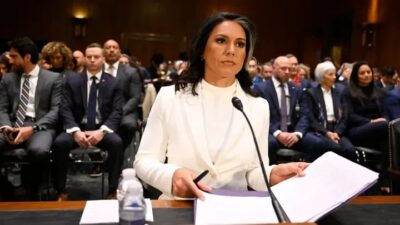

Tulsi Gabbard has announced her resignation as Director of National Intelligence, citing the need to support her husband, Abraham, following his diagnosis with a rare form of bone cancer.
According to a resignation letter shared on her verified X account on Friday, Gabbard informed President Donald Trump during a meeting in the Oval Office that she would step down from the position effective June 30, 2026.
In the letter, Gabbard expressed appreciation to the president for the opportunity to serve in the role over the past year and a half.
She described the decision as a difficult one, explaining that her husband’s health condition would require her full attention in the coming months.
“At this time, I must step away from public service to be by his side and fully support him through this battle,” she stated.
Gabbard praised her husband for standing by her throughout their 11-year marriage, including during her military deployment to East Africa, political campaigns and her tenure in government.
“His strength and love have sustained me through every challenge,” she said, adding that she could not “in good conscience” allow him to face the illness alone while she continued in the demanding national security role.
Despite her resignation, Gabbard said she remained committed to ensuring a smooth transition before leaving office.
“I am fully committed to ensuring a smooth and thorough transition over the coming weeks so that there is no disruption in leadership or momentum,” she noted.
She also thanked the American people for what she described as the “profound honor” of serving as Director of National Intelligence.
During her tenure, Gabbard oversaw a restructuring of the U.S. Intelligence Community, including efforts aimed at reducing operational costs and reorganising several programmes within the agency.
Her office also declassified hundreds of thousands of government records related to investigations and historical events, including files connected to the Trump-Russia probe as well as the assassinations of President John F. Kennedy and Senator Robert F. Kennedy.
The Office of the Director of National Intelligence further reported that its National Counterterrorism Center blocked thousands of individuals allegedly linked to narco-terrorism activities from entering the United States in 2025 and expanded the federal terror watchlist during the same period.