
Why we overthrēw Buhari’s Regime in 1985 – IBB
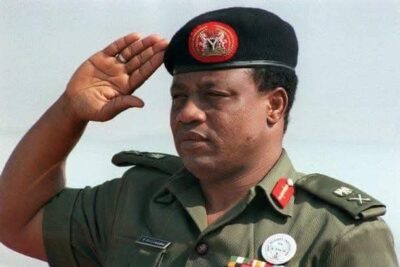
Why we overthrēw Buhari’s Regime in 1985 – IBB
The former milit@ry Hëad of state, Geñeral Ibrahim Badamasi Babangida (IBB), says the Muhammadu Buhari rēgime was overthrøwn because he was dissatisfied with the latter’s policies and leadership styles.
Babangida was CHÌEF of staff to Buhari who ousted Shehu Shagari’s civilîan gøvernmēñt in the December 31, 1983 coup.
In his autobiography, ‘A Journey In Service’, launched in Abuja on Thursday, IBB said the Buhari rēgime promulgated “draconian” decrees which led to the @buse of fundamental rights and freedoms of the citizens.
He said he believed the policies of Buhari and his deputy, Tunde Idiagbon, “were detrimental to the nation’s progress” and his dissatisfaction “eventually led to its ouster in 1985”.
“After the milit@ry CØŪP that replaced the civilian gøvernmēñt of Shehu Shagari with a milit@ry rēgime led by Major Geñeral Muhammadu Buhari, Ibrahim Babangida assumed the role of Chìef of Ārmy Staff.
However, he became increasingly dissatisfied with the Buhari government’s policies and leadership style, which he believed were detrimental to the nation’s progress. This dissatisfaction eventually led to its ouster in 1985, and he took office as the military President,” the book reads
Recalling how he journeyed from Minna to Lagos on August 27, 1985, to assume office, Babangida said tension had already began to build up since the start of the year and a change in leadership had become necessary.
The former Nigerian leader further said that the CØŪP which brought Buhari into officē, which he described as a “rescue mission”, had derailed with the milit@ry at the risk of splitting.
“On that day, it became my lot to step into the saddle of national leadership on behalf of the Nigerian armed forces. The change in leadership had become necessary as a response to the worsening mood of the nation and growing concern about our future as a people. All through the previous day, as we flew from Minna and drove through Lagos towards Bonny Camp, I was deeply reflecting on how we as a nation got to this point and how and why I found myself at this juncture of fate,” IBB said in his book.
“By the beginning of 1985, the citizenry had become apprehensive about the future of our country. The atmosphere was precarious and fraught with ominous signs of clear and present danger. It was clear to the more discerning leadership of the armed forces that our initial rescue mission of 1983 had largely miscarried. We now stood the risk of having the armed forces split down the line because our rescue mission had largely derailed. If the armed forces imploded, the nation would go with it, and the end was just too frightening to contemplate
He claimed that Buhari and Idiagbon “posited a ‘holier than thou’ attitude”, separating themselves from what was meant to be a collective leadership.
He added that the duo caused the nation to become antagonistic towards the military.
“Fundamental rights and freedoms were being routinely infringed upon and abused. As a military administration, we were now presiding over a society that was primarily frightened of us,” he said
He added that the duo caused the nation to become antagonistic towards the military.
“Fundamental rights and freedoms were being routinely infringed upon and abused. As a military administration, we were now presiding over a society that was primarily frightened of us,” he said.
“We were supposed to improve their lives and imbue the people with hope for a better future. Instead, we ruled the nation with a series of draconian decrees. An administration intended to reflect the collective will of the armed forces as a national institution came to be seen as the private personal autocracy of a stubborn few.
Draconian decrees led to the abuse and severe limitation of basic freedoms as people were clamped into indefinite detention, most times for minor infractions. Punishment for crimes against the state had led to the pursuit of mechanical legalistic justice against the dictates of natural justice. As the Chief of Army Staff, I was under undue pressure from the rank and file to seek ways of reconnecting the government to society lest we lose the nation itself.
In his 1985 maiden address to the nation reproduced in the book, Babangida said Buhari was “too rigid and uncompromising in his attitudes to issues of national significance”.
He added that Idiagbon “was similarly inclined in that respect” and that “a combination of these characteristics in the two most important persons holding the nation’s vital offices became impossible to contend with”.
Babangida said an action had to be taken so as to rebuild the hopes of Nigerians, hence the ousting of the Buhari milit@ry RĒGIME.