
why Awolowo preferred PA Ajasin to Chief Omoboriowo as the UPN candidate in old Ondo State
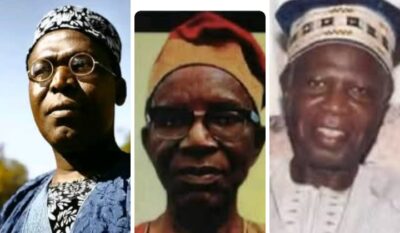
why Awolowo preferred PA Ajasin to Chief Omoboriowo as the UPN candidate in old Ondo State
The politics of Nigeria’s Second Republic between 1979 and 1983 remains one of the most dramatic periods in the country’s democratic history. Within that period, the decision of Chief Obafemi Awolowo, the leader of the Unity Party of Nigeria (UPN), to support Pa Michael Adekunle Ajasin as the gubernatorial candidate of the party in the old Ondo State instead of Chief Akin Omoboriowo became one of the most debated political choices of the era. That decision not only shaped the political leadership of the state but also exposed and deepened political tensions that affected the relationship between politicians from the Ondo axis and those of Ekiti extraction, even though both groups were then part of the same state.
Chief Obafemi Awolowo was widely respected as a principled politician who believed strongly in ideology, discipline, and loyalty to progressive political philosophy. His political organization had its roots in the earlier Action Group, which had dominated politics in the Western Region in the 1950s and early 1960s. When the Unity Party of Nigeria emerged in the Second Republic, Awolowo maintained the tradition of selecting candidates whom he believed possessed integrity, commitment to progressive policies, and the moral discipline required for leadership.
Pa Michael Adekunle Ajasin, whom Awolowo supported as the gubernatorial candidate, came from Owo in the present Ondo State. Before entering partisan politics, Ajasin had built a distinguished career as an educationist and public administrator. He served as a teacher and later rose to become a school principal and education administrator within the Western Region’s educational system. His reputation for discipline, honesty, and dedication to the cause of education made him widely respected. Ajasin had long been associated with the progressive political movement of Awolowo, and he was seen as a loyal adherent of the ideology that emphasized free education, rural development, and social welfare. To Awolowo and many leaders of the party, Ajasin represented stability, moral authority, and ideological consistency.
In contrast, Chief Akin Omoboriowo, who hailed from Ijero Ekiti in the present Ekiti State, was also an accomplished professional before his entry into politics. Omoboriowo was a Lawyer and built a successful career enviable to many. His professional background and youthful energy made him an attractive political figure, particularly among younger politicians and many supporters from the Ekiti area of the old Ondo State. However, despite his competence and popularity, Awolowo reportedly had reservations about his level of ideological commitment and his perceived political ambition.
Awolowo therefore chose to back Ajasin as the party’s gubernatorial candidate in the 1979 election. Omoboriowo was subsequently selected as the deputy governorship candidate in what appeared to be a compromise intended to balance political interests within the party and the state. However, even before the election, the decision revealed an underlying division. Although Ekiti and Ondo were administratively united in the old Ondo State, many politicians from Ekiti extraction believed that their region had been denied the opportunity to produce the party’s gubernatorial candidate. Awolowo’s support for Ajasin from Owo rather than Omoboriowo from Ijero Ekiti reinforced a perception that political leadership within the state favored the Ondo axis.
As the Ajasin administration progressed, the relationship between the governor and his deputy gradually deteriorated. Political disagreements and struggles for influence within the party and government created factions that often reflected regional loyalties. Supporters of Omoboriowo, particularly from the Ekiti area, increasingly believed that their leader had been sidelined within the administration. On the other hand, Ajasin’s supporters argued that the governor was simply maintaining discipline and protecting the ideological direction of the government.
The political conflict reached its peak during the controversial 1983 gubernatorial election. Omoboriowo eventually defected to another political platform and contested against Ajasin. The election result, which initially declared Omoboriowo as the winner, triggered widespread protests and violent unrest across the state. Many supporters of the UPN rejected the result, accusing the federal authorities of manipulating the election. The violence that followed became one of the most notable political crises of the Second Republic and further deepened the mistrust between politicians from the Ondo and Ekiti areas. The crisis also strengthened the argument among many Ekiti leaders that their region had long been politically marginalized within the old Ondo State. Over time, this sense of political exclusion contributed to the agitation for the creation of a separate Ekiti State, which was eventually realized in 1996 during the military regime of General Sani Abacha. Although the demand for state creation had multiple causes, the political tensions of the Second Republic, including the rivalry between Ajasin and Omoboriowo, played an important role in shaping that sentiment.
Looking back at the events of that period, some observers believe that the crisis might have been avoided if a transparent and competitive primary election had been conducted between Pa Michael Adekunle Ajasin and Chief Akin Omoboriowo before the 1979 election. Such a democratic process might have reduced the perception that the candidate had been imposed by the party leadership. If Omoboriowo had lost in a fair contest, his supporters might have been more willing to accept the outcome. Conversely, if he had won the primary election, the political rivalry that later destabilized the state might not have taken the same course.
However, it is also possible that Awolowo believed he was acting in the best interest of the party and the state. His political philosophy emphasized discipline, loyalty, and ideological commitment, and he may have considered Ajasin the more reliable custodian of the party’s progressive programmes. From his perspective, leadership selection was not merely about popularity but about choosing individuals who could faithfully implement the party’s vision of social development.
The events that followed illustrate how leadership decisions within political parties can have far-reaching consequences, especially in a politically diverse environment. The rivalry between Ajasin and Omoboriowo did not only destabilize the government of the old Ondo State but also left a lasting imprint on the relationship between politicians from the Ondo and Ekiti areas. It raised fundamental questions about internal party democracy, regional balance, and the management of political ambition.
In the final analysis, the episode remains one of the most intriguing moments in Nigeria’s political history. It invites reflection on the nature of leadership, party discipline, and political inclusion in democratic governance. Yet it still leaves historians and political observers with an enduring question: was Chief Obafemi Awolowo right in that decision?
Olúfémi Adébáyò Ayeni Oluwadare Ph.D
Soyebi Adenike Ayeni
Oluwadare Ayeni, PhD
Professor of African Democracy and Public Governance