
2027 poll: Ojudu warns Nigerians against political violence, ethnic t£nsions
2027 poll: Ojudu warns Nigerians against political violence, ethnic tensions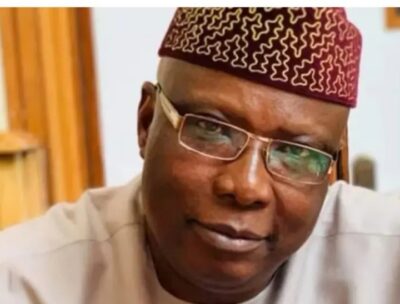
Former Special Adviser to the President, Senator Babafemi Ojudu, CON, has raised concerns over growing political violence, ethnic tensions and declining public confidence in Nigeria’s democratic institutions ahead of the 2027 general elections.
Ojudu, who signed the statement as a former Special Adviser to the President of Nigeria and a concerned citizen, said recent developments across the country posed a threat to national unity and the survival of democracy.

In the statement dated November 6, 2026, the former presidential aide described the situation as a gathering crisis, warning that political disagreements and attacks on campaign activities could undermine peaceful coexistence.
“A dark cloud is gathering over Nigeria. The violence of recent days demands an immediate response, but it is a symptom of a deeper crisis. Public confidence in the institutions that should help us settle our differences peacefully is eroding. Ethnic suspicion is increasingly being put to political use. What is at stake is the survival of our democracy and our ability to live together as one country,” he said.
Ojudu also expressed concern over the Federal High Court judgment in Abuja which set aside the David Mark-led leadership of the African Democratic Congress (ADC) and voided the presidential nomination of former Vice President Atiku Abubakar.
He noted that the ADC had announced its intention to appeal the ruling, insisting that the appeal should receive a fair and timely hearing.
“The ruling also raises a question that concerns every Nigerian, whatever our party preference. Can we trust that the rules of political competition will be applied fairly, even when the outcome is inconvenient to those in power?” he asked.
The former presidential aide also cited reported attacks on opposition campaign activities in different parts of the country, including an incident involving activist Omoyele Sowore and his team in Ado-Ekiti, the smashing of windscreens in Peter Obi’s convoy in Calabar, and an alleged attack on the ADC campaign convoy in Kebbi State.
According to him, the destruction of cameras and other media equipment belonging to the ADC campaign crew in Kebbi disrupted live coverage and threatened the public’s right to access information.
“When those covering a campaign are attacked, the public’s right to see and judge for itself is also at risk,” Ojudu stated.
He, however, condemned attacks and disruptions involving the ruling All Progressives Congress (APC), noting that political violence should be investigated regardless of the party or individuals affected.
He referenced the disruption of the APC campaign visit in Lafia, Nasarawa State, where Vice President Kashim Shettima’s convoy was reportedly obstructed during a visit to the Emir of Lafia. He also mentioned an incident in Yankara, Katsina State, where vehicles were reportedly set ablaze and political posters destroyed.
“These incidents deserve investigation wherever they occur and whoever is affected. A citizen has every right to call for a president to be voted out. Every party has an equal right to campaign peacefully. A democracy depends on our willingness to defend both rights at once,” he said.
Ojudu warned that Nigeria’s political history offered important lessons about the consequences of disputed elections and declining confidence in democratic institutions.
He recalled the disputed Western Region election of 1965, which was followed by violence, arson and killings before the collapse of the First Republic in January 1966 and the subsequent civil war.
He also cited the disputed 1983 elections, which were followed by bloodshed and the eventual collapse of the Second Republic in December of that year.
According to him, although the crises had different causes, they demonstrated how civilian government could become vulnerable when citizens lost faith in the mechanisms for addressing electoral grievances.
The former presidential aide further referenced the annulment of the June 12, 1993 presidential election, saying the widespread support for M.K.O. Abiola across ethnic and regional lines had demonstrated the unifying potential of credible elections.
“A credible election can strengthen the bonds of nationhood. When citizens believe their votes can be discarded, the damage reaches far beyond the candidate whose mandate is at stake,” he stated.
With the 2027 general elections approaching, Ojudu urged presidential candidates to explain how they intend to restore confidence in public institutions and promote national unity.
He specifically said President Bola Tinubu had a greater responsibility to ensure that government institutions remained impartial throughout the electoral process.
“Every candidate seeking the presidency should tell Nigerians what they intend to do to restore confidence in our institutions and hold our country together,” he said.
He added that candidates should reject ethnic incitement, defend the rights of political opponents to campaign freely and commit to respecting credible election results.
Ojudu also called on labour unions, professional associations, traditional and religious leaders, student organisations, journalists and civil society groups to organise peaceful engagements across political divides.
He urged the groups to demand commitments from political parties on electoral fairness, equal protection for campaign activities, press freedom and the timely resolution of electoral disputes.
He further challenged Nigerians to reject ethnic hostility, including when it comes from members of their own political groups.
“Our responsibility is to preserve a country in which we can lose an election and still belong, win an election and still answer to the law, and disagree with our neighbours without fearing one another,” he said.
“That work cannot wait until after the votes are counted. It must begin now,” Ojudu added.
