

Tinubu Will Be Difficult to Remove as President, But Nigerians Can Vote Him Out – Lamido
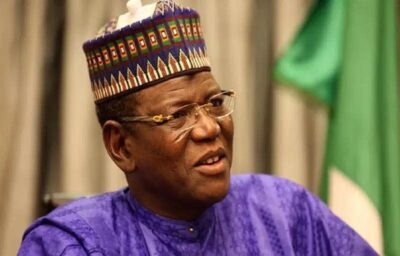
Tinubu Will Be Difficult to Remove as President, But Nigerians Can Vote Him Out – Lamido
A former governor of Jigawa State, Sule Lamido, has stirred fresh political debate with a blunt assessment of President Bola Ahmed Tinubu and the prospects of unseating him ahead of the next general elections.
Speaking on the current political landscape, Lamido acknowledged Tinubu’s strong political influence, describing him as a formidable figure who would be “difficult to remove” from office. According to him, the President possesses an exceptional level of political capacity—one he controversially framed as the ability to manipulate systems to achieve his objectives.
In his words:
“Tinubu will be difficult to remove as a President. Because I know his capacity. I meant his capacity to do the wrong things. His capacity to manipulate anything to get what he wants. But still, Nigerians can decide to vote him out.”
A Statement That Sparks Debate
Lamido’s remarks have since ignited conversations across political circles and among citizens, with many interpreting his statement as both a critique and a caution. While he questions the methods he believes Tinubu employs, he also emphasizes the power of the electorate in shaping Nigeria’s democratic future.
Power Still Lies With the People
Despite his concerns, Lamido underscored a critical point: the ultimate authority rests with Nigerians. He maintained that no matter how powerful a sitting president may appear, the ballot remains the most effective tool for change in a democratic system.
This position reinforces the importance of civic participation, especially as political activities gradually begin to build toward the 2027 general elections.
Political Undercurrents Ahead of 2027
Lamido’s comments come amid increasing political realignments and subtle campaign signals across party lines. Analysts believe such statements reflect growing tensions and strategic positioning among key stakeholders as Nigeria inches closer to another electoral cycle.
For many observers, the message is clear—while incumbency provides leverage, it does not guarantee permanence in office.
Final Thoughts
Lamido’s assertion walks a fine line between criticism and democratic optimism. It highlights both the perceived strength of President Tinubu’s political machinery and the enduring power of the Nigerian voter.
As the nation looks ahead, one question remains: will Nigerians exercise that power decisively when the time comes?