
They Sl!t The Thr0ats Of My Four Children” — Woman Cr!es Out As Jihadists Ravag£ Communities, Force Thousands Into Ex!le
“They Slit The Throats Of My Four Children” — Woman Cries Out As Jihadists Ravage Communities, Force Thousands Into Exile
Nearly three years later, the memories remain raw, the pain unrelenting.
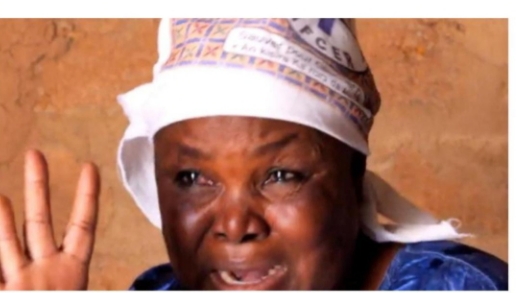
Yameogo Aminata, a 57-year-old Burkinabè woman, has recounted how Islamist militants stormed her village in central Burkina Faso, slaughtered her four sons in cold blood, and left her daughter missing, feared abducted or killed.
Nearly three years later, the memories remain raw, the pain unrelenting.
“They slit the throats of four of my children,” Aminata said, her body shaking as tears rolled down her face.
“When I arrived, they were killing my fourth son.”
Aminata said she grabbed a knife to fight back, but was overpowered, beaten, thrown into the bush, and left with severe injuries to her head, shoulder and throat.
She said her daughter got separated from her during the attack, and she has been missing since then.
BBC reports that Aminata is one of thousands of Burkinabè civilians forced to flee a brutal jihadist insurgency that has torn through Burkina Faso for nearly 15 years, spilling across borders into Mali and Niger.
However, the United Nations has described the three countries as the “epicentre” of global jihadist violence, a grim label reflected in the daily suffering of ordinary people.
In 2022, Aminata had been away from home when armed insurgents struck her village. By the time she returned, jihadists had already taken control of the area—seizing cattle and farmland, burning homes, and killing residents indiscriminately.
Her four sons, aged between 25 and 32, were among those targeted.
In 2023, with violence worsening and no protection in sight, Aminata fled Burkina Faso and crossed into neighbouring Ivory Coast, where she now lives in the Nioronigué refugee camp near the border.
She carried with her the bloodstained clothes she wore on the day of the attack—items she still keeps as painful reminders of what she lost.
“I don’t know how to handle my life anymore,” she said. “I have nothing.”
According to humanitarian agencies, at least 10,000 people have been killed in Burkina Faso’s insurgency, while millions more have been displaced across the Sahel.
The crisis has reshaped politics across the region. Military juntas have seized power in Burkina Faso, Mali and Niger, promising to crush the jihadist threat after accusing civilian governments of failure.
The juntas have since distanced themselves from traditional Western allies and turned to Russia for military support. Russian forces, operating under the banner of the Africa Corps, have been deployed in Burkina Faso.
Yet despite these shifts, the violence has not abated.
The most powerful armed group operating in the region remains Jama’at Nusrat al-Islam wal-Muslimin (JNIM), an al-Qaeda affiliate responsible for countless massacres, kidnappings and attacks on both civilians and security forces.
At the same camp, 60-year-old farmer Hassane Tall described fleeing northern Burkina Faso in 2023 with his three wives and 19 children after repeated attacks.
“We escaped clashes between jihadist groups and security forces,” Tall said. “We thought we would die.”
Leaving behind his ancestral land was devastating, he said, but returning is unthinkable.
“There is no future for us there anymore,” he added.
The Nioronigué camp, spread across 12 hectares, was established in 2023 by the United Nations in partnership with Ivorian authorities. It was designed to host about 6,000 people.
Today, along with the nearby Timala camp, it shelters around 13,000 refugees, more than double its intended capacity.
UN data shows that over three million people have been displaced by conflicts across the Sahel region. More than 80,000 Burkinabè refugees are currently living in camps and host communities in Ivory Coast alone.
Despite her trauma, Aminata expressed gratitude to her host country.
“I thank the state of Ivory Coast, and all the Ivorians,” she said.
“I left my house because we were chased out by jihadists. They said they want the country,” she added, referring to militants who claim to be fighting to impose their rule.
Across the camp, similar stories of loss, displacement and fear are common.
Some refugees have fled from Mali, including a 27-year-old finance graduate who asked not to be named.
He said he and his brothers made a perilous journey down the River Niger in a wooden boat from Gao in northern Mali to Bamako, before travelling by bus to northern Ivory Coast.
They fled after their 24-year-old cousin was killed by suspected jihadists.
“He was a fisherman. He was coming from fishing at night as usual. He was attacked by two men riding motorbikes. These are things that happen every day.
“We were living in fear, not knowing if we’ll wake up the next day,” he said.
Ivory Coast has one of West Africa’s fastest-growing economies, but unemployment and poverty remain high, particularly in border regions. The growing influx of refugees has sparked concerns among local communities.
However, government officials insist that refugees will not be turned away.
“Those who come are our brothers; we share the same history and culture,” said Djamatigui Touré, a government representative.
But humanitarian agencies warn that resources are stretched to breaking point.
“The number of refugees has increased tremendously,” said Blerta Cela, resident representative of the UN Development Programme. “The majority of them are actually not in the camps. They are hosted by Ivorian families.”
For Aminata, life in exile offers safety, but not healing.
“I still cannot erase what happened to me,” she said, her voice barely above a whisper.
“We just pray to God that peace comes back to Burkina Faso.”