
RECORDING A PHONE CALL WITHOUT CONSENT
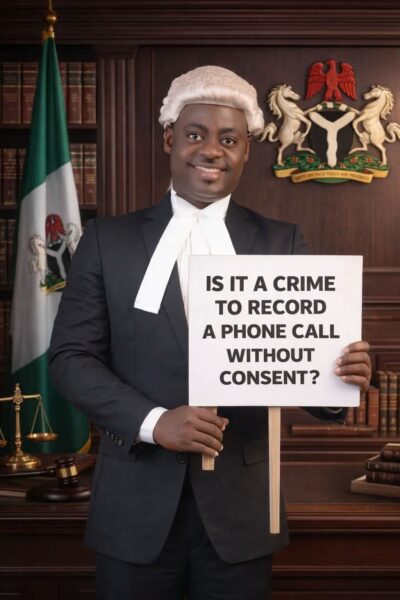
RECORDING A PHONE CALL WITHOUT CONSENT
In Nigeria, the legality of recording a phone call without consent is a dicey issue that sits at the intersection of constitutional privacy rights and the rules of evidence.
It largely depends on the circumstances of the record and the mode of the usage.
Reason being that, there is a Constitutional provision for privacy as contained in the Section 37 of the Constitution of the Federal Republic of Nigeria 1999 (as amended) which protects right to freedom of privacy including telephone conversations. Secret recording violates that right.
Section 8 of the Cybercrimes Act 2015 makes it a criminal offence to unlawfully intercept or record private electronic communications without lawful authority.
Generally, recording a call you are personally part of is not treated as a criminal offence on its own, particularly if such recording is for a personal use, or for evidence in a dispute (e.g. contracts, threats, agreements).
The mode of recording does not stop a court from admitting such recordings as evidence, even if the other party didn’t consent.
Recording a phone call without consent might become an illegality if it is published without lawful justification, for blackmailing, for defamation, harassment, divulging confidential or privileged communication etc.
You have been informed. Follow Legal Consults & Updates for more legal tips and updates