
Ogogo and the Cancer Lesson We All Need to Understand
Ogogo and the Cancer Lesson We All Need to Understand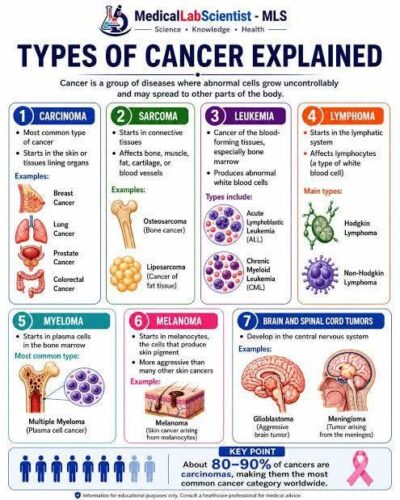
By Aiyepola Abayomi
The appeal by the daughters of veteran actor Taiwo Hassan, popularly known as Ogogo, has done something beyond stirring sympathy. It has forced an uncomfortable conversation about a disease millions fear but many still poorly understand: cancer.
Cancer is not one disease. It is a name given to a large group of diseases in which some cells in the body stop obeying the normal rules.
Healthy cells grow, divide and die when necessary. Cancer cells can keep multiplying when they should not. They may form a tumour and, in some cases, travel through the blood or lymph system to other parts of the body. That spread is called metastasis.
And no, you do not “catch” cancer from another person.
Some infections, however, can increase the risk of certain cancers. HPV, for example, is strongly linked to cervical cancer, while hepatitis B and C can contribute to liver cancer.
Why does someone develop cancer?
There is rarely one simple answer.
Age increases risk because damage can accumulate in cells over time. Tobacco, excessive alcohol, obesity, physical inactivity, some infections, radiation, air pollution and certain chemicals can also increase risk.
Genes matter too. Some people inherit mutations that make particular cancers more likely, although most cancers are not simply inherited from parents.
This is why saying someone “caused” their cancer is often cruel as well as scientifically wrong.
Men and women get different cancers, but there is plenty of overlap
Men commonly face cancers such as prostate, lung and colorectal cancer.
Women commonly face breast, cervical, ovarian and uterine cancers, alongside cancers such as lung and colorectal cancer that affect both sexes.
But cancer does not care about our assumptions.
A man can develop breast cancer.
A woman can develop lung cancer.
The important thing is knowing your risks, recognising worrying changes and seeking medical attention early.
What does stage four mean?
This is where Ogogo’s daughters’ disclosure becomes particularly important.
Cancer staging broadly runs from 0 to IV.
Stage 0 means abnormal cells have not invaded surrounding tissue.
Stages I to III generally describe increasing size or spread into nearby tissues and lymph nodes.
Stage IV usually means the cancer has spread to distant parts of the body.
But stage four does not automatically mean “nothing can be done”.
Some advanced cancers can be controlled for years. Treatment depends on the cancer type, where it has spread, the patient’s condition and how the disease responds to treatment.
So why would doctors stop chemotherapy?
This is where we must stop pretending we know more than Ogogo’s doctors.
His daughters have said hospitals stopped treating him and that chemotherapy was no longer continuing. We do not have his medical records, diagnosis or treatment history.
There are several possible medical reasons.
A cancer may stop responding to a particular drug. The side effects may become greater than the likely benefit. The patient’s condition may make further chemotherapy unsafe.
Doctors may recommend another treatment, or they may move towards palliative care.
Palliative care is not abandoning a patient.
It is medical care focused on controlling pain and other symptoms and preserving comfort and dignity. It can also be given alongside cancer treatment.
And what about herbs and alternative treatment?
This is where desperation can become dangerous.
Traditional medicine exists all over the world. India, for instance, has extensive systems of Ayurveda and other traditional practices, and cancer patients use complementary approaches there too.
The lesson is not that everything traditional is useless.
The lesson is that traditional does not automatically mean effective, and natural does not automatically mean safe.
Some herbs can interact with cancer medicines. Worse, an unproven remedy can cause someone to delay chemotherapy, surgery or radiotherapy until the disease becomes harder to control.
If someone claims to have a secret cure for stage-four cancer, ask the simplest question:
Where is the evidence?
Not testimonials.
Not WhatsApp videos.
Not “it cured my neighbour”.
Evidence.
Cancer treatment is not the place for guesswork.
What should we learn from Ogogo?
First, cancer is not necessarily a death sentence.
Second, early detection can make an enormous difference.
Third, stage four does not mean doctors have nothing to offer.
Fourth, treatment decisions belong to qualified medical professionals who understand the patient’s actual diagnosis.
And finally, when a family is desperate, the worst thing we can do is sell them certainty where medicine has none, let’s be kind enough to not profit from their misery abeg.
Ogogo’s daughters are asking people to help their father.
The best help is not a miracle promised on social media from some of us that will be privilege to meet or interact with them or to subject their dad to unproven herbal or religious trials.
The best help we can gift them is through linking the family with the right specialists, understanding exactly what he has, knowing what treatment remains possible and, if curative treatment is no longer possible, ensuring that he receives the best possible care, comfort and dignity.
That is the conversation cancer deserves at this moment.
And perhaps the lesson we should all take from Ogogo’s ordeal is brutally simple; let us take medical screening and check ups very seriously, even when we feel fine, do not wait until cancer becomes stage four before taking cancer seriously.