
Nigerian Legislators To Mandate Drug Tests For Tanker, Trailer Drivers Every Six Months
Nigerian Legislators To Mandate Drug Tests For Tanker, Trailer Drivers Every Six Months 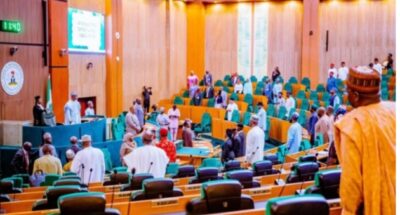
According to Uzokwe, the bill, which is expected to come up for its second and third readings, is designed to address substance abuse among truck drivers, which he described as one of the preventable causes of devastating road accidents involving tankers and trailers.
The House of Representatives has introduced a bill that would make compulsory drug screening for tanker and trailer drivers every six months, as lawmakers intensify efforts to curb the growing number of fatal crashes involving heavy-duty vehicles on Nigerian roads.
The proposed legislation was disclosed on Tuesday by the sponsor of the bill, Peter Uzokwe, who represents Nnewi North/Nnewi South/Ekwusigo Federal Constituency of Anambra State, during an interactive meeting of the House Committee on Petroleum Resources (Downstream) with key operators in the downstream oil and gas sector.
Participants at the meeting included the Depot and Petroleum Products Marketers Association of Nigeria (DAPPMAN), the Major Energies Marketers Association of Nigeria (MEMAN), and the Independent Petroleum Marketers Association of Nigeria (IPMAN).
According to Uzokwe, the bill, which is expected to come up for its second and third readings, is designed to address substance abuse among truck drivers, which he described as one of the preventable causes of devastating road accidents involving tankers and trailers.
“It is in my bill, coming up for second and third reading, that all truck drivers should be tested for drugs at least once every six months,” the lawmaker said, according to TheCable.
“You can train a driver who is a drug addict. He may drive well, but once the substance takes control, he will no longer drive the way he was trained.
“You can see the trailer and tanker accidents we are having. These are things that can be prevented if drivers are in their right senses.”
Beyond the proposed legislation, stakeholders in the downstream petroleum industry urged lawmakers to introduce reforms capable of improving competition, strengthening domestic refining, easing transportation challenges and boosting Nigeria’s energy security.
The Executive Secretary of DAPPMAN, Olufemi Adewole, told the committee that operators are increasingly struggling with declining profit margins due to an uneven competitive environment, dependence on a single supply source, importation policies and persistent challenges surrounding domestic refining and product distribution.
Adewole cited figures from the Nigerian Midstream and Downstream Petroleum Regulatory Authority (NMDPRA), revealing that 72 out of the country’s 154 petroleum depots experienced little or no sustained trading activity over the past year because of the prevailing business climate.
He also warned that the expansion of local refining capacity would place even greater pressure on Nigeria’s road transport network unless authorities invest in alternative distribution infrastructure.
He noted that the continued reliance on trucks for transporting petroleum products would increase road congestion and heighten the risk of tanker accidents across the country.
Also speaking, IPMAN National President, Abubakar Shettima, acknowledged the Federal Government’s efforts to encourage private sector participation and strengthen regulatory oversight in the downstream sector.
However, Shettima said marketers continue to grapple with soaring financing costs, multiple taxation, logistics bottlenecks, inadequate storage infrastructure, pipeline vandalism, foreign exchange instability and insufficient consultation with industry stakeholders.
Responding to the concerns, Chairman of the House Committee on Petroleum Resources (Downstream), Ugochinyere Ikeagwuonu, assured industry operators that the National Assembly would engage relevant government agencies to address the issues raised.
Ikeagwuonu said the committee plans to hold consultations with the NMDPRA, the Nigerian Upstream Petroleum Regulatory Commission (NUPRC), the Nigerian Ports Authority (NPA), the Central Bank of Nigeria (CBN), and other stakeholders as part of efforts to improve the operating environment for the downstream petroleum sector.