Nigeria Set to Approve Chinese Aircraft for Local Airlines
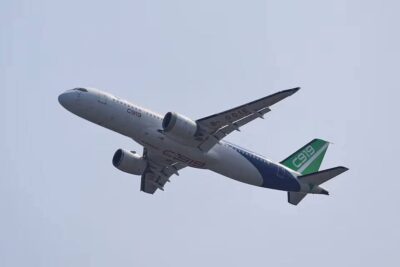
Nigeria Set to Approve Chinese Aircraft for Local Airlines
Nigeria’s civil aviation regulator is considering certifying China’s C919 passenger jet for use by domestic airlines, as stated by the agency’s director general, Capt. Chris Ona Najomo.

This decision coincides with the expansion of local carriers’ fleets and the strengthening relationship between Abuja and Beijing.
The C919, developed by the Chinese company COMAC, aims to compete with aircraft from Airbus and Boeing. Nigeria has engaged in several discussions with this state-owned manufacturer as it attempts to penetrate the African market.
Although COMAC has ambitious goals, the company encounters several challenges. Its aircraft still need crucial approvals from Western aviation regulators, and it has had difficulty meeting delivery timelines. Earlier this year, the U.S. temporarily halted exports of CFM engines used in the C919 due to trade disputes.
Najomo confirmed that Nigeria is reviewing the lengthy certification process for the jet, pointing out its absence of international validation.
“We’re focusing on the airplane’s certification as our starting point,” Najomo mentioned to Reuters during the U.N. aviation agency’s assembly in Montreal.
To enhance its proposal, COMAC has extended maintenance and training support to Nigerian carriers, as well as potential dry lease options—leasing aircraft without crew.
“We simply informed them that it’s preferable if they ensure a good dry lease arrangement is facilitated,” Najomo stated.
Local airlines are already expressing interest. Abdullahi Ahmed, the CEO of NG Eagle, indicated his willingness to incorporate COMAC aircraft into his existing fleet of three planes, as long as certification and support can be assured.
Nigeria’s aviation industry has been experiencing significant progress. The recent enhancement in its Aviation Working Group rating demonstrates improved adherence to the Cape Town Convention, thereby increasing confidence among lessors and providing better access to newer aircraft for the nation’s 13 airlines.
Although flying is still expensive for many Nigerians, IATA data reveals that the average real airfare decreased by 43.6% from 2011 to 2023.