
Iran Confirms D£stroying US Military Assets In Bahrain, Kuwait, Oman As T£nsion Escalates Over Strait Of Hormuz
Iran Confirms Destroying US Military Assets In Bahrain, Kuwait, Oman As Tension Escalates Over Strait Of Hormuz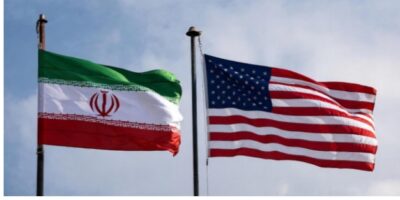
According to the IRGC, Iranian forces “completely destroyed” fuel tanks, Patriot air defence systems and a strategic FPS radar system at two military bases in Kuwait.
Iran’s Islamic Revolutionary Guard Corps (IRGC) has claimed responsibility for fresh attacks on military facilities hosting United States forces in Bahrain, Kuwait and Oman, alleging that it destroyed key defence infrastructure, including Patriot missile systems, fuel storage facilities and radar installations, in what it described as retaliatory operations.
The latest claims, contained in statements issued by the IRGC and carried by Iran’s state-affiliated Mehr News Agency, came amid renewed military escalation between Tehran and Washington following the collapse of indirect negotiations over the strategic Strait of Hormuz.
According to the IRGC, Iranian forces “completely destroyed” fuel tanks, Patriot air defence systems and a strategic FPS radar system at two military bases in Kuwait.
The Guards also claimed to have targeted several facilities at Sheikh Isa Air Base in Bahrain, where U.S. forces operate alongside Bahraini military personnel.
In a separate statement, the IRGC said its naval forces struck U.S. military facilities in Jafirah, Bahrain, and radar systems in neighbouring Oman as part of what it described as reciprocal military action against the United States.
The Iranian military further claimed that one of its air defence units shot down a U.S. Low-Cost Uncrewed Combat Attack System (LUCAS) drone near the southern Iranian port city of Bandar Abbas on Monday.
As of the time of filing this report, the United States had not officially responded to the latest claims by Iran.
Previous statements issued by the Revolutionary Guards have claimed attacks on military bases that are officially owned by Gulf states but host U.S. military personnel and equipment under long-standing defence agreements.
The fresh exchange marks another dangerous escalation in hostilities between Washington and Tehran following the breakdown of indirect, Oman-mediated talks held in Muscat on Saturday.
According to Iran’s Foreign Ministry, the negotiations centred on arrangements for managing navigation through the Strait of Hormuz and guaranteeing the safe passage of commercial vessels.
However, Tehran accused the United States of frustrating the discussions through what it described as “overt and covert” pressure on the Omani government, leading to the collapse of the talks.
Iranian Foreign Minister Abbas Araqchi and his Omani counterpart had met in Muscat in an effort to explore mechanisms for ensuring secure maritime transit through the narrow waterway, which remains one of the world’s most strategically important oil shipping routes.
Washington had reportedly sought a public commitment from Tehran guaranteeing uninterrupted navigation through the Strait, an issue that has remained a major source of tension between both countries.
The latest military developments also follow recent remarks by U.S. President Donald Trump, who indicated that the ceasefire surrounding a June memorandum of understanding between Washington and Tehran was effectively over, while leaving open the possibility of future negotiations.
Adding to the increasingly confrontational rhetoric, Iran’s chief negotiator, Mohammad Baqer Qalibaf, posted a strongly worded message on X on Sunday.
“The era of one-sided deals is OVER,” Qalibaf wrote.
“We told you: keep your word or pay the price. Reality is knocking.”
The Strait of Hormuz, situated between Iran and Oman, is one of the world’s most critical maritime chokepoints, with a significant proportion of globally traded crude oil and liquefied natural gas passing through the narrow waterway each day.
Any prolonged disruption to shipping through the strait is likely to trigger higher global crude oil prices, increase shipping insurance costs and disrupt international energy markets.
For Nigeria, Africa’s largest crude oil producer, a sustained rise in global oil prices could translate into increased export earnings and higher foreign exchange inflows.
However, analysts also warn that escalating conflict in the Gulf could drive up the cost of imported refined petroleum products, aviation fuel and industrial inputs, potentially worsening inflationary pressures despite Nigeria’s status as an oil-producing nation.
Nigeria also maintains significant diplomatic and economic ties with Gulf countries, while thousands of Nigerians live and work across Bahrain, Kuwait, Oman, Saudi Arabia, Qatar and the United Arab Emirates, raising concerns about the potential impact of any wider regional conflict on citizens and businesses.
With military exchanges intensifying and diplomatic efforts appearing to have stalled, fears are growing that the confrontation between Iran and the United States could spill beyond isolated strikes and threaten stability across the wider Middle East, including one of the world’s most important energy corridors.