
INSIGHT: Beyond the numbers, Nigeria’s budgeting system is showing deeper cracks
INSIGHT: Beyond the numbers, Nigeria’s budgeting system is showing deeper cracks
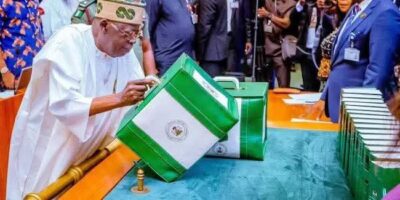
Nigeria’s annual budget process is supposed to serve as the backbone of governance. It is through the budget that government priorities are defined, public resources allocated, infrastructure financed and critical services delivered.
But as the national assembly continues scrutiny of the proposed N58.472 trillion 2026 budget, concerns are growing that Nigeria’s budgeting framework itself may be fundamentally broken.
At the centre of the debate is the controversial envelope budgeting system — a model many lawmakers, economists, and policy experts now say has outlived its usefulness.
The criticism goes beyond figures and fiscal projections. For many stakeholders, the issue is whether Nigeria’s budgeting system is still capable of delivering development, accountability, and economic stability.
Under the envelope budgeting model, ministries, departments, and agencies (MDAs) are allocated spending ceilings before they prepare detailed budget proposals. The system is designed to impose fiscal discipline and prevent uncontrolled spending. But critics argue that in practice, it has produced the opposite effect in Nigeria.
Instead of encouraging strategic planning and measurable outcomes, they say the system has evolved into a mechanism for routine expenditure expansion with little connection to actual policy performance.
Sani Musa, chairman of the senate committee on finance, said submissions made by MDAs during the budget defence sessions showed that the model was no longer effective.
“Specifically, based on submissions made by heads of various agencies during the budget defence sessions, the envelope system of budgeting has failed and needs to be replaced by a priority-based model,” Musa said.
“The incremental allocation model has outlived its usefulness. It promotes routine expenditure expansion rather than strategic prioritisation.”
The senate committee also called on the federal government to abandon the current centralised payment structure for contractors.
Lawmakers said the existing system has left many contractors unpaid for projects already executed in 2024 and 2025.
They urged the government to return to the previous arrangement where MDAs directly handled payments for projects under their supervision.
‘THE SYSTEM PRESUPPOSES RIGOROUS PLANNING’
Beyond the senate, policy analysts say the problem is not simply the budgeting model itself but the institutional weaknesses surrounding its implementation.
Vahyala Kwaga, country director, BudgIT Foundation, said the envelope system only works in countries where budget preparation is driven by data, planning, and measurable policy outcomes.
“The problem with the implementation of that style of budgeting in Nigeria is that it presupposes a system where there is rigorous, detailed, evidence-based budget formulation,” Kwaga said.
He explained that planning, research, and statistics departments within MDAs are expected to gather data and evaluate policy implementation before proposing budgets for subsequent fiscal years.
For instance, he said the ministry of health should use data on maternal mortality, communicable diseases, and neonatal deaths to shape future spending priorities.
According to Kwaga, that process is largely absent in Nigeria’s public sector. He also argued that the national assembly has not demonstrated sufficient commitment to evidence-based scrutiny of budget proposals.
“The national assembly, especially this 10th assembly, has not demonstrated in any way that it is interested in carrying out rigorous evidence-based vetting of budget proposals,” he said.
“They have not shown that they have any interest in the technical specifics of budget proposals, nor have they shown interest in even vetting the implementation of public policies for the previous fiscal year.”
Kwaga said the focus of many political actors has shifted from policy outcomes to maximising financial allocations.
“The envelope system doesn’t work for Nigeria’s institutional profile, not because the envelope system is inherently defective, but because politicians and civil servants primarily aim to maximise how much they can get with very little consideration paid to the actual implementation of public policies,” he said.
QUESTIONS OVER TRANSPARENCY AND FISCAL DATA
The debate over budgeting has also exposed wider concerns about transparency and fiscal reporting.
Kwaga accused the federal government of becoming increasingly opaque in the management of public finance.
“This administration has been extremely opaque with revenue generation,” he said.
“We had budget implementation reports coming late; we had medium-term expenditure frameworks being presented very late, and we do not have disaggregated information even from the office of the accountant-general on the government’s financial position.”
He said inconsistencies in government fiscal data make it difficult to properly assess the country’s financial health.
“That information is not available, and even when it is available, it is not comparable,” he said.
“You cannot compare data from the office of the accountant-general to data being produced by the budget office of the federation.
“That places any Nigerian in a quandary. You generally do not know where your government is financially, and that’s simply unacceptable.”
‘FAILURE TO IMPLEMENT THE BUDGET IS ILLEGAL’
Lawmakers have also expressed frustration over the persistent gap between approved budgets and actual implementation.
Yahaya Abdullahi, senator representing Kebbi north, reminded the federal government that the budget becomes law once passed by parliament.
“Budget, as proposed by the president and approved by parliament, is a law. So, failure to implement the budget is illegal,” Abdullahi said.
The lawmaker said that where there are revenue shortfalls, the executive should return to parliament for necessary adjustments in line with the Fiscal Responsibility Act.
Concerns over implementation have become more pronounced as MDAs continue to complain about poor releases for capital projects.
In many cases, projects approved in the budget either receive partial funding or no releases at all. The result is a growing backlog of abandoned projects, mounting contractor debts, and delayed service delivery.
Senate President Godswill Akpabio has also acknowledged concerns about the envelope budgeting system.
During a meeting with officials of the federal civil service commission, Akpabio hinted that the national assembly may consider amendments to the model.
“Sometimes, if somebody gives you an envelope for N10 billion and your problems are over N100 billion, how can you solve the problem?” Akpabio asked.
He said the legislature may consider reforms that would allow budgeting to better reflect the realities and needs of MDAs.
THE ECONOMIC COST OF POOR IMPLEMENTATION
The economic implications of poor budget implementation are also becoming harder to ignore.
Kwaga warned that the consequences could be severe for an economy like Nigeria’s where government spending drives large segments of economic activity.
“The economic consequences would be catastrophic, especially for a country like Nigeria that, unlike developed countries, is government-driven,” he said.
He explained that government capital expenditure affects contractors, consultants, suppliers, and several layers of the wider economy.
“Where these monies are simply not provided, it means a huge chunk of our economy is going to take a significant blow,” he said.
The BudgIT country director added that weak implementation of capital projects could hurt the formal economy more severely than the informal sector.
A SYSTEM UNDER PRESSURE
As scrutiny of the 2026 budget continues, the debate around Nigeria’s budgeting framework is expected to intensify.
For many stakeholders, the issue is no longer simply about how much the government plans to spend.
The larger concern is whether the country’s budgeting process is still capable of translating public resources into measurable development outcomes.
Until those structural questions are addressed, many analysts fear Nigeria may continue to produce ambitious budgets with limited impact on the lives of citizens.