
IMF Raises R£d Flag On Nigeria’s Planned $5billion Abu Dhabi Loan Deal, Warns Of Hidden Risks
IMF Raises Red Flag On Nigeria’s Planned $5billion Abu Dhabi Loan Deal, Warns Of Hidden Risks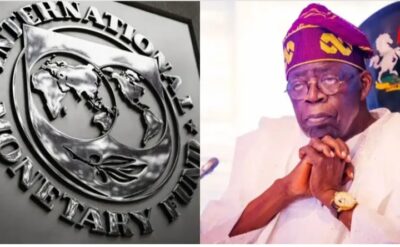
The caution comes months after the Nigerian Senate approved the deal in April 2026, paving the way for the President Bola Tinubu-led Nigerian government to join a growing number of African countries, including Senegal and Angola, that have recently turned to similar financing structures.
The International Monetary Fund (IMF) has expressed concern over Nigeria’s proposed plan to secure up to $5 billion loan through a derivatives-based financing arrangement with First Abu Dhabi Bank, warning that such transactions often come with significant transparency and risk challenges.
Discover more
Breaking news alerts
Newspaper subscriptions
News mobile app
Politics
Journalism training courses
The caution comes months after the Nigerian Senate approved the deal in April 2026, paving the way for the President Bola Tinubu-led Nigerian government to join a growing number of African countries, including Senegal and Angola, that have recently turned to similar financing structures.
Speaking to journalists on Tuesday, the IMF Resident Representative in Nigeria, Christian Ebeke, said the Fund remains wary of these types of transactions because their terms are frequently difficult to scrutinise.
“Our view is that the transactions in these types of structures carry risks. Usually, they are opaque, so the terms are not always very transparent when we reviewed these instruments across countries,” Ebeke said, according to Reuters.
The proposed transaction is structured as a Total Return Swap (TRS), a derivatives arrangement that would allow Nigeria to raise funds intended for refinancing costly existing debt obligations and financing infrastructure projects.
However, the IMF suggested that Nigeria could explore more conventional financing options, including issuing Eurobonds or seeking concessional funding arrangements, rather than relying on complex derivative instruments.
The warning formed part of the IMF’s latest Article IV Consultation on Nigeria, in which the Fund acknowledged progress made through recent economic reforms but cautioned that vulnerabilities remain.
Meanwhile, the IMF said that the reforms introduced since President Tinubu assumed office in 2023, including the removal of fuel subsidies, exchange rate liberalisation, and tighter monetary policies, have improved macroeconomic stability, strengthened fiscal buffers, and boosted investor confidence.
The IMF noted that these policy measures have helped Nigeria regain access to international capital markets while attracting foreign portfolio investments and reducing risk perceptions among investors.
Nigeria’s foreign reserves have also reportedly strengthened significantly, with the Central Bank of Nigeria reporting gross reserves of approximately $50 billion, their highest level in nearly two decades.
Despite these gains, the IMF warned that the benefits of the reforms have yet to translate into meaningful improvements in living conditions for many Nigerians.
The INF highlighted growing social pressures, pointing to an estimated poverty rate of 63 per cent and persistent food insecurity affecting millions of citizens.
It warned that the gap between favourable macroeconomic indicators and the realities faced by households continues to widen.
The IMF also cautioned that Nigeria’s increasing dependence on foreign portfolio investments could expose the economy to future risks, particularly if global financial conditions deteriorate or investor sentiment shifts.
To reduce such vulnerabilities, the IMF urged authorities to prioritise more stable sources of external financing, especially foreign direct investment, while remaining vigilant against external shocks, including geopolitical tensions such as the ongoing conflict in the Middle East.
The IMF maintained that sustaining reforms while ensuring that economic gains reach ordinary citizens will be critical to preserving stability and securing long-term growth.