
I became executive beggar despite serving Lagos for 30 years – Ex-administrator
I became executive beggar despite serving Lagos for 30 years – Ex-administrator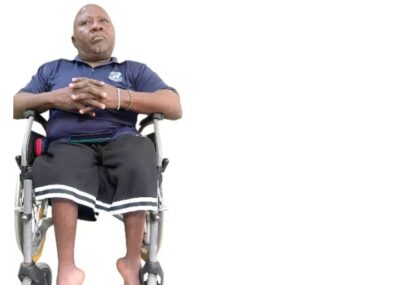
Retired Head of Administration and Human Resources at Kosofe Local Government in Lagos State, Michael Odesanya, who is physically challenged, speaks with AYOOLA OLASUPO about the difficulty of receiving his retirement benefits and how the delay plunged him into hardship
Tell us about yourself.
My name is Michael Odesanya. I joined the Lagos State Civil Service on July 4, 1996, and retired on March 13, 2026, after serving for 30 years. I was born in 1966. I am married and blessed with four children. We live in Ikorodu Local Government Area of Lagos State.
What was your position in the state civil service before retirement?
I retired as the Head of Administration and Human Resources at Kosofe Local Government. My substantive rank was Chief Administrative Officer on Grade Level 14. Like every public servant, I expected retirement to mark the beginning of another peaceful phase of life. I looked forward to resting after decades of service while remaining active in society.
To be fair, my retirement ceremony was memorable. The Chairman of Kosofe Local Government, Mr Moyosore Ogunlewe, the Council Manager, Mrs Mosunmola Okoka, and members of staff organised a colourful celebration that also coincided with my 60th birthday.
I genuinely felt appreciated. The only disappointment was that the chairman had repeatedly promised to provide official vehicles for some retiring senior officers, including me, but that never happened. Apart from that, I left service believing everything had gone well. Unfortunately, what happened after retirement completely changed that feeling.
What was the cause of your disability?
I was born hale and hearty, and my mother told me I started walking at seven months old. I received the oral polio vaccine as and when due, but at the age of two years and 10 months, just a few months before my third birthday, I fell ill. They thought it was malaria and began treating me, but my condition worsened as they discovered my limbs were no longer functioning as they used to. It was when they got to the hospital that they were told I had been struck by polio.
Weren’t you placed on any treatments?
After a series of treatments, including surgery by the late renowned Dr Atunrase, my parents resigned themselves to fate and focused on getting me educated. After graduating, I was fortunate to benefit from a policy introduced by the then military administrator, Olagunsoye Oyinlola, directing that physically challenged graduates be employed. That led to my employment six years after graduation.
As someone living with disability, what challenges did you face while serving?
The biggest challenge was infrastructure. Many public buildings were not designed with persons living with disabilities in mind. You climb staircases where there are no elevators; you move around offices that have no accessibility features.
However, I must sincerely thank the various local government chairmen under whom I worked. I served at Somolu Local Government, Onigbongbo Local Council Development Area, Ikorodu West LCDA, and Kosofe Local Government. Virtually all the chairmen I worked with understood my condition.
Discover more
Latest news updates
Law Enforcement
Politics
History
Geographic Reference
They ensured that I had trained aides officially employed by the councils to assist me with mobility and other physical challenges. Without those aides, carrying out my duties would have been far more difficult. So, despite the infrastructural shortcomings, I received humane treatment from my employers.
What happened after you left service?
Ironically, I understand the retirement system better than many people because I was the human resources officer responsible for processing staff records. Every retirement file passed through my office. I personally prepared my documentation and ensured everything required was submitted to the Local Government Service Commission, from where the files ought to proceed to the Lagos State Pension Commission.
That is the established procedure, but several months later, I received shocking news. Officials at Kosofe Local Government informed me that my retirement file, together with those of other retirees, had been returned unprocessed. The explanation given was unbelievable.
We were suddenly asked to provide fresh Pension Fund Administrator statements and bank statements covering periods before retirement, despite the fact that all relevant salary records and payment slips had already accompanied our original submissions.
I immediately sensed something was wrong. That was when I began to realise that my retirement journey might not be straightforward.
What did you do after realising that your gratuity might not come soon?
I started making enquiries at the Local Government Service Commission. Some officials told me the files could not be processed because new commissioners had not been appointed. That explanation surprised me.
What exactly does the appointment of political office holders have to do with the retirement benefits of career civil servants? The retirement system should continue irrespective of who occupies political office. As someone who worked inside that system, I knew that explanation did not add up.
After making further enquiries, I noticed another development. Two experienced permanent secretaries who previously supervised the commission had left. Mrs George, popularly called Georgie Elle, had retired, while Mrs Bibilomo had been redeployed to the Deputy Governor’s Office.
Both women understood the retirement process thoroughly. Their departure created a vacuum. Had they remained there, I believe these files would not still be lying unattended.
How have you been coping with life without the entitlement?
Honestly, it has been extremely difficult; life without gratuity feels like living in hell. Thankfully, the Chairman, Moyosore Ogunlewe, gave me some cash gifts during my retirement. That money enabled me to renovate parts of my house. It wasn’t an investment that generates income, but at least I improved the house where I now live.
Apart from him, people like Abba Mohammed and Mrs Toyin Ojo have also supported me financially. I remain grateful, but goodwill cannot replace pensions. I have a wife and four children; people eat every day. Bills never stop because someone has retired.
For over 30 years, every month came with a salary. No matter how small, it enabled planning. Now, that income has disappeared completely. The pension has not started coming, and neither the gratuity nor any other retirement benefits have been paid.
The Pension Commission has not contacted me; my file has not even moved properly. Sometimes, I feel reduced from being a productive citizen to someone who constantly depends on others. I have always hated begging.
Today, I jokingly describe myself as an executive beggar because circumstances have pushed me into seeking help from friends and relatives. That is painful, and that is the reason I am speaking out now. I know people who have gone without gratuity for five years or more. I cannot imagine waiting that long without another source of income before speaking out.
If I were physically stronger, perhaps I could have ventured into farming or other physically demanding work to generate income. But my disability limits the opportunities available to me. Nigeria has laws protecting persons living with disabilities.
Lagos State also has disability legislation promoting inclusion and equal opportunities. Yet, in practice, delayed pension payments affect people like us much more severely because our mobility is already limited.
Following up on files across government offices is not easy; travelling repeatedly from Ikorodu to Alausa is physically demanding. Every unnecessary delay places additional hardship on retirees living with disabilities. That is why government agencies should process our files promptly.
Have you been following up at government offices?
Yes, I understand how the system works. Once the file reaches LASPEC, it notifies your Pension Fund Administrator; everything moves from there. But if the Local Government Service Commission fails to process the file promptly, nothing else happens.
I know there is a system; the problem is implementation. Some people simply refuse to do what they are paid to do. That is why I decided to speak publicly. I believe Governor Babajide Sanwo-Olu will eventually hear this.
Did you receive any explanation on why your benefits remain unpaid?
No formal explanation has been given. I don’t need a letter to know something is wrong because I understand the system myself. Every year, the government knows workers will retire because retirement is not an emergency.
Planning always begins long before officers leave service. The records are there, and they know those who will retire in the next two years. Unfortunately, what should be a routine administrative exercise has become unnecessarily complicated.
Do you think your experience is peculiar?
Not at all. Many retirees have suffered similar experiences. Some of my retired colleagues waited years before receiving their benefits. While I was still working, I often assisted many of them financially because they had nothing. Sadly, it is usually junior and middle-level officers who suffer these delays. You rarely hear senior political appointees complaining about pensions. They seem to receive different treatment.
Have you encountered demands for bribes or unofficial payments?
Nobody has directly demanded money from me, perhaps because they know who I am. But prolonged delays create suspicion. When a process unnecessarily drags on, people naturally begin to wonder whether unofficial interests are involved. That alone damages confidence in public institutions.
What has been the most painful moment since retirement?
One incident still hurts deeply. My youngest daughter’s end-of-year school party required parents to contribute N25,000. I simply could not afford it. I called the school principal, who is my friend, and explained my situation.
Out of kindness, he reduced the amount to N20,000. Even then, it was difficult. But because of my daughter and my pride as a father, I did my best to pay it. That experience broke me emotionally. Imagine serving the government faithfully for 30 years and then being unable to pay your child’s school contribution.
There have been reports of retirees becoming depressed because of delayed pensions. Has the experience affected you emotionally?
It affects your mental health because there are moments when hopelessness creeps in. Sometimes, you understand why some retirees become depressed. Some even contemplate suicide. Sadly, the system pushes people to their emotional limits. But I will never take my own life; instead, I will continue speaking until the right thing is done. That is why I appreciate organisations like PUNCH, which has remained the voice of ordinary Nigerians.
Civil servants should not assume retirement will automatically be comfortable. Many financial institutions advise workers to plan. Planning is good, but it becomes difficult when salaries barely meet daily needs. Workers already lose substantial portions of their income to taxes, pension deductions, and other statutory contributions.
When retirement finally comes, the government should at least return what legitimately belongs to them without unnecessary delays. Retirement should not become another punishment. I would appreciate the opportunity to meet Governor Sanwo-Olu personally or receive a delegation from his office. I am not a spent force; I still have experience that the government can benefit from.
Beyond my personal case, I urge him to look carefully into how retirement files are being handled in the state. Workers who devoted decades to Lagos State deserve dignity after retirement, so prompt payment of gratuities and pensions should not be treated as a favour. It is a right earned through years of service.
Despite the experience, what keeps you going?
I have always believed in hope. My outlook on life has remained positive. As a student at the University of Lagos, I was active in student union politics, so after graduation, I participated in grassroots political activities. Throughout my life, I have tried to remain useful to society; that spirit keeps me going.
The only justice I seek now is simple: let my gratuity and pension be paid without further delay. After serving Lagos State faithfully for 30 years despite my disability, I believe that is the least the government owes me.