FG sets up panel to review ‘$200 billion’ gas, high-speed rail projects backed by Chinese investors
FG sets up panel to review ‘$200 billion’ gas, high-speed rail projects backed by Chinese investors
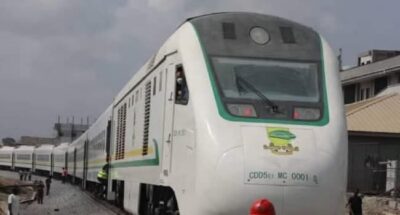
The federal government has inaugurated a multi-agency technical committee to review the proposed $200 billion integrated gas, power, and high-speed rail projects backed by Chinese investors.
The government cited the need for due diligence and protection of national interests as the rationale for the scrutiny.
The Infrastructure Concession Regulatory Commission (ICRC) had said the proposal would be thoroughly reviewed to ensure financial and technical viability when it was announced in August 2025.
Speaking at the inauguration on Thursday, George Akume, secretary to the government of the federation (SGF), said the proposal is “too large and too important” to be rushed.
Akume said the project, estimated at about $200 billion, is envisioned as a multi‑phase programme integrating gas development, power generation and transmission, and the construction of a 4,000‑kilometre high‑speed rail network linking major economic corridors such as Lagos, Abuja, Kaduna, Kano and Port Harcourt.
He said the initiative, promoted by De-Sadel Nigeria Limited in partnership with China Liancai Petroleum Investment Holdings Limited, must be thoroughly evaluated to ensure it is technically sound, financially viable, and aligned with Nigeria’s regulatory framework.
“These kinds of projects have the potential to transform Nigeria’s transport infrastructure, strengthen energy security, stimulate industrial growth and deepen national integration,” Akume said.
“But they must also be carefully evaluated to ensure they align with national priorities, are technically sound, financially viable, and fully compliant with Nigeria’s legal and regulatory frameworks.”
The SGF said the committee would verify proof of funds, assess financial and sovereign risks, and review the project’s integrated financing model, including proposed oil and gas asset divestments.
Akume said the office of the SGF had already received input from security, financial intelligence, and regulatory agencies regarding the consortium’s funding structure and participating entities.
The committee comprises representatives from key ministries and agencies, including the Central Bank of Nigeria (CBN), the Nigeria Financial Intelligence Unit (NFIU), the Economic and Financial Crimes Commission (EFCC), the National Intelligence Agency (NIA), the Office of the National Security Adviser (ONSA), and the Debt Management Office (DMO).
Members are also mandated to conduct technical and engineering due diligence on the consortium and its partners, including China Railway Group Limited, while ensuring compliance with public-private partnership (PPP) guidelines and environmental standards.
Akume said the inauguration marks the beginning of a rigorous review process, urging members to provide objective, evidence-based recommendations to guide government decisions.
‘PROJECT A NEW FOUNDATION FOR INFRASTRUCTURE IN NIGERIA’
In his remarks, Samuel Ukoh, managing director of De-Sadel Nigeria Limited, described the multibillion-dollar project as a “new foundation for infrastructure for this country”.
Ukoh said the first phase would cover a 1,700-kilometre corridor linking Lagos, Abuja, Kano, and Port Harcourt, with trains projected to run at 350 kilometres per hour.
He noted that the project would be built largely on elevated structures, incorporating fibre-optic and power transmission infrastructure.
“We are looking at over 2 million jobs through this project, we are looking at boosting the power sector, boosting the gas sector, and all of that,” Ukoh said.
The managing director said the consortium has made significant progress on regulatory approvals, including environmental assessments and gas availability certification, and has submitted proof of funds to the government.
Ukoh also said the team had concluded a final investment‑decision process in China, saying “we are almost at 90% completion of government systems, regulatory systems.”
He added that outstanding requirements include concession agreements, right-of-way approvals, and updated business case negotiations, which are expected to be addressed during the committee’s review.