
Dangote To Sell Multi-Billion-Dollar Lagos Refinery Shares To Africans Across Multiple Stock Exchanges
Dangote To Sell Multi-Billion-Dollar Lagos Refinery Shares To Africans Across Multiple Stock Exchanges
The proposed listing, which is expected to involve multiple African bourses simultaneously, is aimed at opening up ownership of the refinery to investors across the continent and deepening capital market integration in Africa’s fragmented financial system, according to Bloomberg.
Africa’s richest businessman, Aliko Dangote, is pushing ahead with plans to list his multi-billion-dollar oil refinery across several stock exchanges in Africa in what appears to be an unprecedented pan-continental share offering.
The proposed listing, which is expected to involve multiple African bourses simultaneously, is aimed at opening up ownership of the refinery to investors across the continent and deepening capital market integration in Africa’s fragmented financial system, according to Bloomberg.
The development was disclosed by the chief executive officer of the Nairobi Securities Exchange, Frank Mwiti, in a closed-door meeting in Lagos between Dangote and heads of several African stock exchanges, according to Bloomberg.
Mwiti, who spoke after the meeting, said discussions centred on structuring a “pan-African IPO,” noting that the share sale could be simultaneously executed in multiple jurisdictions.
According to him, the proposed arrangement would allow investors in different African countries to take stakes in the refinery through their local exchanges, a move that could significantly reshape cross-border investment flows on the continent.
Officials of the Dangote Group reportedly confirmed that the meeting with African exchange operators took place, but declined to provide details on timelines, valuation, or regulatory arrangements, fuelling speculation over how far the plan has progressed.
If completed, the listing would mark the first time a major African industrial asset is floated across multiple stock exchanges at the same time, a development analysts say could either strengthen regional capital markets or expose regulatory weaknesses across jurisdictions.
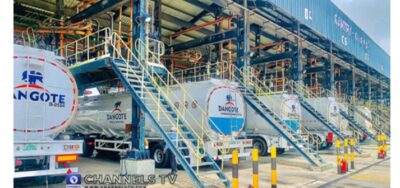
The refinery, located in Lagos, currently has a processing capacity of about 650,000 barrels of crude oil per day.
However, Dangote is targeting a major expansion that would push output to around 1.4 million barrels per day within the next three years.
The expansion is part of a broader aggressive growth strategy backed by an estimated $40 billion investment plan over five years, which also includes scaling up fertiliser production and expanding downstream oil operations across Africa.
The project is already partially supported by international financing.
The African Export-Import Bank recently said it had underwritten $2.5 billion as part of a $4 billion syndicated loan arrangement for the refinery expansion.
The facility has also begun exporting petroleum products to several African countries, taking advantage of supply shortages in regional markets.
The shortages have been linked to global energy disruptions following the escalating US–Israel tensions with Iran, which has strained fuel supply chains and increased reliance on alternative sources.
The refinery’s expansion plan is also seen as a direct challenge to global refining giants, including facilities linked to Indian billionaire Mukesh Ambani, as competition intensifies for dominance in the downstream oil sector.
Earlier this month, Dangote held separate meetings with officials of the Nigerian Exchange Group and members of the African Securities Exchanges Association to explore frameworks that would enable cross-border investor participation and regulatory coordination for the planned offering.
Although enthusiasm is growing within parts of Africa’s financial sector, analysts say the success of the proposed multi-exchange IPO will depend heavily on regulatory harmonisation, currency risks, and investor confidence in the long-term profitability of the refinery project.
For now, details remain tightly guarded, but the move signals one of the most ambitious attempts yet to link Africa’s capital markets through a single flagship industrial asset controlled by one of the continent’s most powerful business empires.