
British Prime Minister Burnham Pledges To Scrap VAT On Household Electricity Bills
British Prime Minister Burnham Pledges To Scrap VAT On Household Electricity Bills 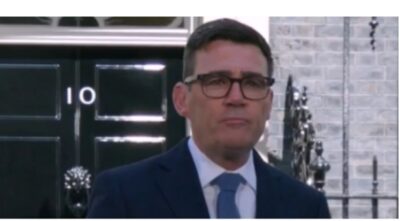
His comments raised fresh questions over whether the projected savings from cancelling the programme would be sufficient to offset the revenue lost through the VAT reduction.
The British Prime Minister Andy Burnham has announced plans to remove Value Added Tax (VAT) on household electricity bills from October, reducing the rate from 5 per cent to zero as part of his new government’s early economic agenda.
The announcement came just days after Burnham assumed office on Monday and formed his cabinet, with the government saying the tax cut would be financed by scrapping the digital ID scheme introduced under former Prime Minister Keir Starmer’s administration.
According to Downing Street, the decision to abandon the digital ID programme will free up resources to fund the electricity VAT reduction, which the government says is aimed at easing the cost of living for households.
However, the funding plan has already drawn criticism from the opposition.
Former Treasury minister Darren Jones questioned the government’s claim that ending the digital ID scheme would generate savings, arguing that the programme had never been fully funded.
“The new government will have to set out how it will pay for its new policies at the Budget,” Jones said, insisting that the digital ID scheme was “unfunded.”
His comments raised fresh questions over whether the projected savings from cancelling the programme would be sufficient to offset the revenue lost through the VAT reduction.
Responding to the criticism, Business Secretary Jonathan Reynolds defended the government’s position during an interview with the BBC.
When pressed on whether any actual savings had been identified from scrapping the digital ID initiative, Reynolds replied that “they would have had to have been,” describing the decision to eliminate the programme as “a legitimate decision.”
The government has argued that reducing VAT on electricity bills will provide immediate financial relief to households facing high energy costs, although further details of the policy’s implementation are expected in the coming months.
The announcement marks one of the first major policy initiatives of Burnham’s administration as it begins setting out its economic priorities.
Later on Tuesday, Burnham is expected to chair the first meeting of his newly appointed cabinet following his swearing-in as Prime Minister.
Among the key appointments, John Healey has been named Chancellor, while Ed Miliband will serve as Foreign Secretary. Wes Streeting has been appointed Defence Secretary.
Angela Rayner has returned to her previous role as Housing Secretary, while Shabana Mahmood has retained her position as Home Secretary.
The inaugural cabinet meeting is expected to focus on the government’s immediate legislative programme, economic priorities and preparations for the upcoming Budget, where ministers are expected to provide further details on how the administration intends to finance its policy commitments, including the proposed removal of VAT on electricity bills.
Earlier, SaharaReporters reported on Monday, that Burnham officially became the Prime Minister of the United Kingdom, succeeding Keir Starmer.
He assumed office following a formal handover that culminated in a visit to Buckingham Palace, where Starmer tendered his resignation to King Charles III. The King subsequently invited Burnham to form a government.
In his first speech as Britain’s new prime minister, delivered outside 10 Downing Street, Burnham pledged to introduce measures this week aimed at easing the country’s cost-of-living crisis.
He also announced plans to unveil a 10-year national development strategy later this year.
Burnham said his government would focus on restoring stability and rebuilding public confidence after years of economic challenges.
“Britain needs to show the world that we can regain our stability once again,” he said. “We have not been good enough, and we need to be better.”