
Federal Government Test Runs Kaduna–Kano Railway As Project Nears Completion
Federal Government Test Runs Kaduna–Kano Railway As Project Nears Completion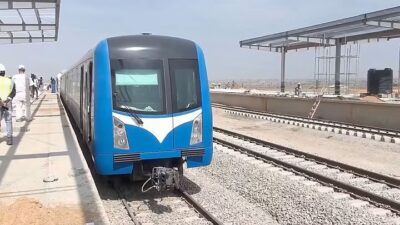
A new development in Nigeria’s railway infrastructure has brought the Kaduna–Kano railway project closer to operational readiness, following a recent train test run from Jaji in Kaduna State to Kano Terminal Station.

The inspection journey, undertaken by a Federal Government team led by the Permanent Secretary of the Federal Ministry of Transportation, Engr. Funso Adebiyi, provided an opportunity to assess the railway infrastructure, track alignment, drainage systems, embankments and passenger comfort ahead of the anticipated commencement of operations.
The Kaduna–Kano railway is an extension of the existing Abuja–Kaduna standard gauge railway, which will eventually allow rail passengers to travel through Abuja, Kaduna, Zaria and Kano. The project is expected to provide an alternative to road transportation while improving connectivity between some of Northern Nigeria’s major commercial centres.
One particularly interesting feature of the development is the location of the Kano Terminal Station, which is situated adjacent to the Dala Inland Dry Port. This presents an opportunity for railway transportation to support freight movement, logistics, cargo distribution and commercial activities, particularly as Kano remains one of the country’s important trading and industrial centres.
Beyond the Kaduna–Kano railway, construction is also progressing on the Kano–Katsina–Maradi railway project, which will extend railway connectivity through parts of Jigawa and Katsina State towards Maradi in the Republic of Niger. A separate branch line is also planned to connect Kano with Dutse, the Jigawa State capital.
These railway developments form part of a broader effort to expand railway connectivity across Northern Nigeria and strengthen the movement of passengers and goods between states and across international borders.
The railway network, when fully developed and properly maintained, could create new opportunities for businesses, traders, commuters and communities located along its corridors, while improving access to markets and supporting regional economic activities.
Northern Nigeria’s railway infrastructure is gradually taking shape, and the completion of these projects could represent an important step towards a more connected regional economy.
Emmanuel C. Nzenwa