
How I flew five presidents, raised five pilots – Retired captain
How I flew five presidents, raised five pilots – Retired captain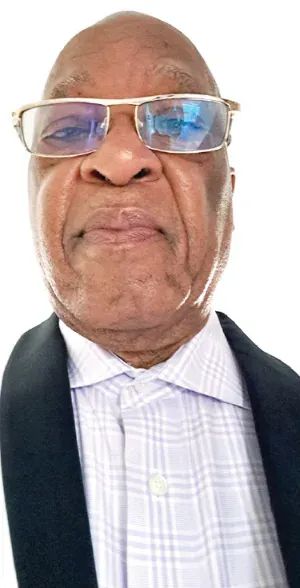
Accomplished aviator and respected retired pilot, Capt Adeoye Ajibola, shares with BIODUN BUSARI the story of his childhood, family, education, career and legacy, shaped by decades of service in the aviation industry

Give us a glimpse into your family background and educational journey.
I was born into a polygamous family of 16 children. My father had two wives, with each having eight children. I am the sixth child. We came from an ordinary background, nothing extraordinary. I was well brought up and never lacked parental care or the basic necessities of life. I was not particularly gifted or a child prodigy.
I obtained a diploma in Electrical/Electronics Engineering from Yaba College of Technology, Lagos. In 1980, I proceeded to the Nigerian Civil Aviation Training Centre, now the Nigerian College of Aviation Technology, Zaria, Kaduna State.
How did you gain admission into the aviation college?
It was a tough decision for me. The school fees were very high for an average Nigerian in the early 1980s, and admission into the college in Zaria was highly competitive. After obtaining my diploma, I applied to NCAT. I sat for several complex coordination tests, after which successful candidates were shortlisted for interviews.
I was offered provisional admission, but it was subject to securing a sponsor or paying the school fees. I could not resume immediately because of the cost. I think the fees were about N12,500 or $15,000 in 1979. So, I went in search of sponsorship.
I applied to Aero Contractors, Nigeria Airways and Bristow. I attended their interviews but was unsuccessful in securing sponsorship. However, I never gave up until I got what I wanted.
In December 1979, two weeks before the January 1980 resumption date, I travelled to the school in Zaria. I had learnt that the school sponsored some students and retained them as instructors before eventually releasing them to work in the aviation industry. That was why I decided to visit.
I met the registrar, who spoke with me one-on-one. He went through my credentials, asked me questions and tested my knowledge. The school subsequently asked me to resume even though I had not secured sponsorship. However, there was no formal documentation to support the arrangement.
I resumed and spent three months at the school without sponsorship. I even bought my uniform myself. In March 1980, we went for the final medical examinations, during which three students were asked to withdraw because they did not meet the medical requirements. One of them was sponsored by Nigeria Airways and another by Aero Contractors.
Shortly afterwards, the headquarters of Nigeria Airways contacted me to regularise my sponsorship application. My late friend, Okudu, had sent me a complimentary ticket through a telegram, which enabled me to travel to Lagos to complete the process. That was how Nigeria Airways took over my sponsorship. I eventually joined the airline after completing my training.
How long did the training take?
The advertised duration was usually 18 months, but we ended up spending nearly two and a half years. I was in school from 1980 to 1982. The delay was largely due to weather conditions, which affected the practical aspects of the training. I learnt that the set after ours spent five years in the school. The duration of the programme often increased because of the practical training requirements.
What were the defining moments of your aviation career?
After my initial training, I joined Nigeria Airways, the country’s former flag carrier, where I rose to the rank of captain on the Boeing 737-200 and served as Assistant Fleet Captain.
In 1990, I was seconded to the Presidency to serve in the Presidential Air Fleet. I flew five Nigerian presidents over 16 years. They were Gen. Ibrahim Babangida, Gen. Sani Abacha, Chief Ernest Shonekan, Gen. Abdulsalami Abubakar and Chief Olusegun Obasanjo.
I resigned from Nigeria Airways in 2006, during Obasanjo’s second term. After that, I joined Virgin Atlantic Airways, the airline founded by Sir Richard Branson, to broaden my operational experience and international exposure.
I was also privileged to fly prominent personalities, including businessmen, pastors and other dignitaries such as Pastor Enoch Adeboye, Bishop David Oyedepo, Bishop Mike Okonkwo, Alhaji Aliko Dangote, Alhaji Sayyu Dantata and Dr Ernest Obiajese.
Who among the former presidents did you have the warmest relationship with?
I had very good and personal relationships with all the presidents I flew. I had many experiences with them, but the oath of secrecy will not allow me to share those things with the public. It is important to maintain that confidentiality because I do not know when I might cross the line.
How does it work to fly private individuals on their private jets?
In our industry, individuals who own private jets can engage pilots based on their aircraft ratings. The example I give people is that flying is quite different from driving. In driving, anyone with a driving licence can drive different cars. But aviation does not work that way. The fact that I can fly a Volkswagen does not mean I can automatically drive a Peugeot or Toyota. I am using driving as an analogy.
In aviation, you must undergo specific training before you can fly a particular aircraft. We call that a type rating. If I have a rating for a particular aircraft, I can fly it and offer my services to its owner.
I have flown different types of aircraft, including the Fokker 28, Boeing 737-200, Boeing 737 Classic, Boeing 727, Challenger 605, Gulfstream IV, Gulfstream II, Gulfstream V, Gulfstream 550 and Gulfstream 650.
What motivated you to become a pilot?
First, I would say courage or guts, and then a sense of adventure. I would not say I was troublesome, but I was adventurous.
I did my early schooling in Ibadan. As a child growing up there, I regularly visited two places: the University of Ibadan Zoological Garden and the aerodrome. It was during those visits to the aerodrome that I developed a passion for flying. It was close to the University of Ibadan, although we were not allowed to go inside. Nevertheless, I had enough opportunities to feast my eyes on the aircraft, and that stirred my interest.
After my secondary education, I tried to gain admission into the Nigerian Defence Academy but could not. Parents generally did not like the idea of their children becoming soldiers or pilots because those professions put them in perpetual fear. They saw such children as troublesome.
A few of us were different from students who wanted to become doctors, lawyers or engineers. I wanted to do something special. So, it took courage to be different and adventurous.
Did your parents think becoming a pilot would be financially demanding?
Money was also a major factor. My parents could not afford to train me as a pilot. Apart from that, they were afraid of the profession. They saw me as a difficult child to control, so they were initially unhappy with my career choice.
However, the truth was that they did not have the money to fund my aviation training. They wanted me to attend a university. At the time, gaining admission into one of the first-generation universities was also a source of pride. It was common for people to aspire to attend the University of Ibadan, University of Lagos, Ahmadu Bello University, Obafemi Awolowo University or the University of Nigeria, Nsukka.
Did you have any frightening experiences while flying around the world?
I cannot recall any particular frightening experience. I have flown into airports and landed in conditions of poor visibility caused by fog. However, the training I received prepared me for such situations. I did not experience any particularly frightening moments because our training equipped us to handle difficult circumstances. We are not trained to be apprehensive.
What role did you play in influencing all five of your children to become pilots?
I never forced my children to pursue my dreams. I only guided and counselled them in making their choices.
The choices they made were entirely theirs, although their proximity to the aviation industry may have influenced them. I always tell my friends that parents should be mindful of their actions because their children are watching and may want to follow in their footsteps.
I never discouraged them, but insisted that they must obtain tertiary education because it would enhance their maturity and prepare them for the discipline required in the profession.
During our time, gaining admission into a flying school required only five credits, including Mathematics and English Language. However, I chose to study engineering at Yaba College of Technology to give myself an advantage. I gave my children similar advice, encouraging them to obtain first degrees. I also thought that doing so might make them reconsider their career choices.
But, as God would have it, five of my children have become accomplished airline captains, contributing meaningfully to Nigeria’s aviation industry. To God be the glory.
However, raising them required years of sacrifice. Their mother and I had to forgo some pleasures, holidays and luxuries to provide for them.
The only child who did not go into aviation is an accountant. She obtained her master’s degree and professional qualifications in the United Kingdom after completing her first degree in Nigeria. She works for an international company and is currently in Spain with her family, having previously lived and worked in the UK and Poland. She is always travelling, perhaps even more than some pilots.
What role did your wife play in your successful aviation career?
Honestly, she is the backbone and pillar of our family. She has been very supportive and encouraging. Her belief is that “As the Lord was with Moses, so shall He be with Joshua.”
My wife is also courageous. Even when people approach me with concerns about their children pursuing careers in aviation, she is the one who encourages them.
Are you considering any aviation-related business after retirement?
Let me enjoy my retirement (laughs). I will be 70 in January, and I am not thinking about starting any business. For now, I can only mentor people.
I have a colleague who recently asked me to become a simulator instructor, teaching aspiring pilots. That would have been easier if I were still in an airline, where I could teach people. For now, I am relaxing, and I believe we should invest in younger people.
Do you have any philosophy that guides your personal and professional life?
The love of God, self-discipline, humility and dedication are integral to my life. Be good and treat people nicely. Leave a place better than you met it. Close a door gently because you might need to come back through it.
