
How We Collected N40,000 For Sal£ Of C0rpses Of Children In Oyo State, Herbalist Reveals
How We Collected N40,000 For Sale Of Corpses Of Children In Oyo State, Herbalist Reveals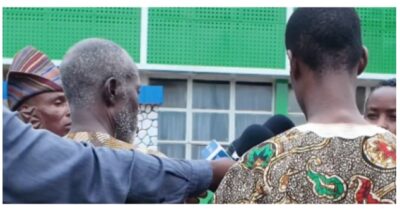
Azeez, who described himself as a herbalist and said he resides in Olunloyo, Oyo State, disclosed that he received N40,000 from his colleague after taking custody of the body of a child who had died.
A40-year-old man, Yakubu Azeez, has allegedly revealed how he and a colleague shared proceeds from the sale of the bodies of two children who died while under the care of the colleague in Oyo State.
Azeez, who described himself as a herbalist and said he resides in Olunloyo, Oyo State, disclosed that he received N40,000 from his colleague after taking custody of the body of a child who had died.
He also alleged that, in another case, a second child’s body was sold to another person for N70,000, with his colleague receiving N40,000 from the transaction.
Azeez made the disclosure while explaining how he became involved in the alleged handling and sale of the children’s remains.
“My name is Yakubu Azeez, I live in Olunloyo, in Oyo State, I am forty years. I was called by a colleague that a child under care died and I should cover up. He gave me the dead child and I took the child home and I gave him N40,000.”
According to him, his colleague initially asked him to assist in burying the child. However, Azeez said he could not bury the body because he was unable to find an appropriate tool to dig the ground.
“He said I should help him bury the body, when I went to bury the child, I could not find what to use to dig the ground because he was with me. I then dropped the child close to a banana which is close to a River side, when the rain fell, the river was full and when we went the next day we could not find the dead body there.”
Azeez said the second incident occurred after another child died. He claimed that, rather than allowing the body to “waste”, his colleague asked him to help find someone who would take it.
“The second time when a child died, I gave the body to someone, I collected N70,000 and this my colleague collected N40,000. I don’t know what the person I sold the baby to wanted to use it for.”
These herbalists buy dead babies between 40k – 70k from baby factory operators for ritual purposes in Ibadan. Kudos to the Oyo Police. Watch the confession. https://t.co/tk7VzhQ0RJ pic.twitter.com/GHmNTpWeZV
— Oyo Affairs (@Oyoaffairs) September 9, 2026
The allegation suggests that the transactions involved payments to different parties, although Azeez did not provide details of the identity of the buyer or explain precisely how the N70,000 payment was arranged.
He also denied that he personally used the bodies for ritual purposes, saying his role was allegedly limited to helping his colleague dispose of the remains and locate a potential buyer.
“I do not use the bodies for ritual, the person that reported me to the Police also said so. My colleague only told me that we should not allow the second body to waste, so I should help look for the buyer.”
Azeez further said that although he claimed not to know exactly what the buyer intended to do with the remains, he suspected that the purpose was connected to money rituals.
“I told him I don’t know anyone but I will look for anyone who has what he wants to use from the body. I don’t know what they will use it for but I know it’s money ritual they will want to use it for.”
He also insisted that he had not previously engaged in the alleged sale of human remains, saying his involvement was limited to the two cases.
“It has not happened before that I would help sell dead bodies, he just called me this time, it’s only two bodies I have sold.”
The allegations have raised serious concerns over the circumstances surrounding the deaths of the children, the disposal of their remains and the identities and intentions of those who allegedly received the bodies.
Authorities are expected to establish the circumstances surrounding the children’s deaths, identify other individuals allegedly involved in the transactions and determine whether the remains were obtained or transferred for criminal or ritual purposes.